Manhattan to Enact Local 1% Grocery Tax, Replacing State Revenue Stream
MANHATTAN – The Village of Manhattan will implement a 1% local grocery tax beginning January 1, 2026, a move designed to preserve a crucial revenue stream after the State of Illinois voted to repeal its own 1% tax on groceries.
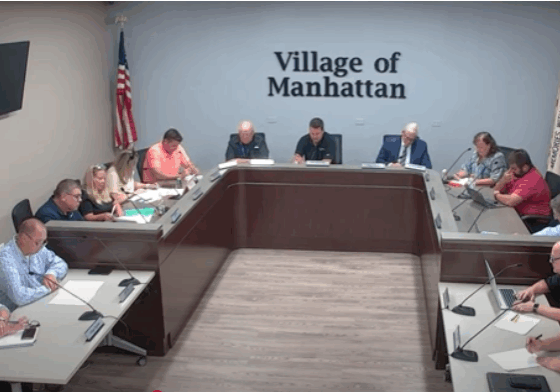
The Village Board approved the ordinance in a 5-1 vote Tuesday, with Trustee Clint Boone voting against the measure. Village officials stressed that the ordinance does not create a new tax for consumers but simply shifts the collection authority from the state to the municipality, ensuring no net change at the checkout counter.
“This is not a new tax,” Mayor Mike Adrieansen explained during the meeting. “Currently the state collects this 1% grocery tax and distributes it all to the municipalities. So starting in 2026, the state will no longer collect this tax and it’ll be up to the municipalities to collect it ourselves.”
The state’s repeal of the grocery tax was part of its Fiscal Year 2025 budget. The legislation, however, granted municipalities the authority to impose their own 1% tax to avoid a loss of funding. Like many other local governments across Will County and Illinois, Manhattan is taking this preemptive step to maintain its budget.
Trustee Justin Young sought to clarify the impact on residents. “I just want to make sure that the people in this village aren’t paying any more than what they have to,” he said.
Adrieansen agreed, framing the state’s action as a political maneuver. “If they wanted to help, the state could lower property tax or fund the schools more,” he said.
The tax applies to qualifying food and beverage items typically consumed off-premises, such as produce, dairy, and meat, but does not apply to prepared foods like a hot pizza or chicken. As with the state tax, purchases made with SNAP or LINK cards are exempt.
The Illinois Department of Revenue will continue to administer and collect the tax on behalf of the village. The village is required to file the ordinance with the department before October 1, 2025, for the tax to take effect at the beginning of 2026. While the exact annual revenue from the tax is confidential, officials estimate it to be a significant figure for the village budget.
Mostly Sunny
Latest News Stories

Illinois news in brief: Chicago police review Illinois Accountability Commission report; Granite City man sentenced for transporting minor in sex assault case; Report finds Illinois’ AI careers rank 34th in nation

Service member killed in action; remains found in search for one missing
Second family welcomes baby boy

Everyday Economics: Falling gas prices helped keep consumers spending
Illinois may bring early warning of toll costs ahead of proposed rate hike
Illinois senator says True Value move highlights business climate concerns

Two service members killed, one missing in Iranian strike
U.S. Coast Guard monitors Chinese ships off Alaska coast

Millions celebrate America 250, Sail250 events in key ports

Chicago delays vote on parking meter sale, risks litigation

Hegseth’s ‘High-T’ troop screening mandate comes without cost estimate

Congressional candidates tackle housing, immigration