Citing Liability Concerns, Will County Committee Postpones Vote on Septic System Ordinance
Article Summary: The Will County Ad-Hoc Ordinance Review Committee postponed a vote on updating its sewer and sewage disposal ordinance after a member raised significant concerns about the county’s liability for soil tests it performs for septic systems. The committee will invite officials from the Will County Health Department to its next meeting to explain the process before moving forward.
Will County Ordinance Review Key Points:
-
The committee voted to table the review of Chapter 51, which governs sewers and sewage disposal, until its September meeting.
-
Member Daniel Butler argued that the county is potentially misleading homeowners by charging for soil tests while disclaiming responsibility if a septic system subsequently fails.
-
The committee requested a representative from the Health Department’s environmental division to attend the next meeting to discuss their testing and permitting process.
JOLIET, IL – A comprehensive update to Will County’s regulations for septic systems was halted Tuesday after a committee member questioned the county’s practice of charging residents for soil tests while simultaneously disclaiming responsibility for the accuracy of those tests.
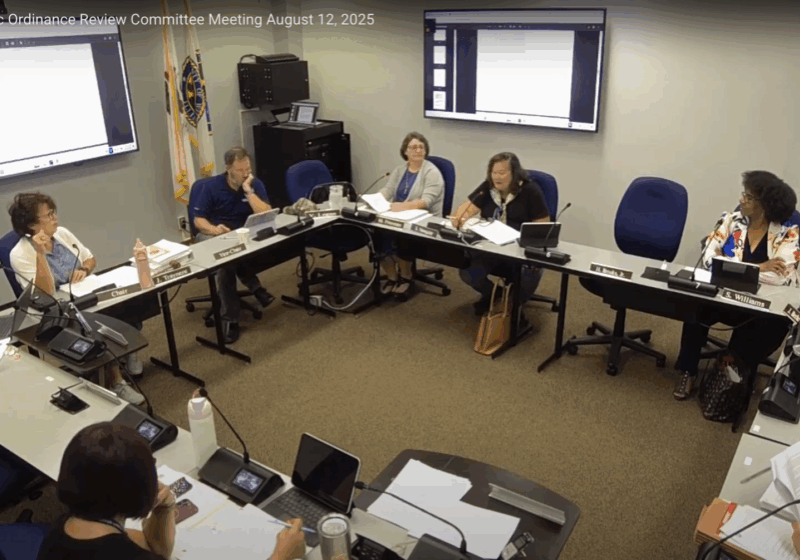
The Will County Ad-Hoc Ordinance Review Committee voted unanimously to postpone its review of Chapter 51, the sewer and sewage disposal ordinance, and requested that representatives from the Will County Health Department attend their next meeting to address the concerns.
The issue was raised by Member Daniel Butler, who argued that the current system puts homeowners in a difficult position. The county offers soil tests to determine if a property is suitable for a septic system, but if the system fails due to poor drainage, the county is not held liable.
“Aren’t we misleading them by charging them for a soil test that if it doesn’t work, we’re not responsible for?” Butler asked. “How do you charge money for something that you’re not willing to be responsible for?”
Butler explained that homeowners who pay the county for the service have a reasonable expectation of accuracy. If a system approved based on a county test later fails, costing the resident thousands of dollars to replace, they have little recourse. He suggested the county should instead require homeowners to provide their own certified percolation test to ensure proper drainage, thereby placing the responsibility on the property owner and their contractor.
“It puts in my opinion it opens us up to liability,” Butler said. “I’m just saying we should put in here a safety valve that just says, ‘Hey, you’re on the hook for making sure your soil is draining for your system where it is.’”
Assistant State’s Attorney Philip Mock explained that homeowners have the option to use the county’s less expensive service or hire a private company, which they could then hold liable. He framed it as a choice for the resident.
Committee members, including Sherry Newquist and Chairperson Jacqueline Traynere, agreed that the issue was significant enough to warrant expert input. “I really think that we need to have them here at this committee,” Traynere said, referring to the Health Department. “I would really like somebody to make a motion to postpone this particular chapter to next month.”
The committee subsequently voted to table the discussion until its September meeting.




Showers And Thunderstorms Likely
Latest News Stories

Gun rights advocate questions Illinois ballistic imaging plan

Camp Mystic suspends summer operation 2 days after Texas lawmakers’ demands

Six Democrats seeking 13th Congressional District post

DHS shutdown ends after 76 days

Farm bill passes U.S. House, heads to Senate for approval
Alleged WHCD shooter to remain in federal custody until trial
DeSantis: Ruling vindicates Florida redrawing congressional maps

Congress advances bills targeting $186 billion payment problem

Beasley Allen booted from looming talc trial in Chicago

Illinois Quick Hits: Gas prices rise again
Manhattan Launches $100,000 Safety Study for Route 52 Corridor

Board Establishes New Regulations and Fees for Wireless Telecommunication Facilities