Food companies push back on Pennsylvania bills to ban certain food products
Representatives of the American Beverage Association said Tuesday the proposed bans for artificial ingredients in Pennsylvania are unnecessary and advocated for a national FDA-approved standard for processed foods instead of state-by-state restrictions.
Ed Patru, senior vice president of Public Affairs at American Beverage, argued that the policies currently in place already take into account consumers’ health and that the suggested restrictions would create more financial issues than healthier outcomes.
“The disagreement starts when policymakers push mandates and bans on commonly used ingredients that are proven safe,” Patru said. “Ingredient bans impose costs on businesses, limit consumer choice and ultimately drive up grocery prices.”
Several bills have been filed in Pennsylvania that would ban certain types of food and beverages from being purchased with SNAP benefits, restrict the use of certain additives such as BHA, certain dyes, and others.
Dr. Lyle Burgoon, president and CEO of Raptor Farm & Tox Ltd., argued that the ingredients in question to be banned are some of the most well studied and safe. He also said that the studies about these artificial ingredients have been dramatized to scare consumers.
“These are studies that are extremely high doses where they’re looking for toxicity. That’s why they treat at such high doses,” Burgoon said. “What they’re trying to do is they’re trying to see some kind of big response. But again, it’s not actually happening in humans.”
Alex Baloga, president and CEO of Pennsylvania Food Merchant Association, was more worried about the packaging legislation. He argued that the reformulation of products and redesigning packaging for the mandatory labels will ultimately result in higher costs for businesses and consumers.
“We would rather see discussion, robust discussion, which I think is taking place around these issues, that takes into account consumer safety, product safety, but also, ultimately, the cost on consumers that could be passed down if some of these processes and policies are implemented,” Baloga said.
Patru stated that consumers want transparency and clarity regarding the food they purchase and thus would be more interested in a national food legislation approved by the FDA.
“What’s approved in one state is not approved in another. It doesn’t create clarity for consumers, and it burdens businesses. And so I think if you ask most Americans, the vast majority of consumers would prefer to have this national standard,” Patru said.
Baloga emphasized the issue with the bill is how the required changes will be a financial burden to consumers as much as businesses.
“Higher costs incurred by manufactures to reformulate products and redesign them will ultimately result in higher costs for retailers who are buying those products from wholesalers … and then ultimately for the consumers. And so, business can’t absorb the cost that would be associated to alter these products. … With 1-2% profit margin businesses, we’re already doing everything in our power to keep prices low for consumers.”






Chance Showers And Thunderstorms then Slight Chance Showers And Thunderstorms
Latest News Stories
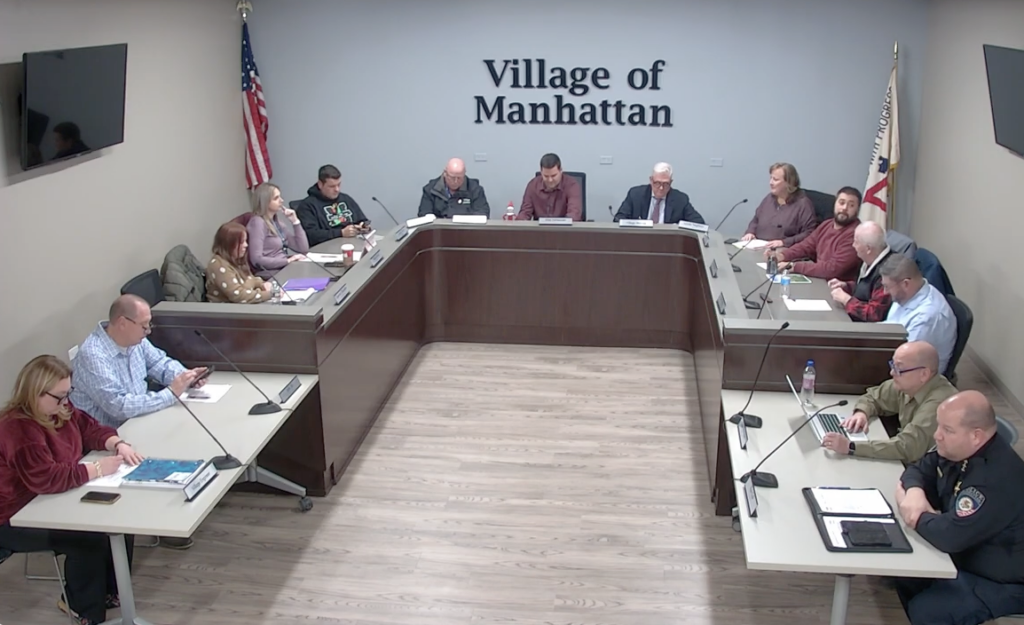
Manhattan Board Finalizes Round Barn Annexation, Sets New Year’s Eve Ball Drop

PZC Approves Homer Township Landscape Business Despite Neighbor Concerns; Adds Berm Condition

JJC Foundation Executive Director Retires Following $2.3 Million Estate Gift

Lincoln-Way Board Approves $92.5 Million Tax Levy for 2025

Chicago council, ‘starting to legislate,’ sends $16.7 billion budget to mayor
Manhattan Board Approves Kubota RTV Purchase for Sidewalk Plowing

Hegseth promises to fix barracks, but work could take time

‘Long overdue’: Praise for HHS’ action to bar taxpayer-funded sex-change procedures

Gas prices drop, but taxes make Illinois pricier than Midwest neighbors
Liquor License Amendments Approved for Frankfort, Joliet, and Lockport Businesses
Meeting Summary and Briefs: Will County Planning and Zoning Commission for December 16, 2025

Joliet Property Owner Cleared to Convert Non-Conforming Building into Two-Unit Residence