Will County to Draft New Harassment Policy Amid Debate Over Board Authority
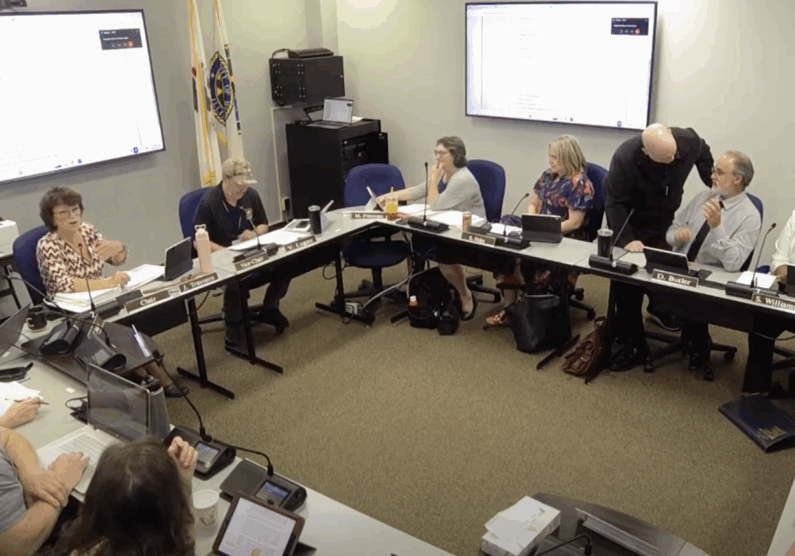
The Will County Ad-Hoc Ordinance Review Committee will draft a new, county-wide general harassment policy after a lengthy debate on Tuesday revealed the complexities of the county’s legal obligations and the limits of the County Board’s authority over other elected officials.
The discussion arose during a review of Chapter 39 of the county’s ordinances, which contains the state-mandated sexual harassment policy. Board Member Dan Butler proposed broadening the policy’s title and scope from “sexual harassment” to a general “harassment policy,” arguing the county’s required training course covers a much wider range of protected classes, including veterans and pregnant women.
“I was surprised that it included a lot of groups other than just men and women of a sexual nature,” Butler said. “I just thought our policy should reflect that… to bring a broader understanding of what we’re trying to accomplish.”
However, Phil Mock of the Will County State’s Attorney’s Office, who is guiding the committee’s review, advised against altering the existing policy. He explained that state law specifically mandates a standalone “Sexual Harassment Policy,” and changing the title could put the county out of compliance.
“The reason we use that term is because the state mandated us to use that term,” Mock said. “We don’t want to be in a situation where they said, ‘You just have a general harassment policy, you don’t have a sexual harassment policy.'”
This prompted a deeper conversation about the board’s power to set policy for the entire county. Member Judy Ogalla questioned why some ordinances apply county-wide while others do not. Mock described the county government structure as a “feudal system with a bunch of dukes and not one king,” where each elected official—like the Sheriff, County Clerk, or Coroner—maintains control over their office’s internal operations.
He clarified that the County Board’s authority is strongest on fiscal matters. Policies with direct financial implications, like those concerning insurance benefits or purchasing, are binding. Policies on workplace conditions, however, are largely followed voluntarily by other elected officials.
“As a county voice you can say that,” Mock said, suggesting a separate anti-harassment policy would likely be adopted by other officials. “My belief is all the elected officials will voluntarily follow your policy because that makes it easy on them. They don’t have to make their own up.”
Ultimately, the committee voted to direct Mock to draft a new, separate general harassment policy to be added to Chapter 39. The policy will address protections for various classes as defined by state law and court interpretations. Due to the addition of this new section and other required changes, the committee voted to postpone final approval of Chapter 39 until its next meeting.




Chance Showers And Thunderstorms
Latest News Stories

Chicago mayor to push for local funding, keeping Bears
Senate Republicans unveil $72 billion budget package to fund ICE, CBP

Jackson Township Reassesses Land Acquisition Needs for ComEd Project

Illinois AI regulations have mild industry support, could draw federal ire

DOJ files complaint to block Minnesota climate lawsuit

Hegseth: Ceasefire holds despite Iranian aggression

Illinois Quick Hits: Mayors to visit capitol urge protection of local funding

Despite tax revolt, Lower Merion keeps administrator pay high

Supreme Court allows Louisiana to immediately move on drawing new map

After Fifth Circuit ruling on TX border security law, ACLU sues to stop it from going into effect

Colorado legislators back psychedelic drug research

Trump tells small business owners tariffs ‘aren’t high enough’