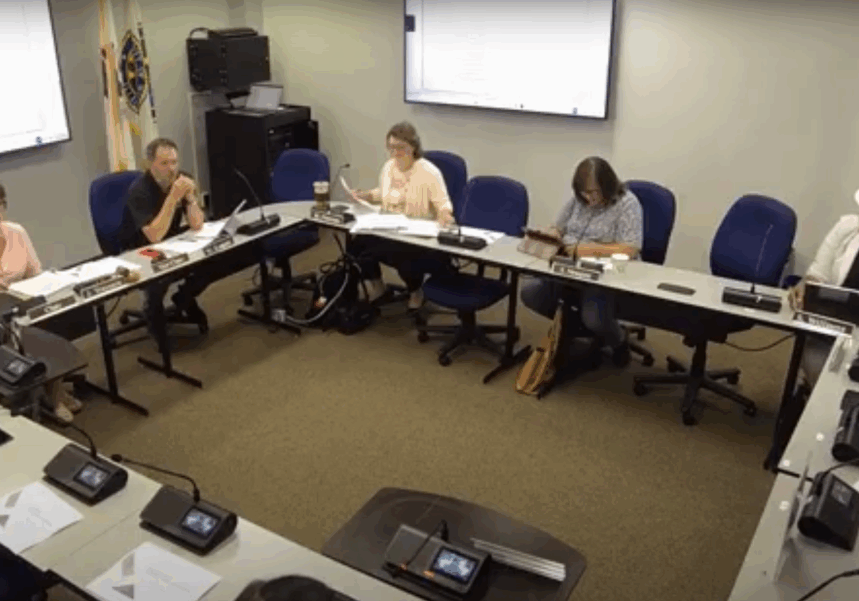
Finance Officials Clarify How Will County Tracks Assets, From Vehicles to Desks
Will County finance officials on Tuesday detailed the policies governing how the county tracks its physical and digital assets, explaining the $5,000 threshold for items that are formally capitalized and the separate process for managing less expensive goods.
Karen Hennessy, the county’s finance director, and Emily Perkins, the assistant finance director, presented to the Ad-Hoc Ordinance Review Committee to clarify the long-standing rules. Hennessy explained that the county follows standards set by the Government Finance Officers Association (GFOA), which recommends a capitalization threshold of no less than $5,000 per item.
“The time spent managing things under $5,000, there’s no benefit to it,” Hennessy said.
Items purchased for $5,000 or more, such as vehicles or heavy machinery, are considered capital assets. They are formally inventoried, assigned a “useful life,” and depreciated on the county’s books annually.
Responding to questions about large furniture purchases that cost well over $5,000 in total, Hennessy clarified that assets are treated individually. “Ten chairs are not lumped together as an expense. They’re looked at individually,” she said. “They don’t have to be together to work.”
Items costing between $1,000 and $5,000 are categorized as “minor assets.” While they are not depreciated, they are inventoried and tracked at the department level, particularly if they are “sensitive” items like weapons, laptops, or power tools. The finance department provides departments with lists and tags, but the day-to-day management is handled internally.
Hennessy noted that one area for potential improvement could be creating a more standardized, county-wide definition of what constitutes a “sensitive” asset to ensure consistent tracking across all departments.





Patchy Fog then Slight Chance Showers And Thunderstorms
Latest News Stories

Manhattan Launches $100,000 Safety Study for Route 52 Corridor

Board Establishes New Regulations and Fees for Wireless Telecommunication Facilities
Illinois pauses redistricting effort after Supreme Court ruling
U.S. gas prices at 4-year high as oil exports hit new record

Defense and Timely Power Lift Lincoln-Way West Past Homewood-Flossmoor 2-1

Government leaders statewide call for cashless bail reform after CPD officer killed
Coalition formed to fight railroad merger includes direct competitors

Illinois Quick Hits: Pritzker announces new IBM investment at Quantum Park
ISU’s union says it cheaper to negotiate than paying

Iran conflict, refinery disruption play roles as Illinois gas price passes $4.50.
Rates hold steady ahead of Fed chair transition
Supreme Court skeptical of Syria, Haiti temporary protected status