Will County Public Works Committee Unveils 25-Year Transportation Plan, Projects $258 Million Gap
ARTICLE SUMMARY: Will County officials have presented “Our Way Forward 2050,” a new long-range transportation plan that provides a 25-year vision for infrastructure projects while forecasting a $258 million shortfall in funding for all identified county roadway needs.
Key Points:
-
The plan projects $2.49 billion in revenue through 2050, with $2.18 billion available for capital projects after operating and maintenance costs are covered.
-
It is designed to address major regional trends, including a projected 30% population growth, a continuing logistics and warehousing boom, and new technologies like electric vehicles.
-
The plan was shaped by extensive public engagement, including 12 in-person workshops, over 1,700 survey responses, and feedback from a multi-agency advisory committee.
JOLIET—Will County’s transportation planners have finalized a 25-year roadmap designed to guide infrastructure priorities through 2050, addressing significant population growth and a booming logistics industry while acknowledging a projected $258 million funding gap for all needed county road projects.
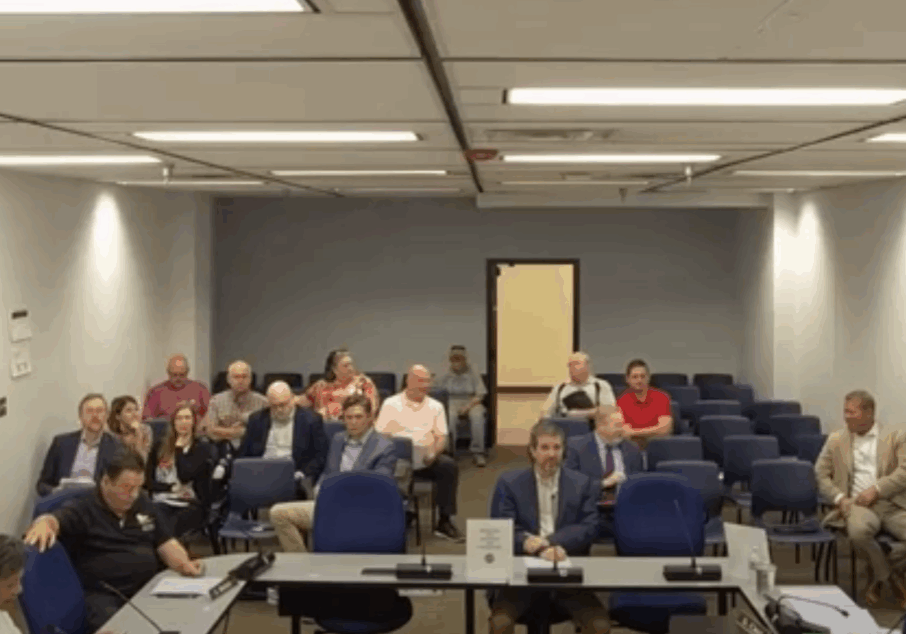
The “Our Way Forward 2050” long-range transportation plan was presented to the Will County Board’s Public Works & Transportation Committee on Tuesday by the county’s Director of Transportation, Jeff Ronaldson, and the consulting team that developed it. The plan serves as a high-level guide for future investment but does not directly fund projects. Instead, it informs the county’s annually updated, five-year Transportation Improvement Program (TIP), where specific projects are formally approved and funded.
“We are finally at the end of our multi-year study of what we need for 2050, if you can believe looking that far out,” Ronaldson told the committee.
The plan is an update to the “Will Connects 2040” document from 2017. Planners said a refresh was necessary due to major changes over the past eight years, including a massive growth in warehousing, continued population increases while other counties decline, the transformative impacts of the COVID-19 pandemic on travel, and the rise of new technologies like electric vehicles and smart traffic systems.
“A long-term vision needs regular course correction as conditions change,” said Samantha Primer, a transportation planner with Civiltech Engineering.
The creation of the plan involved a robust public engagement process that included 12 in-person workshops across the county, five advisory committee meetings, and three separate surveys that garnered a total of 1,700 responses.
Rachel Aziz, a community engagement specialist on the project team, said residents consistently emphasized several priorities: safety improvements for pedestrians and cyclists, better management of truck traffic, enhanced public transit, strategic roadway improvements to ease congestion, and support for sustainable transportation.
A key technical component of the plan is an updated and enhanced Will County-specific travel demand model. Brian Dowl, the project’s lead traffic engineer, explained that while the regional model from the Chicago Metropolitan Agency for Planning (CMAP) is a good starting point, the county-specific model provides more detailed and accurate local forecasting. It was calibrated using over 160 new traffic counts collected throughout the county.
The financial analysis projects that Will County can expect approximately $2.49 billion in revenues from 2031 to 2050 from sources like motor fuel taxes, sales taxes, and federal grants. After setting aside $310 million for operating and maintenance costs, about $2.18 billion remains available for capital projects. However, the total estimated cost for all identified county roadway projects is $2.44 billion, leaving the $258 million shortfall.
During the committee discussion, Chair Jackie Traynere (D-Bolingbrook) and other members questioned how public input was weighed against technical data and how the plan handles major uncertainties, like the proposed South Suburban Airport.
Eric Kempell, a planner on the team, explained that the airport is not included in the current modeling because critical decisions about its size, scope, and demand are still in the hands of the Illinois Department of Transportation (IDOT) and the Federal Aviation Administration (FAA). However, the county’s travel model was built to allow for the airport’s data to be added later as a plan amendment.
Regarding public input, the team said it was essential for establishing the plan’s overall vision and goals and for identifying community-specific needs. “The public, the involvement that we did was all Will County,” Dowl said, clarifying that while regional partners like the South Suburban Mayors and Managers Association were consulted as stakeholders, the advisory committee was composed of Will County representatives.




Slight Chance Showers And Thunderstorms then Chance Showers And Thunderstorms
Latest News Stories
Illinois quick hits: New Illinois Supreme Court justice installed
High schools throughout California stage walkouts over ICE
Pritzker celebrates expansion of French cheese maker in GOP leader’s district

WATCH: WA GOP lawmaker asking Trump administration to investigate fraud allegations

IL Accountability Commission chair: “People need to be prosecuted”

Graham blocks govt. funding vote over policy demands as deadline looms

Trump sues the IRS for $10 billion
Walz, Ellison to appear before House Oversight Committee

BREAKING: Don Lemon arrested for involvement in church attack
Lawmaker calls Pretti shooting an injustice, points to NRA statement as validation
DOJ to release more than 3 million Epstein documents Friday

WATCH: Commission meets as Chicago mayor seeks to prosecute ICE; SNAP changes Sunday