Trump confirms Nvidia chip agreement
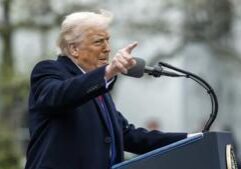
Nvidia will pay the United States 15% of the money it makes from selling artificial intelligence chips to China, President Donald Trump said in a press conference on Monday.
Trump said he allowed Nvidia CEO Jensen Huang to sell H20 chips to China while the company provides the U.S. government with a kickback of the profits.
“The H20 is obsolete,” Trump said. “So we negotiate a little deal so he’s, essentially, selling an old chip,” Trump added, referring to Huang.
Trump said he initially asked for a 20% cut from sales of Nvidia’s chips but the two landed on 15%.
In April, Trump banned Nvidia from selling H20 chips to China. The administration later reversed the ban in July.
A coalition of democratic lawmakers, including Sen. Chuck Schumer, D-N.Y., criticized the administration’s July reversal.
“Limiting the PRC’s access to advanced compute has been a focus of Congress: one with a strong bipartisan commitment across both chambers and both parties,” The letter read.
“The PRC’s development of advanced AI capabilities represents a clear risk to the United States’ national and economic security, and the administration’s willingness to trade away that security is extremely troubling,” the letter continued.
Community Events
Latest News Stories
Manhattan School Board Honors Top Student-Athletes and Academic Achievers
Meeting Summary and Briefs: Will County Board Executive Committee for November 13, 2025

SCOTUS issues stay in Texas redistricting case

Marjorie Taylor Greene leaving Congress in January

WATCH: Trump, Mamdani meeting cordial with leaders finding common ground

Study: K-12 public spending nears $1 trillion in U.S.
WATCH: Power grid regulator says PNW in ‘crosshairs’ for potential winter blackouts
Pritzker suggests he’s open to tweaking SAFE-T Act after train passenger fire

Arizona attorney general to appeal ‘fake electors’ ruling

Illinois quick hits: Small business grants announced; new Naperville DMV

Clintons ordered to testify on connections to Jeffrey Epstein in December
CBO says foreign companies could pick up some tariff costs