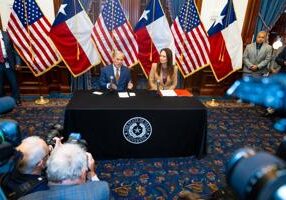
$750 million facility to protect Texas cattle, wildlife from screwworm threat
Responding to calls by state lawmakers and the agricultural industry for immediate action to be taken to protect cattle and wildlife from a parasitic fly, the Trump administration is investing $750 million to build the first U.S.-based Sterile Screwworm Production Facility.
The U.S. Department of Agriculture is building it at Moore Air Force Base in Edinburg, Texas. Built with the Army Corps of Engineers, it will produce up to 300 million sterile flies per week to eradicate the NWS. It will be the only sterile fly facility in the U.S. in a key location at the U.S.-Mexico border.
A deadly parasitic fly, the NWS is believed to be 370 miles south, flying north through Mexico from Central America. It has the potential to wipe out Texas cattle in a state that produces the most in the U.S. as well as livestock in other states. It also has the potential to kill a wide range of wildlife that could wipe out the Texas game industry, tourism, livelihoods and cause billions of dollars in losses.
In May, the USDA closed the US-Mexican border to livestock imports. However, the NWS continues to move north, and if not stopped, could reach Texas in roughly a month.
As a result, 94 House members, led by state Rep. Ryan Guillen, R-Rio Grande City, called on Gov. Greg Abbott to add NWS preventative measures to the special session agenda.
The NWS larvae (maggots) burrow into (screw in) wounds of livestock, pets, wildlife and sometimes people. The more maggots, the more the animal is eaten alive. The parasite is endemic in Cuba, the Dominican Republic, Haiti and in South American countries. A current outbreak has been reported in Central America and Mexico.
The NWS threatens more than $100 billion worth of U.S. economic activity tied to the cattle and livestock industry alone, the USDA says.
While the Panama facility produces 100 million sterile flies a week and Mexico’s upcoming facility will produce 100 million sterile flies a week, the U.S. facility will end a “United States-based reliance on foreign facilities for sterile fly production,” the USDA says.
After assessing information on the ground in Mexico, the USDA “determined we must construct an additional sterile fly production facility in the U.S. to stop the northward advancement of this terrible pest that is threatening American cattle production,” USDA Secretary Brooke Rollins said. “President Trump has made it clear that we must take all necessary steps to protect our country from foreign pests and diseases that threaten our economy and way of life. The construction of a domestic sterile fly production facility will ensure the United States continues to lead the way in combating this devastating pest. If our ranchers are overrun by foreign pests, then we cannot feed ourselves.”
The USDA also is hiring mounted horseback patrol officers, known as “Tick Riders,” and other staff to implement border surveillance. Tick Riders and animal health experts will patrol the border to “provide the first line of defense against an NWS outbreak along the United States-Mexico border,” the USDA says.
The USDA is also training dogs to detect screwworm infestations in livestock and other animals along the border and at ports of entry. The USDA is also working with the Department of the Interior and the U.S Customs and Border Protection to search for any wildlife infected by the NWS.
So far, the NWS has not been reported or detected in the U.S. in any animal.
The USDA and CBP “are constantly monitoring our ports of entry to keep NWS away from our borders. We are working every day to ensure our American agricultural industry is safe, secure, and resilient,” Rollins said.
“Texas agricultural producers feed the world, with our state’s food and agriculture sector supporting over two million good-paying jobs and creating over $867 billion in total economic impact. All of this is at risk because of the New World screwworm,” Abbott said. Federal and state efforts “will eradicate New World screwworm threat to protect our nation’s food supply and economy,” he said.
While Abbott didn’t add NWS legislation to the second special session, he previously directed state agencies to establish a response team to ensure Texans remain “informed, prepared, and aligned to prevent the re-emergence of this destructive parasite.”
Texas Farm Bureau President Russell Boening said the new Edinburg facility is a “pivotal step forward” to protect Texas livestock and wildlife. “It’s a vital investment in safeguarding our livestock, wildlife, rural communities, and the consumers who rely on a safe and stable food supply.
“A domestic outbreak of NWS could result in catastrophic losses, with estimates of $1.8 billion annually in Texas cattle alone and more than $10.6 billion in national economic damages. This threat is real and urgent, and we cannot afford delays. Immediate construction and deployment of this facility are essential to prevent irreversible harm to the agricultural economy and our nation’s food system.”






Chance Showers And Thunderstorms
Latest News Stories

Executive Committee Advances Dissolution of Southeast Joliet Sanitary District

Meeting Summary and Briefs: Will County Board Legislative Committee for January 6, 2026

Meeting Summary and Briefs: Capital Improvements & IT Committee for January 6, 2026

Public Works Committee: $18.8 Million Contract Awarded for Lorenzo Road Bridge Over BNSF Railway
Meeting Summary and Briefs: Will County Board Public Health & Safety Committee for January 7, 2026

Executive Committee: Relaxes Rules for Retiring Employee Proclamations
Lobbyist Updates: State Session Resumes; Transit Safety Concerns Raised

Meeting Summary and Briefs: Will County Board Finance Committee for January 6, 2026
Capital Imp Committee: Facilities Director Reports on VAC Progress and Critical Health Department Elevator Repairs
‘Good Food For All’ Initiative Proposes Local Agricultural Asset Mapping for Will County
Public Works Committee Advances $3.2 Million Engineering Contract for Mills Road Reconstruction
Board Members Debate “Commitment to Truth” in Media Resolution
Executive Committee: Speaker VanDuyne and Member Butler Clash Over Removal of Committee Chair
Finance Committee: County Appropriates Fees from $25 Million Wilmington Warehouse Project