Planned restart of California oil production faces legal challenges
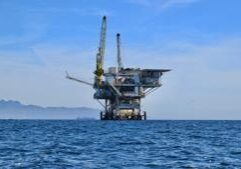
Oil and gas production resumed on May 15 that had been out of service for 10 years after an oil spill off the California coast, with the restart of the Santa Ynez Unit in the Santa Barbara Channel expected to boost U.S. energy supplies by up to 50,000 barrels per day by year-end 2025, according to the U.S. Bureau of Safety and Environmental Enforcement.
Legal challenges remain, however.
Litigations involve the environment, oversight approval involving Santa Barbara County, and accusations from the lieutenant governor and State Lands Commission she leads.
The three platforms that comprise the Santa Ynez Unit – Harmony, Heritage and Hondo – tap into an offshore reservoir containing approximately 190 million barrels of recoverable oil reserves, representing nearly 80% of reserves in Pacific Northwest states and about 3% of total U.S. reserves, the bureau says in a release. Platform Harmony began production on May 15 at a rate of 6,000 barrels a day.
The Santa Ynez unit includes 112 wells located 5 to 9 miles offshore in federal waters, three offshore platforms, a pipeline system, and an onshore oil and gas processing facility at Las Flores Canyon. In the year before the 2015 shutdown, the three Santa Ynez Unit platforms produced an average of about 45,000 barrels of oil equivalent each day.
Restarting production at the Santa Ynez Unit is “a significant achievement” that aligns with the Trump administration’s energy dominance initiative, said bureau Principal Deputy Director Kenneth Stevens.
“President Trump made it clear that American energy should come from American resources,” he said.
The Bureau of Safety and Environmental Enforcement had expected production would resume on Platform Heritage in July and Platform Hondo in August.
Stevens said second-term Republican President Donald Trump’s leadership and Interior Secretary Doug Burgum’s commitment turned a decade-long shutdown into a comeback story for Pacific oil production.
“In just months, BSEE helped bring oil back online safely and efficiently – right in our own backyard,” said Stevens. “That’s what energy dominance looks like: results, not delays.”
The 2015 spill occurred when a 24-inch buried pipeline owned by Plains All American Pipeline ruptured near Refugio State Beach in Santa Barbara County, releasing 140,000 gallons of oil, some of which flowed into the Pacific Ocean and soiled miles of beach. After a cleanup and then years of litigation and class action lawsuits, Plains All American agreed in 2024 to pay $230 million to the fishing industry and shoreline residents and to settlements totaling $72.5 million with California State Lands Commission and Aspen American Insurance.
In February 2024, Houston-based Sable Offshore Corp. bought the dormant Santa Ynez Unit from ExxonMobil, which never repaired the assets. In late May this year, Sable said it had hydrotested seven of the eight sections of the unit’s onshore pipeline and only one final test would be required. The company said it had obtained all permits from state and county governments necessary to resume production. Sable says it has added new safety measures that include a total of 27 emergency shutoff devices and round-the-clock leak detection.
Sable Chairman and Chief Executive Jim Flores said the resumption of Santa Ynez oil production is a “milestone achievement” that will help bring “energy security to the state of California.”
Hurdles are numerous.
Several environmental organizations, including the Center for Biological Diversity and the Environmental Defense Center, have filed lawsuits against the California state fire marshal arguing that waivers were issued to Sable without sufficient environmental review or public input. Another lawsuit challenges the legality of transferring permits from Exxon to Sable without a majority vote by Santa Barbara County’s Board of Supervisors. A court in Santa Barbara County in June granted a restraining order that bars Sable from opening the onshore Las Flores pipeline until litigation concludes.
In a May 23 letter to Sable Vice President of Environmental and Governmental Affairs Steve Rusch, Lt. Gov. Eleni Kounalakis, chairwoman of the California State Lands Commission, accuses the company of falsely portraying Santa Ynez oil production. Kounalakis wrote that Sable’s May 19 release “appears to mischaracterize the nature of recent activities” and that the so-called “restart” was nothing more than “well-testing procedures required by the Bureau of Safety and Environmental Enforcement prior to restart.”
Kounalakis wrote that a failure by Sable to comply with applicable regulatory requirements or to resolve any outstanding permitting issues could constitute a breach of the commission’s leases.
Investors who recently put money in Sable Offshore securities say in a class action lawsuit that the company on May 19 deceptively triggered a stock frenzy when it announced the resumption of oil production at the Santa Ynez Unit, which they contend was not accurate.
Sable share prices rose by 12.5% on the day. Two days later, on May 21, Sable said it raised $256.5 million in a secondary stock offering.




Areas Of Drizzle
Latest News Stories
Second produced water treatment pilot facility online in Permian Basin
Bill provides access to customized gene therapies, medicines

Illinois Quick Hits: State unemployment rate remains more than 5%
Arthur hammers Louisiana; flood threat persists along Gulf Coast

Report: More than 1M Minnesotans could face Social Security cuts by 2032
Democrats like Schumer, back Platner’s scandal-riddled Senate bid

Chicago discards proposed ban on unregulated ‘sweepstakes machines’
Democrats spend millions in attempt to unseat Boebert

Vance: Iran deal ‘win-win’ for Americans, conditioned on Iran’s behavior
Wisconsin Supreme Court rules against race-based scholarships
Legislator calls for investigation of Newsom’s FOIA request
EXCLUSIVE: Social Security reform imperative to avoid 34% tax hike, insolvency by 2032