Book: Foreign countries pose greatest threat to free speech on college campuses
A senior scholar at the Foundation for Individual Rights and Expression argues in her new book that the greatest threat to free speech in higher education is from foreign countries, with many American schools “compromising their values for financial gain and global partnerships.”
Author Sarah McLaughlin told The Center Square she decided to write her work Authoritarians in the Academy “to draw much-needed attention to a free speech crisis on campus that has escaped notice for too long: authoritarian influence on campus and its deleterious effects on higher education’s most vulnerable dissidents and academics.”
McLaughlin said that “there are few spaces left to speak openly against authoritarianism in the world – we must preserve higher ed as one of them.”
As stated in a news release, Authoritarians in the Academy aims to expose how higher education institutions “are compromising their values for financial gain and global partnerships.”
McLaughlin told The Center Square that “universities’ global expansion has produced many valuable opportunities and exchanges but it has been conducted far too carelessly.”
“There is a deep tension between universities’ stated values of free expression and academic freedom and the legal realities of the countries into which they have expanded,” McLaughlin said.
“Universities cannot adequately protect the rights of their community members abroad if they are not willing to be upfront about how local laws limit their ability to speak and study freely,” McLaughlin told The Center Square.
In her book, McLaughlin wrote that “as college campuses have grown into global institutions – with international student bodies, campuses, and research agreements – they have benefited from the opportunities and relationships gained by expanding across borders.”
“But they have also discovered that expansion can bring with it certain pressures and incentives that result in universities with larger global footprints, but with diminished rights,” McLaughlin wrote.
According to McLaughlin, nations with whom a global partnership has been made “have the power to deny universities millions in tuition payments, a fact university administrations, pressed by dwindling domestic investment, no doubt know.”
“Universities have increasingly turned to international students to staunch financial bleeding as other funding sources have dried out,” McLaughlin wrote. “This reliance on international students’ tuition has also offered a powerful lever for well-populated authoritarian countries to pull against noncompliant universities.”
McLaughlin wrote that “administrators weigh their commitments to free expression against the cost of offending foreign governments and losing out on lucrative partnerships.”
McLaughlin said in the book that in order to end authoritarianism in higher education, universities must reevaluate how they operate, censorship must be combatted, and students must be given tools to speak freely.
We must also expect better from higher education institutions and reject “governmental censorship across the board,” McLaughlin wrote.
McLaughlin told The Center Square that “the challenge authoritarian censorship poses to higher ed is part of a broader problem faced by all global brands and industries.”
“It’s worrying enough when a movie studio or tech company self-censors to protect its bottom line, and even worse when higher education, an industry we rely on for vital research and truth seeking, does the same,” McLaughlin said.





Mostly Sunny
Latest News Stories
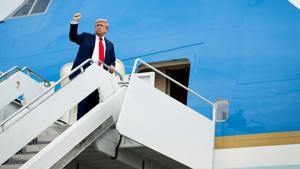
Trump leaves NATO on old Air Force One, repeats claims he’s Iran’s no. 1 target
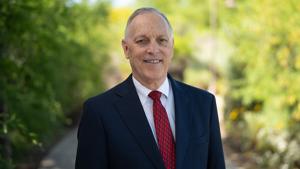
Pollster: Biggs set to win Arizona GOP gubernatorial primary
Chicago mayor says head tax would have prevented deficit

Former judge Dugan avoids prison, fined $5K for obstruction

Food-borne illness cases spike as Michigan declares outbreak

Op-Ed: Women deserve protection from the harm of mail-order abortion pills
Minnesota woman pleads guilty to threatening state House speaker
Illinois lawmaker, husband indicted over alleged kickback scheme

Border Patrol warns of rideshare human smuggling risks in El Paso

Illinois Quick Hits: Gas prices show slight uptick as US military action resumes
Maine Democrats lining up to replace Platner in Senate race
Trump: U.S. to ‘probably’ strike Iran tonight; oil prices rise