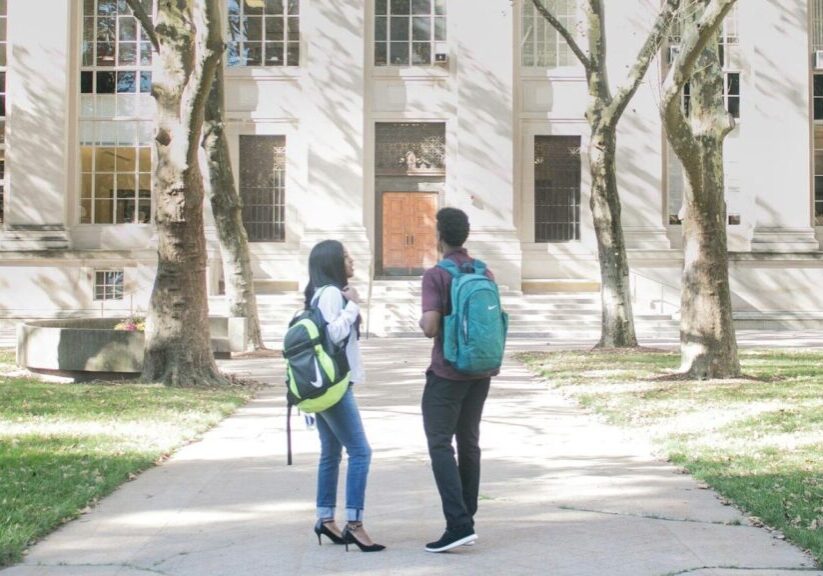
Book: Foreign countries pose greatest threat to free speech on college campuses
A senior scholar at the Foundation for Individual Rights and Expression argues in her new book that the greatest threat to free speech in higher education is from foreign countries, with many American schools “compromising their values for financial gain and global partnerships.”
Author Sarah McLaughlin told The Center Square she decided to write her work Authoritarians in the Academy “to draw much-needed attention to a free speech crisis on campus that has escaped notice for too long: authoritarian influence on campus and its deleterious effects on higher education’s most vulnerable dissidents and academics.”
McLaughlin said that “there are few spaces left to speak openly against authoritarianism in the world – we must preserve higher ed as one of them.”
As stated in a news release, Authoritarians in the Academy aims to expose how higher education institutions “are compromising their values for financial gain and global partnerships.”
McLaughlin told The Center Square that “universities’ global expansion has produced many valuable opportunities and exchanges but it has been conducted far too carelessly.”
“There is a deep tension between universities’ stated values of free expression and academic freedom and the legal realities of the countries into which they have expanded,” McLaughlin said.
“Universities cannot adequately protect the rights of their community members abroad if they are not willing to be upfront about how local laws limit their ability to speak and study freely,” McLaughlin told The Center Square.
In her book, McLaughlin wrote that “as college campuses have grown into global institutions – with international student bodies, campuses, and research agreements – they have benefited from the opportunities and relationships gained by expanding across borders.”
“But they have also discovered that expansion can bring with it certain pressures and incentives that result in universities with larger global footprints, but with diminished rights,” McLaughlin wrote.
According to McLaughlin, nations with whom a global partnership has been made “have the power to deny universities millions in tuition payments, a fact university administrations, pressed by dwindling domestic investment, no doubt know.”
“Universities have increasingly turned to international students to staunch financial bleeding as other funding sources have dried out,” McLaughlin wrote. “This reliance on international students’ tuition has also offered a powerful lever for well-populated authoritarian countries to pull against noncompliant universities.”
McLaughlin wrote that “administrators weigh their commitments to free expression against the cost of offending foreign governments and losing out on lucrative partnerships.”
McLaughlin said in the book that in order to end authoritarianism in higher education, universities must reevaluate how they operate, censorship must be combatted, and students must be given tools to speak freely.
We must also expect better from higher education institutions and reject “governmental censorship across the board,” McLaughlin wrote.
McLaughlin told The Center Square that “the challenge authoritarian censorship poses to higher ed is part of a broader problem faced by all global brands and industries.”
“It’s worrying enough when a movie studio or tech company self-censors to protect its bottom line, and even worse when higher education, an industry we rely on for vital research and truth seeking, does the same,” McLaughlin said.






Patchy Fog then Partly Sunny
Latest News Stories

Illinois Quick Hits: Housing, megaprojects take backseat to budget talks

Taxpayer watchdog calls for accountability after helicopter prom controversy

Proposed $250 bill could be a boon for drug cartels, experts warn
Iowa voters head to the polls for fierce races

District 210 Transportation Update Details Fuel Swings, New Bus Safety Technology
Speakers object to transgender athletes in girls sports

Taxpayers group, economist praise Pratt’s plan for homelessness in LA
Almost 25,000 immigration arrests made in Florida

Illinois Quick Hits: Unemployment numbers rise; Champaign job growth continues

Filing lawsuits doesn’t immunize Gori vs asbestos fraud claims: New filing

Exxon, global agencies warn of oil price spike within weeks

Bondi defends Epstein files release, denies Trump involvement