Illinois expands campus abortion access, shields doctors from legal risk
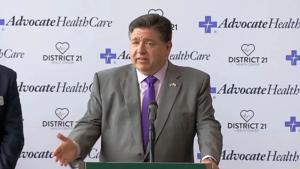
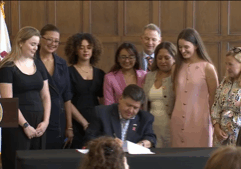
(The Center Square) – Gov. J.B. Pritzker signed new laws expanding abortion access on public college campuses while vowing to make Illinois a “safe haven” for out-of-state women seeking to terminate a pregnancy.
House Bill 3709 requires campus pharmacies to offer contraception and abortion pills, while House Bill 3637 strengthens Illinois’ shield law protecting providers from out-of-state prosecution. Pritzker compared the fight over abortion rights to the film, “The Avengers: End Game.”
“At the end of that movie, all the women of the Avengers come together for the final battle. That’s how I feel about the women here today, and the women in the General Assembly, who have led this fight,” said Pritzker. “Our job right now is to protect Illinois and its residents from the onslaught coming from Washington and neighboring states, and to provide a safe haven for women across the country seeking to have their rights protected.”
One notable aspect of the event was the emphasis on student activists and their role in shaping the legislation. University of Illinois student Emma Darbro described how HB 3709 began.
“We wrote student policy as students and for students, so to be able to contribute to the passage of state laws, our last act of love for our peers, has really been so rewarding,” Darbro said, adding it all started as “a referendum written on a college apartment floor by two girls with a Google Doc and a dream.”
HB 3709 sponsor, state Sen. Celina Villanueva, D-Chicago, is a U. of I. alumna. She said she saw the legislation as part of a continuing tradition of campus activism.
“It was here on the quad that I developed my voice and learned what it means to be not just an activist, but an organizer,” said Villanueva. ““If I knew then what I know now about where my path would lead, I wouldn’t have believed it. But I’m glad to see I’m still hanging with my friends, working on causes we truly believe in.”
State Rep. Reagan Deering, R-Decatur, criticized the legislation for promoting abortion rather than supporting services for women during and after pregnancy.
“These bills work to promote and celebrate abortion rather than work to build up the services and support to help empower women through their pregnancy and even postpartum,” said Deering. “The Democrats need to worry less about Trump-proofing and more about serving those we were elected to represent.”
HB 3637 is designed to protect Illinois abortion providers from potential prosecution in other states where abortion is restricted or banned. State Sen. Karina Villa, D-West Chicago, was one of the bill’s sponsors.
“Illinois will remain a beacon of hope for individuals across the Midwest, where they can access reproductive health, their privacy is protected, and our providers are supported instead of being criminalized,” Villa said.
Deering called the two abortion-related bills “reckless” and said it reflects the priorities of Illinois Democrats.
“They don’t care about the lives of mothers, they just care about pushing their radical policies,” said Deering. “I’m personally concerned that Illinois is disregarding FDA guidance on prescription drugs, and now women will have to access chemical abortion pills without proper medical oversight.”


Mostly Cloudy
Latest News Stories
Trump appoints housing regulator as acting spy chief
Mullin defends $118B Homeland Security budget request
Bill loosens in-state tuition requirements
Illinois Quick Hits: Nine arrested during Naperville teen gathering
Rubio provides few answers to Congress on Iran conflict timeline
Pritzker housing proposal partly stalls amid overreach concerns from localities
HUD shifts $4B homelessness program from ‘Housing First’ to treatment
Poll: Democrats hold slight edge over Rogers in Michigan U.S. Senate race

Swipe fee battle continues after delay, court ruling
Walz appoints members to Operation Metro Surge ‘Truth Council’
$45M included in budget for previously unfunded property tax relief

Over one ton of cocaine seized at U.S.-Mexico tunnel bust