Trump eyes First Amendment showdown with order to prosecute flag burning
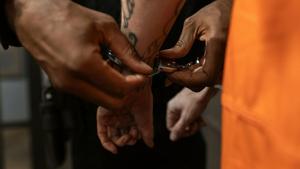
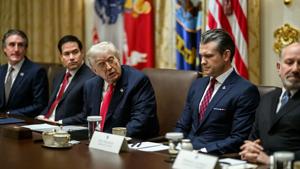
President Donald Trump signed an executive order Monday requiring federal prosecutors to investigate and prosecute people for burning the American flag, a practice the U.S. Supreme Court said was protected speech in 1989.
In his executive order on Monday, Trump said that the flag is an important symbol that should be protected.
“Over nearly two-and-a-half centuries, many thousands of American patriots have fought, bled, and died to keep the Stars and Stripes waving proudly,” according to the order. “Desecrating it is uniquely offensive and provocative.”
Civil liberties groups questioned the order, especially in light of the Supreme Court ruling.
The president said anyone who burns the American flag should spend a year in jail.
“You burn a flag, you get one year in jail,” the president said. “You don’t get 10 years, you don’t get one month. You get one year in jail, and it goes on your record, and you will see flag burning stopping immediately.”
Trump acknowledged the high court’s 1989 ruling, but said federal prosecutors still have room to pursue criminal charges in some cases.
“The Attorney General shall prioritize the enforcement to the fullest extent possible of our Nation’s criminal and civil laws against acts of American Flag desecration that violate applicable, content-neutral laws, while causing harm unrelated to expression, consistent with the First Amendment,” the order said.
In the order, Trump likened the practice to “fighting words.”
“Notwithstanding the Supreme Court’s rulings on First Amendment protections, the Court has never held that American Flag desecration conducted in a manner that is likely to incite imminent lawless action or that is an action amounting to ‘fighting words’ is constitutionally protected,” it noted.
The order instructs U.S. Attorney General Pam Bondi to “pursue litigation to clarify the scope of the First Amendment exceptions in this area” if needed.
The Foundation for Individual Rights and Expression, or FIRE, said Trump has no authority to change the First Amendment, which protects speech.
FIRE Chief Counsel Bob Corn-Revere said that no matter how offensive, flag burning is protected.
“Flag burning as a form of political protest is protected by the First Amendment. That’s nothing new. While people can be prosecuted for burning anything in a place they aren’t allowed to set fires, the government can’t prosecute protected expressive activity – even if many Americans, including the president, find it ‘uniquely offensive and provocative.'” he said in a statement. “You don’t have to like flag burning. You can condemn it, debate it, or hoist your own flag even higher. The beauty of free speech is that you get to express your opinions, even if others don’t like what you have to say.”
Former Supreme Court Justice William J. Brennan, a Democrat nominated by former President Dwight Eisenhower, wrote the majority opinion in the 1989 case.
“We can imagine no more appropriate response to burning a flag than waving one’s own, no better way to counter a flag-burner’s message than by saluting the flag that burns, no surer means of preserving the dignity even of the flag that burned than by – as one witness here did – according its remains a respectful burial,” the majority opinion read. “We do not consecrate the flag by punishing its desecration, for in doing so we dilute the freedom that this cherished emblem represent.”
The existing nine-member Supreme Court has a 6-3 conservative majority.

Mostly Sunny
Latest News Stories

Arrests made during operation targeting India-based gangs

Seven more counties consider separation, creating new state
DHS: Minnesota pardon could ‘thwart’ deportation of criminal illegal

Democratic attorneys general oppose latest round of tariffs

Illinois Quick Hits: Indiana governor touts True Value move from Illinois
Dem leaders want transparency, unsure if ethics report will be released

Flash index shows rising tax receipts in Illinois

Illinois Quick Hits: Aqua seeks water rate hike
Pritzker signs AI regulation critics say harms innovation, ‘picks winners’
500-plus fugitives arrested across two states
Illinois Quick Hits: Woman sentenced for voting twice

Embattled state lawmaker resigns after investigation into ‘unethical’ behavior