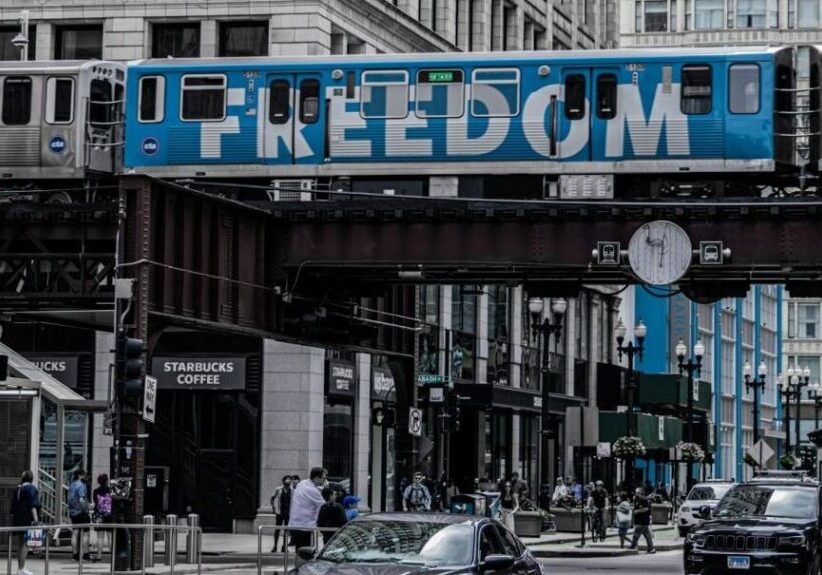
Alternative tax-hike ideas emerge to fund Illinois public transit
(The Center Square) – Illinois lawmakers are proposing more options to address a $770 million fiscal cliff for public transit.
After a funding package that included a $1.50 retail delivery tax and real-estate transfer taxes failed to clear the Illinois House during the 2025 spring legislative session, state Rep. Kam Buckner, D-Chicago, suggested a special-event surcharge that could raise interest in the use of mass transit.
State Sen. Don DeWitte, R-St. Charles, told The Center Square that Senate Republicans are getting ready to propose their own new legislation.
DeWitte said labor agreed to allow interest from Illinois road-fund dollars to be used for the transit fiscal cliff. He said Gov. J.B. Pritzker should do the same with the approximately $3 billion rainy day fund.
The St. Charles Republican said the state reported that the rainy day fund generated close to $600 million in interest since its inception. DeWitte also pointed to a Chicago Metropolitan Planning Agency report that showed Illinois with the smallest percentage of state contribution to mass transit in the nation.
“They took the six largest mass transit systems in the country, compared state contributions. Illinois was dead last. The administration needs to recognize that mass transportation has got to be a priority in this state,” DeWitte said.
DeWitte said Republicans would also propose a rideshare tax as an alternative to the so-called “pizza tax” for Chicago transit.
“While nobody likes tax increases and there’s got to be some level of sustainable revenues, we believe it’s a much fairer model to use Uber/Lyft on a statewide basis to fund the downstate transit regions, keeping that local tax money being generated where it’s being collected from. We think that’s a much fairer approach,” DeWitte said.
DeWitte said Senate Republicans hoped to have the legislation put together before the fall veto session in October.
State Sen. Ram Villivalam, D-Chicago, told The Center Square last month that any funding plan would have to invest $1.5 billion and keep at least $200 million for downstate transit.
University of Chicago Professor Justin Marlowe said some people might think a real-estate tax for transit would make sense because both real estate and transit are place-based.
“At the same time, as ways to finance a transit system go, it’s no more place-based than a lot of our others ways of paying for a transit system. It’s technically no more place-based than a sales tax. It’s no more place-based than a traditional property tax, so I think critics say that there’s nothing unique about the real estate transfer tax. The connection between it and transit is no different than most of our other taxes, and for that reason it’s not necessarily a good candidate to try to address the transit funding gap,” Marlowe told The Center Square.
Marlowe said a real estate tax would be more volatile than other funding options.
“The housing market is prone to cycles and swings and ebbs and flows, just like any other type of market or any other type of what we might call ‘a wealth tax,’ something that’s taxing behavior of a certain kind of investment in the marketplace. It’s not as predictable as some would like,” Marlowe said.
Marlowe said the empirical evidence is unclear about the effects of real estate taxes on people leaving the state or on the demand for properties, but he said the taxes could discourage people from investing in homes.
DeWitte said a transit working group of Illinois House Democrats shared some alternative revenue scenarios. DeWitte said the measures sounded more moderate, but he said he expected there to be surcharges or tax increases included in the bill from the majority party.
Community Events
Latest News Stories

Attorneys general oppose pay cut for foreign farmworkers

WATCH: Pritzker signs vaccine law GOP doctor called ‘Trump Derangement’ bill
Illinois, Chicago residents rank high taxes as state’s top issue

Illinois quick hits: Biss criticizes university payout; more time in emergency rooms

WATCH: Sanctuary bill soon law; Use of force case proceeds; CTU audits due Mon
Park District Board Approves New Management Job Descriptions

CTU can’t sue group for campaigning in union elections

IL U.S. House candidate: drug screen expectant moms getting subsidies

Illinois quick hits: Ameren requests rate hike; Pearl Harbor remembrance

First Look at Lincoln-Way 210’s Proposed 2026-2027 School Calendar
Meeting Summary and Briefs: Manhattan Township Board for October 2025

Everyday Economics: A consumer slowdown, fraying margins, and a big test for the Fed