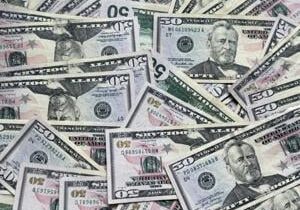
Chinese networks use U.S. to launder billions for Mexican cartels
Chinese networks are laundering billions of dollars in drug cartel cash through the U.S. financial system, according to a new report from the Treasury Department.
Treasury’s Financial Crimes Enforcement Network said banks flagged about $312 billion in transactions from suspected Chinese money laundering networks from January 2020 to December 2024. That came from 137,153 Bank Secrecy Act reports from financial institutions. Treasury also linked Chinese money laundering networks to U.S. real estate transactions, casinos, human trafficking and even laundering through assisted living homes in New York. The networks also use Chinese students studying in the U.S. to help facilitate some schemes. Real estate alone accounted for about 13% of the total, but the vast majority was U.S. banks.
“Money laundering networks linked to individual passport holders from the People’s Republic of China enable cartels to poison Americans with fentanyl, conduct human trafficking, and wreak havoc among communities across our great nation,” Under Secretary for Terrorism and Financial Intelligence John Hurley said.
The report comes after Treasury Secretary Scott Bessent suspended a Biden-era small business rule in March designed to curb money laundering that small businesses had challenged in court. President Donald Trump said the Corporate Transparency Act, which Congress passed in 2021, was “outrageous and invasive.” Bessent said it was costly for small businesses. The CTA would have required small businesses to report information about their beneficial owners to Treasury’s FinCEN. The rules remain in place for foreign businesses.
The FinCEN report noted that laws and regulations in Mexico and China also play a role.
“Mexico’s currency restrictions prevent large amounts of U.S. dollars from being deposited into Mexican financial institutions, hindering the cartels’ ability to launder funds through the formal Mexican financial system,” according to the report. The [People’s Republic of China] currency control laws limit the amount of money Chinese citizens can transfer abroad each year.”
The two groups have learned to work well together in recent years. FinCEN refers to Chinese money laundering networks as CMLNs.
“Ultimately, Chinese citizens’ demand for large quantities of U.S. dollars and the cartels’ need to launder their illicit U.S. dollar proceeds has resulted in a mutualistic relationship wherein the cartels sell off their illicitly obtained U.S. dollars to CMLNs who, in turn, sell the U.S. dollars to Chinese citizens seeking to evade China’s currency control laws,” the report said.
Scott Greytak, an anticorruption attorney and the deputy executive director for Transparency International U.S., said the U.S. is considered one of the best places in the world for money laundering because of its strong property rights and rule of law.
“Even though they don’t like the rule of law, they certainly like their money being protected by it,” he told The Center Square. “So we just tend to attract a ton of dirty money.”
Greytak said that U.S. law enforcement officials can’t track the money without stricter financial, business, and real estate reporting.
The FinCEN report highlighted China’s capital flight restrictions, which limit the amount of money Chinese citizens can transfer abroad annually to $50,000 for investment and financial purposes. That limit has sprouted its own underground banking network.
“Many Chinese citizens have turned to alternative methods, like the Chinese underground banking system (CUBS), to bypass these restrictions. The CUBS consists of various individuals and businesses from different industries who collaborate through ‘mirror transfers’ to move money across borders, as part of informal value transfer system schemes. The CUBS, in turn, depend on CMLNs to secure foreign currency.”





Chance Showers And Thunderstorms
Latest News Stories

Bill that tried to kill secret agreements with your tax dollars now faces its own silent death

After-school program orgs seek $70M in new state grants to cover gap from fed cuts
Collins, Dooley to face off in June runoff for U.S. Senate

Alabama U.S. Senate races head to June runoff

Tuberville, Jones to face off in Alabama governor’s race

SCOTUS turns down Eli Lilly bid to end ‘bounty hunter’ lawsuits
Congressional candidates discuss immigration, tax policies
Trump-endorsed Gallrein outs Massie in Kentucky

U.S. House defies Senate, weakens private equity restrictions in housing bill

Illinois Quick Hits: Group files lawsuit against gun owner ID law
Pritzker touts EV plant in Normal, Bailey says taxpayers bear the burden

State Supreme Court hears arguments over Uber forced arbitration
Vance defends DOJ’s nearly $1.8B ‘weaponization’ fund

Vance highlights ‘progress’ in Iran negotiations, floats additional fighting