Proposed federal funding bill doles out nearly $16M for electric, hydrogen buses
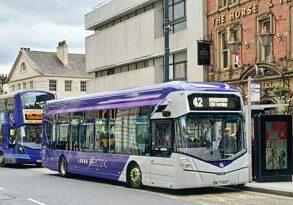
Nearly $16 million taxpayer dollars are set aside for zero-emission buses and charging stations across the country in one of Congress’ proposed annual government funding bills.
The House’s proposed Transportation, Housing and Urban Development, and Related Agencies Appropriations Act for fiscal year 2026 is just one of the 12 annual appropriations bills providing money for federal agencies.
With a total price tag of $89.9 billion, the proposed legislation includes more than a dozen earmarks totaling at least $15.8 billion for electric buses, hydrogen buses, and electric bus charging stations or battery systems across only four states. The number is likely higher, due to the ambiguity of some lawmakers’ transportation-related budget requests.
California would receive the lion’s share of the money, requested for multiple projects by Democratic U.S. Reps. Pete Aguilar, Judy Chu, Linda Sanchez, Mark DeSaulnier, Jimmy Gomez, Sydney Kamlager-Dove, Ted Lieu, Maxine Waters, Nanette Barragan, and Amy Bera.
The California projects include:
$2 million for Central Contra Costa Transit Authority to build a battery system that would store solar energy for changing their zero emissions buse
$1.7 million for Foothill Transit’s zero emissions bus program, split evenly between the 28th and 38th districts
$1.2 million for 36th district-based Culver City’s hydrogen bus pilot project
$1 million for zero emission battery electric buses for the El Sol Shuttle
$1 million for battery electric buses and the installation of charging infrastructure for Omnitrans Public Transit Agency
$850,000 for 37th district-based Culver City’s hydrogen bus project
$850,000 for zero emission battery electric buses the Link Willowbrook and King Medical Center Shuttle transit services
$260,000 for Sacramento Food Bank & Family Services to replace three gas-powered buses with electric buses, plus an EV refrigerated cargo van
$250,000 for electric buses and charging infrastructure for the city of South Gate
$250,000 for additional electric buses for the University of California, Los Angeles (UCLA)
Ohio, Massachusetts, and Washington would also receive funds. In Ohio, Toledo Area Regional Transit Authority would collect $2.45 million to transition to zero emissions buses, plus build a new garage.
Steamship Authority Shuttle in Massachusetts would receive $2 million to replace its gas-powered buses with electric, while Community Transit in Washington would get $2 million to purchase battery electric buses.
The Department of Transportation and the Department of Housing and Urban Development would distribute the funds if the appropriations bill, which currently awaits a House floor vote, passes both chambers.
So far, three appropriations bills have passed the House while a three-bill minibus is the only 2026 appropriations legislation that has passed the Senate. If lawmakers do not pass all dozen appropriations bills through both chambers of Congress by Sept. 30 – the end of fiscal year 2025 – they risk a government shutdown.





Mostly Sunny
Latest News Stories

Late-Inning Offensive Surge Propels Lincoln-Way West Softball Past Lemont 8-2
Advocates warn of looming debt crisis
Bears want more after Illinois House passes megaproject tax incentive bill

DHS wants millions more from taxpayers after federal SNAP changes
Illinois Millionaires Tax doesn’t get support
Pritzker bans insider trading by state employees, faces hypocrisy claims

Autism care providers, parents urge change in ownership mandate
Illinois Quick Hits: Bears want more from state
Will County Board Approves Controversial Solar Farms Following Court Mandate
Bears, megaprojects tax incentive bill heads to Senate after clearing House
House Dems pass redistricting amendment GOP says will lead to more gerrymandering

Illinois Quick Hits: Governor announces green tax credits for film and TV