Supreme Court rejects bid to overturn H-1B visa rule
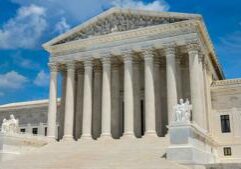
The U.S. Supreme Court on Tuesday declined to hear a case challenging a rule that allows spouses of H-1B workers to work in the United States.
In the case, Save Jobs USA challenged a 2015 rule allowing spouses of H-1B workers to get H-4 visas. The rule was put in place by the Obama administration.
“Its definition contains no indication of work authorization, and for forty-five years the executive interpreted it as not permitting work,” a petition to the court reads.
The H-1B program allows businesses to petition for high-skilled foreign workers, typically with at least a bachelor’s degree, to work and live in the United States.
The visa is most often used by companies in the technology industry. In fiscal year 2025, Amazon, Meta and Apple were among the top petitioners for H-1B visas, according to data from the U.S. Citizenship and Immigration Services website.
The high court’s denial to hear arguments in the case comes as President Donald Trump imposed a $100,000 fee on businesses that apply for new H-1B workers. The fee has already been challenged by a group of several unions.
The Department of Homeland Security granted more than 25,000 H-4 visa petitions to spouses of H-1B workers in fiscal year 2024, according to department data.
The District of Columbia circuit court previously rejected Save Jobs USA’s petition to change the rule allowing spouses to work in the country.
“Since announcing its claim of having unlimited authority to permit alien employment, DHS has promulgated regulations authorizing several massive alien employment programs entirely through regulation,” Save Jobs USA’s petition reads.
The petition pointed to the optional practical training program, which allows immigrant students to remain in the country after graduating from a U.S. college or university and before obtaining work authorization through the H-1B program.
“As long as aliens can work in the United States, they can afford to remain in the United States,” the petition reads. “This regulatory transformation of parole has subjected small communities to a huge influx of aliens that the communities have to support with increases in services.”





Partly Sunny
Latest News Stories

Hundreds of thousands of acres burn as fires spread in West

Feds buy two immigration detention centers for $1.5 billion
Chicago court tosses order blocking Florida from suing over kids’ transgender meds
Toyota set to construct $3.6 billion expansion in San Antonio
Republicans silent, Democrats irate at Iran ceasefire collapse
Chicago aldermen consider election reforms, cost savings
U.S. launches more strikes against Iran
Trump calls American military operation in Iran a ‘tremendous military success’
U.S. Energy Department finalizes $3.3B loan to Texas utility
Illinois Quick Hits: Chicago breaks ground on $4.7M torture memorial

Crude oil rises, gas prices may follow

Alabama, Louisiana, Arkansas lead country in veteran protection