U.S. military strikes another suspected drug boat near Venezuela
A U.S. military strike on a suspected drug boat off the coast of Venezuela on Tuesday killed six suspected traffickers, the latest in recent weeks as the U.S. builds up military forces in the region.
It is at least the fifth such military strike on a suspected drug boat in the region near Venezuela.
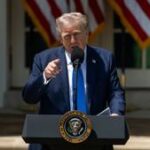
Trump announced the strike in a social media post on Tuesday.
“Intelligence confirmed the vessel was trafficking narcotics, was associated with illicit narcoterrorist networks, and was transiting along a known [designated terrorist organization] route,” the U.S. president said. “The strike was conducted in International Waters, and six male narcoterrorists aboard the vessel were killed in the strike.”
Trump said no U.S. forces were harmed in the strike. He also posted a video of the strike, as he has with past military operations in the area. The gray video shows what appears to be a boat standing still in the water before the strike destroys the vessel.
Nicolás Maduro, the president of Venezuela, has been accused of consolidating power through fraudulent elections. In 2024, his reelection was widely condemned as illegitimate, with allegations of vote tampering and intimidation of opposition leaders. Maduro is also facing allegations of human rights abuses, corruption, and involvement in illegal narcotics trafficking. U.S. prosecutors have charged Maduro with running a drug cartel that allegedly uses cocaine trafficking as a tool to sustain the regime.
Last week, Republican senators shut down a Democrat-led proposal that would have required Trump to get congressional approval before using the military to destroy suspected drug boats in the region. In a 51-48 vote, Sens. Lisa Murkowski, R-Alaska, and Rand Paul, R-Ky., voted with Democrats in favor of the measure. Republicans blocked it with help from Sen. John Fetterman, D-Pa. Sen. Ted Cruz, R-Texas, didn’t vote on the measure.
Trump’s use of military strikes on suspected drug boats marks a new strategy in the war on drugs. Previously, U.S. forces stopped suspect vessels, made arrests, and seized drugs.
Last week, Trump told Congress that the U.S. is engaged in “armed conflict” with drug cartels in the Caribbean after ordering at least five military strikes on suspected drug boats in the region.
“The President determined that the United States is in a non-international armed conflict with these designated terrorist organizations,” according to the confidential notice the administration sent to Congress. Trump directed the U.S. Department of War to “conduct operations against them pursuant to the law of armed conflict.”
Trump ordered military strikes on Sept. 2, Sept. 15, Sept. 19, Oct. 3 and Oct. 14 on suspected drug boats in the Caribbean. Trump said the Venezuelan gang Tren de Aragua was using the boats to smuggle drugs to the U.S.
The U.S. said the five boat strikes resulted in 27 deaths.
After one of the U.S. strikes against a speedboat, agents from the Dominican Republic’s National Drug Control Directorate and the Dominican Republic Navy seized 377 packages of suspected cocaine about 80 nautical miles south of Beata Island, Pedernales province.
On his second day in office in his second term, Trump issued an executive order designating Mexican cartels, the Venezuelan gang Tren de Aragua, and Salvadoran La Mara Salvatrucha (known as MS-13), as foreign terrorist organizations and specially designated global terrorists under the U.S. Constitution, Immigration and Nationality Act and International Emergency Economic Powers Act.
The strikes prompted criticism from Democrats and others, including some Republicans.
David Bier, director of immigration studies at the Cato Institute, said the military strikes were a significant change in U.S. policy and could pose legal challenges.
“The strikes are both illegal and unconstitutional,” he previously told The Center Square. “The law is clear that the military is only authorized to intercept vessels to communicate with them and refer them to civilian law enforcement. The Constitution prohibits war without congressional authorization, and even in a war, the military may not intentionally kill civilians.”
Colombian President Gustavo Petro previously called for a criminal investigation into Trump and other U.S. officials related to the military strikes on suspected drug boats in the Caribbean.


Partly Sunny
Latest News Stories
Congressman calls out Chicago schools’ academic woes

Everyday Economics: A stable labor market is not enough
Fishermen advocate begins campaign against offshore wind, ‘industrializing’ of the ocean

Sorensen drug-pricing bill draws criticism from former FDA official

Supporters, critics clash over future of taxpayer funding for Rx Kids

U.S. Senate race headlines Maine primaries as voters head to polls Tuesday
Bessent backs 3% deficit goal despite 5% budget forecasts
Bessent backs 3% deficit goal despite 5% budget forecasts
Constables hope to find missing children in immigration search effort
Constables hope to find missing children in immigration search effort

Lawmaker blasts reports of ‘equitable assessments’ at medical school
FOID changes advance in Illinois House, not called in Senate