
Glock: Judge’s OK of Chicago’s anti-gun lawsuit questionable, at best
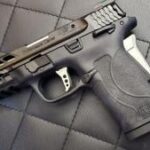
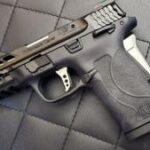
Firearms maker Glock is asking for permission to appeal a Cook County judge’s ruling allowing the city of Chicago to continue its lawsuit against Glock for “deceptive practices” in the sale and marketing of their popular semiautomatic pistols, as the gunmaker argues the judge’s take on the legal permissibility of the city’s lawsuit rests on shaky and unproven legal ground.
Glock filed the motion in mid-October in Cook County Circuit Court, asking Cook County Judge Allen P. Walker to allow the company to request an appeals court to review Walker’s September ruling declaring that neither the city’s lawsuit nor the state consumer fraud law on which it rests don’t violate the Second Amendment, federal law or a recent U.S. Supreme Court decision concerning legal actions seeking to make gunmakers pay for the acts of criminals using their weapons.
The motion for appeal comes as the latest step in Glock’s bid to defend itself against the city’s bid to use its lawsuit to not only secure a potentially massive payout from Glock, but also secure a court order effectively barring Glock pistols from being sold in Chicago.
The lawsuit was filed by City Hall at the direction of Mayor Brandon Johnson last year. Johnson and City Hall partnered in the action with gun control activist organization Everytown USA, which routinely supports laws to ban firearms in states, cities and nationwide.
The lawsuit has specifically accused Glock of violating an Illinois state law and a related Chicago city ordinance by selling semiautomatic pistols that can be converted to fully automatic weapons by illegally installing an aftermarket “switch,” known as an “auto sear,” which is not made or sold by Glock.
A semiautomatic weapon fires one round for each time the trigger is pulled. An automatic weapon fires multiple rounds of ammunition per squeeze of the trigger.
The lawsuit was the first of its kind filed in Illinois against a gun maker under a 2023 state law, signed and supported by Illinois Gov. J.B. Pritzker, specifically enacted to allow such lawsuits against firearms sellers.
The legislation revised Illinois’ consumer fraud law. It was designed to allow Chicago and others to build on anti-gun activists’ and trial lawyers’ strategy of using lawsuits to advance left-wing policy goals and punish companies making products or selling services that left-wing activists wish to end. In this case, that included Glock’s popular lines of semiautomatic handguns.
Glock has responded to the action by arguing the lawsuit amounts to an unconstitutional and illegal attempt by the city to use the state consumer fraud law to run over the Second Amendment and bypass federal law, which otherwise would prohibit state and local governments and others from suing gun makers for the crimes committed by others using their guns.
Glock argued the city’s lawsuit, if successful, would essentially give Illinois state officials and lawmakers – the majority of whom are Democrats – an unconstitutional power to use Illinois law to regulate how guns are designed, made and sold, everywhere.
Glock has particularly criticized Mayor Johnson, saying the lawsuit is an attempt to blame Glock for inadequate city policies addressing gang activity and violent crime.
In September, however, Judge Walker rejected Glock’s efforts to dismiss the lawsuit.
In the ruling, Walker said he didn’t believe a legal action that could result in outlawing certain kinds of guns would interfere with Chicagoans’ Second Amendment rights, because the Second Amendment’s right to keep and bear arms doesn’t mean the city or state should be forced to “make it easy to acquire them” nor does it “confer the right to purchase a specific brand of semiautomatic pistol.”
And the judge ruled the federal Protection of Lawful Commerce in Arms Act (PLCAA) also doesn’t prevent the city’s lawsuit. He noted the PLCAA includes exceptions for lawsuits brought by governments citing so-called “predicate exceptions,” or claims against gunmakers for marketing or selling firearms when they knew they were violating a state law and that “such violation was the proximate cause of the alleged harm” – in this case, the use of Glocks by criminals in Chicago to fuel the city’s notoriously high rates of violent crime.
Walker said the city had done enough in its complaint to establish that Glock knew that its weapons could be modified into otherwise illegal automatic weapons and didn’t do enough to stop it from happening.
Glock, however, has responded with a request to appeal, saying Walker’s legal reasoning is not as strong as the judge may believe.
In the brief filed in October, Glock pointed to the U.S. Supreme Court’s decision, delivered earlier this year, rejecting an attempt by the nation of Mexico to make gunmakers pay for the violence committed by Mexican drug cartels and other criminals there.
In that ruling, Glock noted the Supreme Court specifically indicated that laws used to justify such legal actions against gun makers must be written specifically to regulate the firearms industry, and cannot just be laws addressing “public nuisance” or any other cause of action applied generally by law to every industry or population.
Glock noted two federal appeals courts that have addressed the “predicate exception” question under the PLCAA have determined that so-called “statutes of general applicability do not satisfy the predicate exception simply because they also apply to the firearms industry.”
“There is a substantial ground for a difference of opinion regarding whether the Illinois Consumer Fraud Act is the type of statute applicable to the sale and marketing of firearms, the alleged violation of which is capable of satisfying the predicate exception, simply based on adding a reference to firearms to a statute of general applicability, and whether Congress intended to allow states to essentially negate the immunity provided by the PLCAA in such a manner,” Glock wrote in its brief.
Further, Glock took issue with Walker’s determination that the “predicate exception” was satisifed in this case by the city’s allegation that it believed Glock had “knowingly violated” the Illinois consumer fraud law’s provisions regulating the gun industry.
Glock argued more evidence should be required from the city to back its claims.
The company noted the Supreme Court determined the “‘core purpose’ of the PLCAA was to ‘halt a flurry of lawsuits attempting to make gun manufacturers pay for the downstream harms resulting from misuse of their products…'”
Allowing the “predicate exception” to be satisfied by an unsupported assertion by a government that a gun maker had violated a state law of questionable applicability would all but overturn the protections supposedly provided by the PLCAA, Glock argued.
The company said it believed a state appeals court, at least, should be required to review Walker’s findings. No state court has yet dealt with those questions, Glock said.
Further, Glock said the Cook County decision could also fly in the face of earlier decisions from the Illinois Supreme Court that held firearms makers can’t be sued over claims they did not do enough to “prevent criminal misuse of their products by third parties.”
And the company said appeals courts should answer whether Chicago can use a lawsuit under the Illinois consumer fraud law to require the company and other gun makers to “change the design of a legal, semi-automatic pistol, or impose liability for not doing so,” or ban the sale of such otherwise legal handguns altogether.
Glock said there is no historical precedent for using a lawsuit to accomplish these goals, rendering Walker’s conclusions open to debate, at the least.
Glock said an appeals court should be asked to weigh in on these important questions before the city is allowed to continue its lawsuit.
Glock is represented in the action by attorneys Richard J. Leamy Jr., of Wiedner McAuliffe, of Chicago; and John F. Renzulli, Christopher Renzulli and Scott C. Allan, of the Renzulli Law Firm, of White Plains, New York.
The city of Chicago has not yet responded to Glock’s motion for appeal.
Judge Walker has not yet ruled on the motion.



Mostly Cloudy then Chance Showers And Thunderstorms
Latest News Stories

Meeting Summary and Briefs: Will County Land Use & Development Committee for Dec. 2025

Board Committee Approves Rate Hike for Private Pay Residents at Sunny Hill Nursing Home

Illinois quick hits: Bovino thanks police; fire assistance grants available
IL House Speaker: ‘not even close’ to school choice legislation

IL comptroller: Chicago mayor’s policies chase businesses away

Menards settles deceptive 11% rebate lawsuit for $4.25M with 10 states

Pace Expands I-55 Service and Launches ‘VanGo’ in Joliet

Will County Speaker Praises JJC for ‘Heroes’ Scholarship Success
Speech Team Wins ‘Judges Choice’ as Students Raise Thousands for Charity

Will County Executive Committee Rejects School Choice Advisory Referendum

‘Welcome Move’: 815 Mulch-It Granted More Time to Relocate in Homer Glen

JJC Trustees Clash Over New Policy Controlling Information Requests
Meeting Summary and Briefs: Public Works & Transportation Committee for December 2, 2025