Small business leader warns swipe fees are squeezing local stores
A longtime small business advocate has launched a new website to help store owners explain credit card surcharges to their customers.
Karen Harned, who led the National Federation of Independent Business Small Business Legal Center for 20 years, launched Swipeflation.com to address the rising costs of credit card fees.
The site provides businesses with information to use at checkout, explaining why customers may see new fees when paying with credit cards.
“Most customers don’t realize that a percentage of every credit card purchase goes to big banks and card companies instead of the local store they’re trying to support,” Harned said in a news release. “If you want to help small businesses, or avoid these fees yourself, paying with cash is one way to do it.”
Eighty percent of consumers reported paying a credit card surcharge in the past year, according to a recent WalletHub survey.
Harned said small businesses aren’t profiting from these surcharges but are passing them along because of the 2% to 4% swipe fees that credit card companies charge on each transaction.
“Small businesses aren’t trying to nickel-and-dime anyone,” she said. “They’re simply being upfront about swipe fees so customers can decide whether to pay with a card or consider paying with cash.”
She said these costs are growing at the same time business owners are facing inflation and higher prices for supplies.
Ninety-two percent of small business owners report higher costs for supplies or services since 2020, and 71% said their costs have increased at least 20%, a Business.org survey found.
Credit card swipe fees nationwide exceeded $180 billion last year, according to industry data. That figure is up 70% from before the pandemic and equivalent to over $1,400 per household.
Harned said she hopes Swipeflation.com will help small businesses communicate more transparently with customers and raise awareness of the issue.
“No one wants an upset customer who is being asked to pay a fee to use their credit card,” she said. “What they want is to give them a better understanding of why they are asking, and how cash payments are a better alternative to keep the local merchant in business.”





Chance Showers And Thunderstorms then Showers And Thunderstorms
Latest News Stories

Board Accepts Retirements and Creates New Administrative Position

WATCH: Reclaiming the Panama Canal could be back on the table

Las Vegas tourism industry continues to decline

More states now offer school choice programs for families

Trump likely to make waves at biggest-ever World Economic Forum

Manhattan Fire Trustees Extend Chief Contracts Through 2029
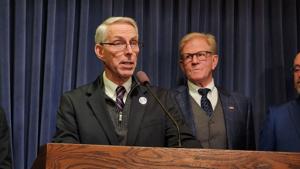
Illinois House returns to session with plans for SAFE-T Act, Israel, taxes

Illinois quick hits: Bovino bounty trial to begin; Judge sentences Kentucky man to 15 years in drugs case; Pritzker criticizes Trump’s first year as Trump marks accomplishments
IL AG reviews battles vs. Trump administration: ‘365 days of chaos’
Largest U.S. band manufacturer plans to leave Ohio, send some production overseas
WATCH: Trump says he plans to send out $2,000 tariff checks without Congress

House to vote on last four govt. funding bills costing $1.2 trillion