
NetChoice scores legal win in social media warning lawsuit
A U.S. District Court recently granted a preliminary injunction against a new Colorado law that would require social media platforms to regularly send pop-up notifications to minors using their sites.
The lawsuit, which was filed by internet trade group NetChoice, was first exclusively reported on by The Center Square back in August. NetChoice argued this new law is a government attack on free speech and asked the U.S. District Court for the District of Colorado to declare the bill unlawful.
Paul Taske, co-director of the NetChoice Litigation Center, spoke with The Center Square regarding the preliminary injunction.
“This decision reaffirms a core free speech protection,” Taske said. “The First Amendment prohibits government from forcing private speakers to adopt the government’s position on important and controversial topics.”
The bill in question, House Bill 24-1136, was first passed in 2024 and is set to take effect Jan. 1, 2026. The preliminary injunction will prevent it from going into effect until NetChoice v. Weiser is “fully resolved” by the courts.
Designed to encourage “healthier social media use” in Colorado’s youth, the bill received bipartisan support in the legislature.
“Parents cannot tackle these challenges on our own, and that’s why this law is so important,” said House Minority Leader Rose Pugliese, R-Colorado Springs, who sponsored the bill.
“This is a common-sense, family-focused law that provides young people and their parents with the knowledge and support they need to make informed decisions about safe social media usage,” the state legislator said.
In addition to requiring the Colorado Department of Education to maintain educational materials on the health effects of social media, the new law also requires social media platforms to display a pop-up notification every 30 minutes to any user:
• Who is under 18.
• Has been on the platform for one cumulative hour during a 24-hour period.
• Is on the platform between the hours of 10 p.m. and 6 a.m.
NetChoice, which represents some of the major social media companies such as X, YouTube and Meta, does not believe the government should have the ability to force private businesses to speak and is confident the bill will eventually be permanently struck down in court.
Taske applauded this first step of a preliminary injunction by the court — in a case that he said everyone should be concerned about.
“This case might be about social media websites, but the government’s position, that it can force a private speaker to adopt its message, applies equally to individuals, churches and companies,” he said. “By re-affirming the government’s lack of authority, this decision preserves everyone’s right not to be a mouthpiece for government-mandated messages.”
In the past few years, Colorado has been at the forefront of the social media debate, passing a number of bills that would regulate its usage.
Recent data from the Pew Research Center found nearly half of teens say they are online almost constantly, up from 24% a decade ago. This comes as 41 states are suing Meta for allegedly using addictive features in its platforms, leading many states to consider passing laws addressing social media.
“As lawmakers explore potential regulations, our 2023 survey found a majority of Americans support time limits for minors on social media,” stated the Pew report.
Following Colorado’s passage of HB 24-1136, Minnesota and New York took up similar legislation this year.
NetChoice argued parents should be the ones receiving controlling social media usage, not the government mandating private companies do so. The company is hopeful its lawsuit in Colorado will deter other states from taking similar measures.
“We look forward to seeing the law struck down permanently and free speech protected online in Colorado,” Taske said.
Healthier Colorado, a nonprofit based in the state, was a lead champion for the Colorado bill during its passage.
In a recent poll commissioned by Healthier Colorado, 90% of the state’s voters surveyed said social media had a “negative impact on the mental health of youth in Colorado.” When provided with a description of HB24-1136, 69% indicated they supported the new law.
“Everybody recognizes that social media is a problem for kids,” CEO Jake Williams told The Center Square in an exclusive interview in August. “Ninety percent agreement on a poll is remarkable.”






Chance Showers And Thunderstorms then Showers And Thunderstorms
Latest News Stories

Nashville speaker maker plans to move overseas to avoid tariffs
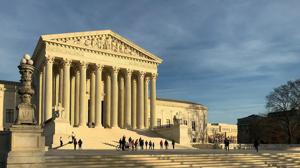
Supreme Court could redefine 14th Amendment application

Missouri year in review: capital gains eliminated, Medicaid increased

2025 in review: Historic border security actions taken by Trump

Free speech under fire nearly 300 times in 2025 on campus

IL rep: As if Bears ‘had a plan to rob the bank’ before considering Indiana
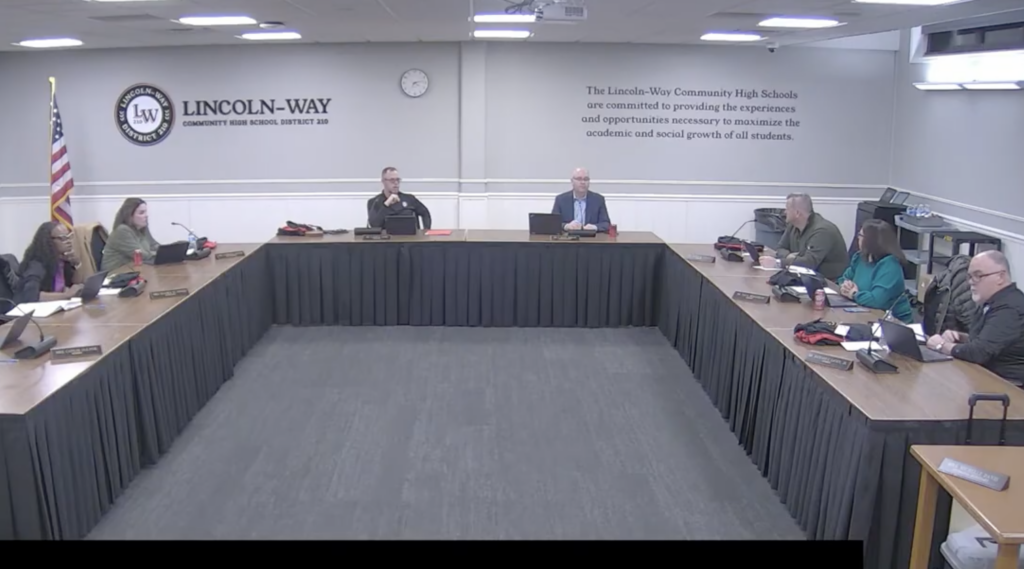
Lincoln-Way High Schools Maintain Top State Rankings; EL Progress Jumps
Undersheriff Brian Conser Retires After 29 Years of Service

Officials warn against limits on loans for nursing students
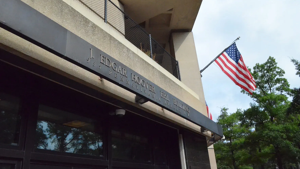
FBI to scrap $5 billion move, Patel says

AGs say ‘As You Sow’ may violate antitrust laws with anti-fossil fuel alliance
Manhattan-Elwood Library Board Authorizes Steps to Sell Extra Lot