Trump signs executive order to improve foster care
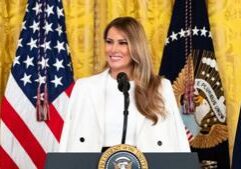
In line with First Lady Melania Trump’s efforts to improve the foster care system, the president signed an executive order Thursday to better support foster children, those aging out of the system, caseworkers and foster families.
The first lady said she began working on a concept specifically for older foster children exiting the system that was included in Thursday’s executive order in 2021.
“I developed an idea to establish an impactful platform with an important mission,” Trump said, “to provide individuals from the foster care community the ability to secure an entry level job position and in turn, financial independence.”
The order establishes a “Fostering the Future” initiative to develop partnerships between the government and leading private sector organizations, schools and colleges, and non-profits to help children aging out of foster care create a life they want – whether by pursuing a degree or entering the workforce. It also “increases flexibility in Education and Training Vouchers for short-term, career-focused programs and facilitates tax-credit scholarships for foster children,” according to a White House summary.
“Each year, more than 15,000 young people age out of the foster care system and unfortunately, too many struggle to become self-sufficient,” said President Donald Trump. “The order I will sign in a few moments will provide vital new resources to help young people transition out of the foster care system and live a very happy and a very successful life.”
The order also includes directives to improve states’ child welfare data, both its collection and accessibility. The Department of Health and Human Services is to update its policies on data collection and publication, ensuring the data most pertinent to children’s safety is captured and available to those who need it. The order also calls for the “modernization” of the child welfare system, encouraging the use of technology – including artificial intelligence – all throughout the system for things like “[increasing] caregiver recruitment and retention rates, [improving] caregiver and child matching,” and maximizing the use of federal funding.
Programs are to be evaluated annually for their progress on key metrics like reducing “unnecessary entries into foster care, [decreasing] the time between reports of child maltreatment and investigations,” and reducing “child injuries… caused by caregiver neglect and abuse.”
Finally, the order directs the HHS secretary to work with the White House Faith Office to strengthen the relationships between faith-based organizations and the foster system, as well as address state and local policies that disqualify otherwise qualified caregivers based on their religious beliefs or moral convictions.




Chance Showers And Thunderstorms then Showers And Thunderstorms
Latest News Stories
District 210 Reports Insurance Deficit Amid National Healthcare Cost Spikes; Finances Remain Stable

Planning Commission Backs 5-MW Peotone Solar Farm; Developer Pledges Pollinator Habitat and Community Funds
Joliet Junior College Board Approves $2 Tuition Increase Amidst Heated Debate Over Enrollment and Spending
Lincoln-Way Board Ratifies Three-Year Support Staff Contract with Significant Hourly Raises
Manhattan Township Weighs Hall Rental Fee Increase to Cover Professional Cleaning Costs
Jackson Township Prepares for Property Viability Pole Relocation, Addresses Northpoint Traffic Control
Manhattan School District Explores Alternative Transportation Amid Lincoln-Way Bus Challenges

Manhattan Ranked 6th Safest City in Illinois; Police Chief Warns of Traffic Accidents
Manhattan Township Assessor Initiates $13,500 Software Upgrade Amid Office Transition
Manhattan and New Lenox Renew Boundary Agreement Through 2046
Manhattan Board Approves Route 52 Safety Study and Multi-Use Path Engineering
State of the College: Local Legislators Bolster Student Support Services