Supreme Court case could have major effect on 2026 midterms
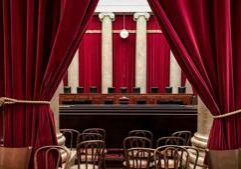
The U.S. Supreme Court has agreed to take up a case that could have an effect on the 2026 midterm elections.
The case, Watson v. Republican National Committee, centers around a Mississippi law that allows mail-in ballots to be counted up to five days after an election as long as they are postmarked by Election Day. The Mississippi law was enacted in 2020 due to the COVID-19 pandemic.
Fifteen other states and the District of Columbia have similar laws that allow domestic mail-in ballots to be received after Election Day, as long as the ballot is postmarked by the date of an election. In Illinois, mail-in ballots can be received up to 14 days after Election Day.
The nation’s highest court will decide whether to uphold a ruling from the Fifth U.S. Circuit Court of Appeals that said ballots must be received by Election Day to be counted.
Jason Snead, executive director of the Honest Elections Project, celebrated the court’s decision to take up the mail-in ballot challenge. He said the court’s decision is especially important because it will set a precedent for election law going into the 2026 midterms.
“The Supreme Court now has the chance to set the record straight: Federal law clearly says that ballots must be received by Election Day,” Snead told the Center Square. “Despite this, some states continue to allow absentee ballots to pour in days or even weeks late.”
“This case gives the Supreme Court the chance to resolve that question once and for all,” Snead said.
Ken Martin, chair of the Democratic National Committee, said the case is an attempt to restrict voting rights in states that offer delayed mail-in ballot deadlines.
“The DNC will fight like hell in this case for the rights of Mississippians and every other citizen to make sure their voices are heard and their votes are counted,” Martin said.
Lawyers for the Republican National Committee argued that federal law sets the Tuesday after the first Monday in November as Election Day.
Nineteen states and the District of Columbia filed a brief to the Supreme Court that argued states should have the ability to set rules over the receipt of ballots. The states said mail-in ballot deadlines give voters a greater opportunity to cast their ballots.
“States have the constitutional authority to make individualized judgments on how best to receive and count votes in federal elections,” representatives for the state wrote.
While most states require mail-in ballots to be postmarked by Election Day to be received, Snead said the practice of postmarking has diminished with prepaid postage. Nineteen states and the District of Columbia use prepaid postage for mail-in ballots.
“Most of that prepaid postage isn’t postmarked because the whole point of a postmark is to cancel a stamp,” Snead said.
Snead said most states require explicit evidence that a ballot was cast after the date of an election, otherwise they will be counted in vote totals.
“You wind up in a situation where somebody could commit fraud and get away with it or somebody could follow the law and still have their ballot thrown out,” Snead said. “We can’t just assume that because we put a rule down on paper that it actually means it’s going to be followed in practice.”
The court’s decision to hear Watson v. RNC is particularly relevant because of its implications for the midterm elections. The Purcell principle is a standard that asks courts not to change election rules during the period of time an election takes place or just prior to the beginning of an election.
Snead said the court hearing this case does not interfere with the 2026 midterm elections because it will most likely be decided in June or July 2026, months before the general election takes place.
“I think that you’d probably be outside the Purcell window for something like this,” Snead said. “This gives [the Supreme Court] freedom to weigh the merits of the argument and come to a conclusion outside the context of a particular or contentious election.”
Ultimately, Snead said a decision in the case could give uniformity to election laws instead of having states issue different policies.
“What you want to see is that at the end of the voting period, the close of polls on Election Day, you know how many votes have been cast,” Snead said. “The absolute maximum number of ballots should be set when the polls close for all forms of voting.”





Mostly Sunny
Latest News Stories

Fishermen advocate begins campaign against offshore wind, ‘industrializing’ of the ocean

Sorensen drug-pricing bill draws criticism from former FDA official

Supporters, critics clash over future of taxpayer funding for Rx Kids
U.S. Senate race headlines Maine primaries as voters head to polls Tuesday

Bessent backs 3% deficit goal despite 5% budget forecasts

Bessent backs 3% deficit goal despite 5% budget forecasts

Constables hope to find missing children in immigration search effort

Constables hope to find missing children in immigration search effort

Lawmaker blasts reports of ‘equitable assessments’ at medical school

FOID changes advance in Illinois House, not called in Senate

FOID changes advance in Illinois House, not called in Senate

Texas tops California, New York, with the most Fortune 500 headquarters