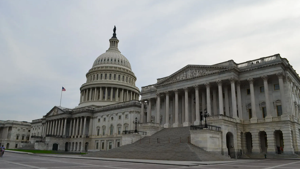
Inflation-adjusted teacher salaries drop despite record spending on public education
(The Center Square) – A new report says structural problems have led to record-high spending on public education in Illinois and across the United States.
Reason Foundation’s K-12 Education Spending Spotlight 2025 found that record-high funding of U.S. public schools is approaching $1 trillion.
The report author, Reason Foundation Director of Education Reform Aaron Garth Smith, said the higher taxpayer costs are driven by structural problems with public education financing.
“One is a surge in non-teaching staff and sort of a focus away from academics, so we found that between 2002 and 2023, public school enrollment only grew by 4.1% but non-teaching staff such as counselors, psychologists, social workers, instructional aides, non-instructional staff grew by nearly 23%,” Smith told The Center Square.
Smith said teacher pension debt has caused a sharp increase in benefit spending, and empty school buildings are also a structural problem.
“Since the pandemic, public schools have lost nearly 1.2 million students, but they haven’t closed schools to keep pace with this. This spreads resources thin,” Smith explained. “It takes resources out of the classroom, and it’s something that public schools will have to grapple with in the coming years.”
Despite the higher spending, the report found that the average Illinois teacher’s inflation-adjusted salary dropped nearly 8% between 2002 and 2022.
“That is surprising, especially since public school spending has increased so rapidly across the last couple of decades. A lot of those dollars are going to pay off pension debt,” Smith said.
Earlier this year, Chicago Public Schools teachers approved a new four-year contract to raise the average CPS teacher’s salary to more than $114,000 per year.
“In certain cities or certain school districts, the trends might vary, but as a whole, spending is way up in Illinois but those dollars aren’t finding their way to teacher salaries. It’s up to policy makers and taxpayers and other stakeholders to ask the question of why is this the case and how do we address this problem,” Smith said.
Smith said the solutions are both incredibly simple and incredibly difficult.
“Difficult in that you need to address the structural challenges. Teacher pension debt, of course, is not going to disappear overnight, and policymakers need to make the difficult decisions to start paying that down, and the same thing with non-instructional staff,” Smith said.
On the other hand, Smith said states like Mississippi and Louisiana have improved test results simply by focusing on academics.
“They’ve implemented reforms that make public schools focus on core subjects, particularly reading,” Smith said.






Showers And Thunderstorms Likely
Latest News Stories
Bonta’s anti-Exxon emails may have run afoul of CA corruption law: Claim

Expulsion votes for two members of Congress could happen next week, Luna says
NAACP sues xAI over air pollution near Memphis data center
Trump says he’s ready to nominate up to three Supreme Court justices
Military hostilities in Iran continue after Senate tanks War Powers Resolution

WATCH: Detransitioner battles to revive landmark malpractice and fraud lawsuit

Iran economic fallout is temporary, Hassett says

Illinois Quick Hits: NFIB says biz deduction will bring jobs, benefit to Illinois

Soaring costs and short supply shut millennials out of housing market

Vought testifies before lawmakers on Trump’s $2.1T budget request

SNAP eligibility changes spark debate on gap for impacted recipients

Trump puts spotlight on China, Iran’s top oil consumer