CBO says foreign companies could pick up some tariff costs
The Congressional Budget Office slashed its tariff revenue forecast to reflect new data on the highest import duties the U.S. has seen in nearly a century.
The CBO, which Congress created to help evaluate economic and budgetary policies, said the new projections show tariff changes will reduce deficits by $3 trillion over the next decade. That’s down from the CBO’s earlier estimate of $4 trillion in August.
The latest update from CBO Director Phillip Swagel found the increase in tariffs implemented since President Donald Trump took office would decrease primary deficits by $2.5 trillion over 11 years if the higher tariffs persist throughout the 2025–2035 period. By reducing the need for borrowing, those tariffs will lower federal interest costs on debt by $500 billion.
“Roughly two-thirds of the downward revisions result from adjustments to reflect new data,” according to the report.
The new projections assume foreign businesses would pick up more of the costs than initially expected.
“We had previously projected that foreign exporters would not reduce their prices to offset increased tariff rates. We now project that foreign exporters will reduce their prices by an amount equivalent to 5% of the increase in tariff rate,” according to the report.
That 5% assumption is “consistent with evidence from increases in tariff rates on China that were implemented in 2018 and 2019.”
That could help U.S. consumers frustrated with high costs.
“As a result, the cost of imported goods for U.S. businesses and consumers rises by less than we had previously projected, leading to a smaller decline in imports,” according to the CBO report.
A recent Goldman Sachs report found that U.S. consumers will pay 55% of the costs resulting from Trump’s tariffs, U.S. businesses will pay 22%, and foreign exporters will pay 18%. That report said that most tariffs will be passed on to American consumers as businesses adjust prices in the coming months.
The CBO projections come with uncertainty, especially around how Trump could change tariffs over time. Trump has already made dozens of unilateral changes to tariff rates as he looks to give America a trade advantage around the world.
“One source of uncertainty about these projections is that the Administration could change how tariff policies are administered,” the report noted. “If mechanisms for additional exemptions were implemented, the tariff duties collected could decline substantially.”
The CBO, created in 1974, has little practice with estimating tariff revenue.
“The United States has not implemented increases in tariffs of this size in many decades, so there is little empirical evidence to guide our estimates of their long-term effects. Consumers and businesses could be more or less responsive to increases in tariffs of this size, which would cause trade and revenues to diverge from projected amounts,” Swagel said.
A group of small businesses and states have challenged Trump’s authority to use tariffs without congressional authority. The CBO said it is watching that case, which remains pending before the U.S. Supreme Court.


Chance Showers And Thunderstorms
Latest News Stories
Advisory Committee Debates Rigor of Online Summer School Options
Group Presents Allegations of 2024 Voter Roll Errors to County Board
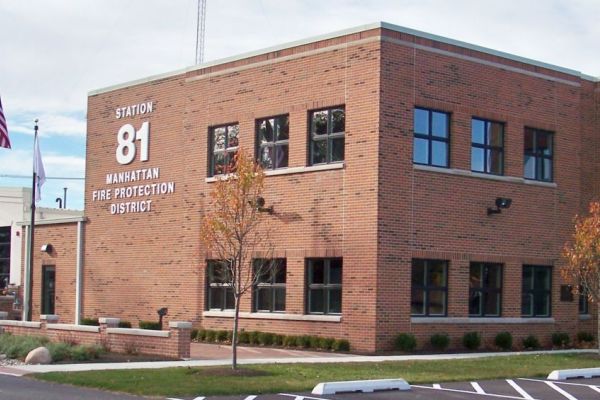
Manhattan Fire District Hires Three Full-Time Paramedics, Reports Progress on New Station
Will County Board Advised on Strict “Judicial” Role Ahead of Landfill Expansion Application
Ad-Hoc Committee: Bath House Regulations Updated; Removes 60-Day Licensing Window
Land Use Committee Rejects Shorewood Solar Farm Despite 25-Year Lease Offer
Trustees Renew Federal Lobbyist Contract Following $800,000 Funding Win
Executive Committee Advances $28.7 Million BNSF Bridge Project for Lorenzo Road

Meeting Summary and Briefs: Manhattan-Elwood Public Library District for January 26, 2026
Land Use Committee: ‘Clean Fill’ Proposal Stalls After Unauthorized Tree Removal Sparks Environmental Concerns
Manhattan School District Approves Tax Abatement and Fund Transfers
Contracts Approved for New West Principal and District Technology Director