Report: Michigan wasted millions on deceased Medicaid enrollees
Michigan made $39.9 million in Medicaid payments to deceased enrollees over a two-year period a decade ago, with a total of $249 million spent across 14 states.
This is according to a new report titled the “Welfare Walking Dead” from the non-profit the Foundation for Government Accountability, which looked at federal audit data from the Office of Inspector General, among other research.
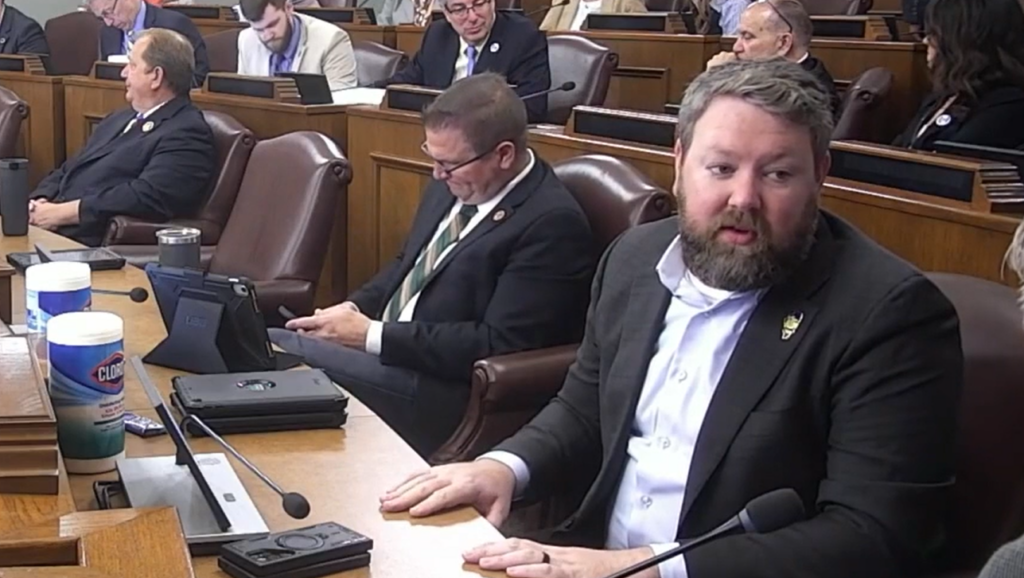
In an exclusive interview with The Center Square, Jonathan Bain said that every taxpayer should be concerned with these findings. Bain is a senior research fellow at the FGA and authored the report.
“The average citizen should care about these findings because it’s yet another example of government waste that’s rooted in inefficiency and lack of care and precision,” Bain explained. “Every dollar that is lost to waste, fraud, or abuse is a dollar that cannot be spent to benefit the truly needy—folks like pregnant women, low-income kids, or seniors.”
Of the 14 states the audit looked at, the report found that Michigan reported one of the highest amounts of Medicaid payments to the deceased. States that surpassed it included California at $70.9 million and Ohio at $51.3 million.
Other states, including ones with much higher populations than Michigan, reported much lower Medicaid payments to the deceased. That included Florida at $26.2 million and Illinois at $4.6 million.
Bain said there is action that states can take to ensure fraud is not happening.
“States have the tools to identify these deceased enrollees,” he said. “The issue is that they either aren’t doing the proper cross checks to discover them, or their Medicaid Management Information Systems aren’t being updated to reflect that a deceased enrollee has been flagged.”
The report found that most of the states audited did not routinely enter death information into their Medicaid Management Information Systems.
In Michigan, this led to about $39.9 million in Medicaid payments being made to managed care organizations on behalf of people who were already deceased. This was just during the two-year period the 2023 audit looked at, from 2014 to 2016. The audit gathered data from the 14 states over different periods, from 2009 to 2019, to obtain a large sample of national information.
Of that nearly $40 million in Michigan, the federal government paid about $27.5 million, while Michigan paid the rest.
According to Bain, these managed care organizations are contracted with by the state to deliver health services for a portion of their Medicaid population. The state then pays each organization a fixed, per-member monthly rate. That means that, once someone is enrolled, the plan gets paid that amount regardless of how many services the person actually uses.
However, Bain emphasized that the issue wasn’t rooted entirely in the payment model, but in a deeper administrative failure.
“The main issue wasn’t the payment structure itself,” Bain said, “It was that Michigan’s Medicaid system failed to flag these individuals as deceased, even though the state had access to both state and federal death-record data.”
While the audit examined data that is now nearly a decade old, Bain thinks the problem with waste, fraud, and abuse in taxpayer-funded welfare programs like Medicaid has likely only grown nationally.
The FGA report highlighted how, over the past decade, it is estimated that there has been $1.1 trillion in improper payments. That means that upwards of one out of every five dollars Medicaid pays out is improper, not to mention that nearly 85% of Medicaid’s enrollment increases over the last decade were able-bodied adults.
Following the release of the federal audit, Michigan acknowledged that Medicaid payments were made for deceased individuals and that the state did not receive reimbursement, even once the date of death was entered. It said it would begin to seek reimbursement going forward and that it would “develop processes to ensure that dates of death” are added into its MMIS system.
Still, Bain explained there are further steps that states like Michigan should take to mitigate these mistakes and preserve its “limited” taxpayer dollars for the “truly needy.”
“Regularly cross-checking Medicaid enrollment against state and federal databases is an effective first step,” he said. “But equally as importantly is taking immediate action if a discrepancy is flagged . . . the problem wasn’t a lack of data—it was that the state wasn’t using the information.”






Slight Chance Rain Showers then Mostly Cloudy
Latest News Stories

Trump hits 60 nations with forced-labor tariffs

Illinois news in brief: Year-over-year unemployment rates rise; Judge gives Rockford woman six months for stealing from booster club; Chicago Fed’s National Activity index rises

Voters say economy rigged for wealthy as Trump earns low marks

Parents challenge special ed regulation for private schools, seek SCOTUS review

Trump: Data center boom will lower Americans’ energy costs

Election 2026: Third day of filing for Graham’s seat remains quiet
White House has extra asks for stalled federal highway bill

Carolina, Virginia Tech chosen for fellowship program by War Department
Future regional power supply down, but not out

Exclusive: USDA distributing loans to Oregon, Nevada sawmills to expand timber production
Lawsuit claims digital asset tax is unconstitutional

Minnesotan will spend life in prison for deaths of House speaker, husband