Revenues from energy production at $14.6B for 2025
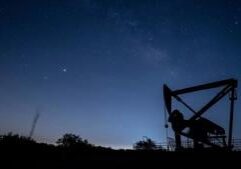
Energy production on federal lands and waters and in U.S. tribal areas generated $14.61 billion in government revenues in the 2025 fiscal year, according to the Department of the Interior’s Office of Natural Resources Revenue.
Revenues generated from royalties, rents, and bonuses paid by energy and mineral producers are disbursed to a wide range of initiatives and programs, including those that support public infrastructure, education, emergency services, conservation and reclamation projects and historic preservation.
The amount represents the fifth-largest disbursement since 1982, according to the Interior Department.
The revenues were down from $16.45 billion in the 2024 fiscal year and $18.24 billion in the 2023 fiscal year. In the 2022 fiscal year, revenues reached a record-high $21.53 billion, according to the department.
A decrease in this year’s disbursements was mostly due to a drop in commodity prices, according to the department.
Just over $5 billion was disbursed to the Treasury Department, $4.07 billion was allocated to 34 states and $2.98 billion went to the Bureau of Reclamation, which builds and operates dams, power plants, canals and other water resources in the western U.S. About $1.0 billion went to tribes and individual Native American minerals owners during the 2025 fiscal year.
New Mexico received $2.76 billion, the highest amount of royalties from energy production on federal lands within its borders.
It was followed by Wyoming at $544.87 million, Louisiana at $162.42 million, North Dakota at $114.95 million and Texas at $99.83 million.
The revenues disbursed to 33 federally recognized tribes and approximately 31,000 individual Native American mineral owners represent 100% of the revenues received from energy and mining activities on tribal lands in the 2025 fiscal year, according to the Interior Department.
Tribes use the revenues to fund infrastructure development, provide health care and education and support other community programs such as senior centers, public safety projects and youth initiatives, according to the department.






Chance Showers And Thunderstorms then Showers And Thunderstorms
Latest News Stories

Nine pharmaceutical companies agree to most-favored-nation pricing
Congress leaves for holidays after zero progress on federal funding

EXCLUSIVE: New House committee report highlights increasing terrorism threat in U.S.

Chicago aldermen pass revenue package, business groups express concern

DOJ posts thousands of Epstein documents to partially comply with law
DOJ lawsuit against Illinois draws support from election integrity advocates
Trump administration to dismantle federal climate center

Illinois quick hits: Federal funding for CTA still uncertain; fire risk for EVs

Feds sue IL for refusing to turn over full info on IL voters

WATCH: Detransitioner to providers: “Please just stop” gender surgeries on minors

Bears threaten move to Indiana after property tax break bill frustrations

Phoenix serial killer gets death penalty for six 2017 murders