Revenues from energy production at $14.6B for 2025
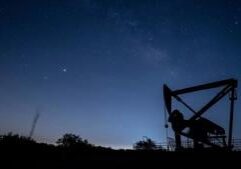
Energy production on federal lands and waters and in U.S. tribal areas generated $14.61 billion in government revenues in the 2025 fiscal year, according to the Department of the Interior’s Office of Natural Resources Revenue.
Revenues generated from royalties, rents, and bonuses paid by energy and mineral producers are disbursed to a wide range of initiatives and programs, including those that support public infrastructure, education, emergency services, conservation and reclamation projects and historic preservation.
The amount represents the fifth-largest disbursement since 1982, according to the Interior Department.
The revenues were down from $16.45 billion in the 2024 fiscal year and $18.24 billion in the 2023 fiscal year. In the 2022 fiscal year, revenues reached a record-high $21.53 billion, according to the department.
A decrease in this year’s disbursements was mostly due to a drop in commodity prices, according to the department.
Just over $5 billion was disbursed to the Treasury Department, $4.07 billion was allocated to 34 states and $2.98 billion went to the Bureau of Reclamation, which builds and operates dams, power plants, canals and other water resources in the western U.S. About $1.0 billion went to tribes and individual Native American minerals owners during the 2025 fiscal year.
New Mexico received $2.76 billion, the highest amount of royalties from energy production on federal lands within its borders.
It was followed by Wyoming at $544.87 million, Louisiana at $162.42 million, North Dakota at $114.95 million and Texas at $99.83 million.
The revenues disbursed to 33 federally recognized tribes and approximately 31,000 individual Native American mineral owners represent 100% of the revenues received from energy and mining activities on tribal lands in the 2025 fiscal year, according to the Interior Department.
Tribes use the revenues to fund infrastructure development, provide health care and education and support other community programs such as senior centers, public safety projects and youth initiatives, according to the department.





Areas Of Drizzle
Latest News Stories
House Oversight to examine Medicare fraud, Smithsonian, DEI policies

Judge delays merger between Paramount and Warner Bros.

Illinois news in brief: Ammons House investigation hearing set; IDOT requests public feedback; Duckworth reacts to service member’s death

Text messages aren’t ‘phone calls’ that can trigger class actions: Appeals panel
Darline Graham will file for full term succeeding brother Lindsey
Election 2026: Prisoners in historic release by Cooper consistent in pattern

Secretary of State says insurance reforms are not political
Details show Speaker delayed lawmaker misconduct action

Man suspected of using ‘incendiary device’ arrested outside NYC immigration court
Gubernatorial candidate calls for leadership overhaul, prison reforms

U.S. Supreme Court to hear Alaska plane confiscation case

Illinois news in brief: Chicago police review Illinois Accountability Commission report; Granite City man sentenced for transporting minor in sex assault case; Report finds Illinois’ AI careers rank 34th in nation