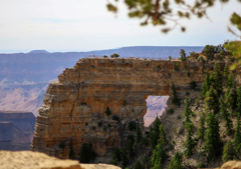
Mayor near Grand Canyon awaits impact of new tourism rule
A mayor in Arizona is taking a wait-and-see approach on how the Trump administration’s fee hike for international tourists will affect her small town near the Grand Canyon.
Last week, the Trump administration implemented new rules that raised prices for international travelers seeking to visit national parks. The new rule applies to the 11 most visited parks in America, including Grand Canyon National Park.
Starting in 2026, foreigners without an annual pass will need to pay $100 per person. An annual pass costs $80 for Americans and $250 for foreigners.
Secretary of the Interior Doug Burgum said the new policies “ensure that U.S. taxpayers, who already support the National Park System, continue to enjoy affordable access, while international visitors contribute their fair share to maintaining and improving our parks for future generations.”
Clarinda Vail, the mayor of Tusayan, told The Center Square that it is “unknown” how the new international tourism fee will affect the town, adding that Tusayan is “very concerned.” Tusayan, a town of around 600 people, is one mile south of the Grand Canyon’s South Rim, which is open year-round.
The new park fees raises many questions on its implementation, said Kati Schmidt, the communications director for the National Parks Conservation Association, noting there’s “a lot to unpack in this announcement.”
Schmidt told The Center Square that her organization will ask the Department of the Interior questions such as whether “fee collectors have to check every ID going into parks” and how parks will verify digital passes.
The new rule’s impact on Tusayan’s economy is unknown, Vail said. But the mayor added business owners in the small town are “very concerned.”
The National Park Service said in 2024 that visitors to the Grand Canyon spent $905 million. This spending generated $1.1 billion in economic output and employed nearly 9,000 people.
Vail said she would have liked to have seen the new rule implementation done with more process and public input.
She noted she’s concerned about the rule making lines back up for people trying to enter the park. She noted when the gate at the entryway at the Grand Canyon’s South Rim is not working correctly, cars can back up into Tusayan.
Vail added she wonders how park workers will be able to determine whether someone is a foreigner during the park’s busy times.
Tourists from around the world, including many from Canada and China, visit Grand Canyon National Park, she said.
“We don’t need any extra reasons for foreign travelers not to come see the Grand Canyon,” the mayor said. “I don’t want price to be a reason that anyone traveling to our country might skip any national park.”
Canadian visitors to Arizona this year have fallen between 20% and 30%, Arizona PBS reported.
Despite concerns that the rule changes will affect Tusayan’s economy, the new rule could raise $528 million annually for the federal government, The Center Square reported.
Property and Environment Research Center, a nonprofit research institute, said of the 325.5 million visitors to national parks in 2023, about 14 million were foreigners.
The Center Square contacted the National Park Service, but did not hear back before press time.

Mostly Sunny
Latest News Stories

Existing-home sales edge up in April as affordability improves
Accused correspondents’ dinner shooter pleads not guilty to all charges

Illinois Quick Hits: Diesel passes $6; unleaded price drops

U.S. Senate panel to examine fertilizer costs, food prices

Green Garden Solar Project Cleared to Implement Higher “Agrivoltaic” Standards

Everyday Economics: Stable but weak under the surface

Committee: Facilities Department Reports $92,000 in Energy Savings, Completes Veterans Assistance Commission Buildout

Lemont Pulls Away from Lincoln-Way West in 10-3 Non-Conference Defeat
Nebraska voters to elect party representatives

U.S. farmers struggling with high price of fuel, fertilizer as bankruptcies rise
Trump, Xi meeting to be packed with slew of hot topics
Manhattan District 114 Reviews Major Board Policy Overhaul