$3.5M verdict tossed; Judge shielded evidence of plaintiff’s dishonesty, crime
A state appeals panel voided a $3.5 million verdict awarded to a man who claimed he was hurt while working for Union Pacific because the court determined a Cook County judge wrongly blocked the railroad from telling jurors about the man’s prior conviction for a crime related to dishonesty.
Jeffrey Kozik Jr. sued UP in August 2019 over an incident from two years earlier. While working as a conductor, Kozik said a piece of concrete fell from a bridge and struck him in the head causing “severe, permanent and progressive physical and emotional injuries.”
Cook County Circuit Judge Robert Harris presided over a jury trial that ended with an award of $1 million for disability, $1.25 million for past and future pain and suffering, and $1.265 million for past and future wage loss.
Kozik was represented in the case and at trial by attorneys John P. Kujawski, Harlan Harla and John E. Sabo, of the firm of Kujawski & Associates, of O’Fallon.
The railroad sought a new trial. The company said it wasn’t allowed to present evidence of Kozik’s criminal history at trial, specifically a 2016 guilty plea for felony theft of property between $100,000 and $500,000 from a jewelry store where he worked at the time.
The Illinois First District Appellate Court agreed to consider the matter. Justice Margaret Stanton-McBride wrote the panel’s opinion, published Dec. 9; Justices Rena Van Tine and David Ellis concurred.
The heart of the debate, according to Stanton-McBride, is the fact Kozik earned a certificate of good conduct, a legal document attesting he was “fully rehabilitated” and calling for removal of “all statutory employment barriers.” He asked the state to issue the certificate in January 2024, before the trial began in April.
Prosecutors didn’t object to the request at a February 2024 hearing, during which “Kozik was accompanied by one of the same attorneys who also represented him in his suit against Union Pacific,” Stanton-McBride wrote.
After the trial, the railroad asked for a new trial, arguing Judge Harris was wrong to hold the certificate of good conduct prevented it from asking Kozik about the felony during the trial. Union Pacific argued the General Assembly had “made clear that certificates of good conduct are not intended, nor should they be used, to exclude otherwise relevant evidence to attack a witness’s credibility.”
Harris denied the request for a new trial, but the appeals panel saw the matter differently. They identified a conflict between the language of the state law addressing good conduct certificates and Illinois Supreme Court rules about the admissibility of evidence. Neither Kozik nor the railroad argued the rule language is ambiguous, but Kozik insisted the certificate qualifies as a “pardon, annulment, certificate of rehabilitation or other equivalent procedure” rendering his felony inadmissible in his personal injury trial.
Union Pacific disagreed, arguing such certificates are intended only to “relieve eligible offenders of certain employment, licensing, and housing barriers” and the panel noted no state court had considered Kozik’s argument.
Stanton-McBride said Kozik didn’t — and couldn’t — argue his certificate is similar or equal to a pardon or annulment, then explained the relevant state law makes clear such certificates are “not intended to nullify the conviction or consequences.” It also delineates what a certificate can’t do: “limit or prevent the introduction of evidence of a prior conviction for purposes of impeachment.” Convictions, she continued, may still be considered in judicial proceedings and certificates don’t “hide, alter or expunge the record.”
As to whether the certificate equates to a “certificate of rehabilitation,” the panel continued, Kozik doesn’t explain that position or identify any state procedure governing such certificates. They exist in other states, Stanton-McBride said, but those procedures aren’t equivalent to Illinois’ good conduct law.
In reviewing precedent from outside Illinois, the panel found the equivalency analysis distills to whether an administrative procedure focuses on restoration of civil rights or if there is a legitimate judgment of a criminal’s rehabilitation.
“Although the Illinois certificate of good conduct statute requires a finding that the applicant has been rehabilitated, that finding must be read in the context of the purpose of the statute and the available relief,” Stanton-McBride wrote. “When the trial court concluded that Kozik had been rehabilitated, it did so under the parameters of the certificate of good conduct statute. The trial court was not being asked to determine whether Kozik was completely rehabilitated for all purposes, including so that his conviction could not be used as impeachment in a judicial proceeding. To the contrary, the trial court was only asked to evaluate Kozik’s rehabilitation as it related to the purposes of the certificate of good conduct statute to relieve Kozik of employment and housing barriers.”
The panel also noted that, although brief, the record of the hearing resulting in Kozik’s certificate “suggests that Kozik misrepresented his motivations to the criminal court and that he was not seeking the certificate in line with the purposes of that statute, but instead to obtain a litigation advantage in his civil suit against Union Pacific.”
Finally, Kozik argued the appellate panel could affirm the trial verdict on any basis and suggested the potential value of the evidence having been admitted was “substantially outweighed by the danger of unfair prejudice.”
The panel disagreed, saying Kozik’s credibility was a fundamental issue and finding little risk of unfair prejudice. And although the felony might be 10 years old by the time a new trial begins, court rules allow evidence that would have been admissible at the original proceeding.
Kozik was represented on appeal by attorney Michael W. Rathsack, of Park Ridge.
Union Pacific was represented by attorneys J. Timothy Eaton, Jonathan B. Amarilio, and Adam W. Decker, of Taft Stettinius & Hollister, of Chicago, and by company in-house attorneys, Thomas A. Hayden and Patrick F. Russell, of Chicago.




Showers And Thunderstorms Likely
Latest News Stories
Will County’s “First-in-Nation” Veterans Center to House Workforce Services, Sparking Debate
Improved Vendor Service Creates $1.2 Million Shortfall in Sheriff’s Medical Budget
Will County Public Works Committee Unveils 25-Year Transportation Plan, Projects $258 Million Gap
Will County Animal Protection Services Seeks New Facility Amid “Gaping Wound” of Space Crisis
Board Confronts Animal Services Crowding, Explores Future Facility Options
Will County Board Members Demand Transparency in Cannabis Tax Fund Allocation
Homer Glenn Residents Push Back on 143rd Street Widening as Officials Signal “Tentative Agreement”
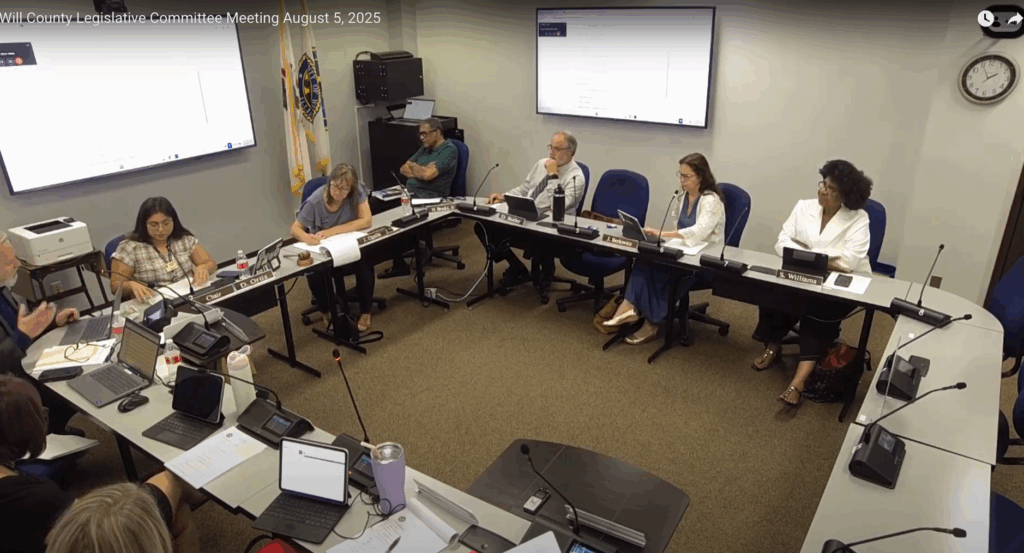
Will County Forges 2026 Federal Agenda Amid D.C. Policy Shifts, ‘Big Beautiful Bill’ Impacts
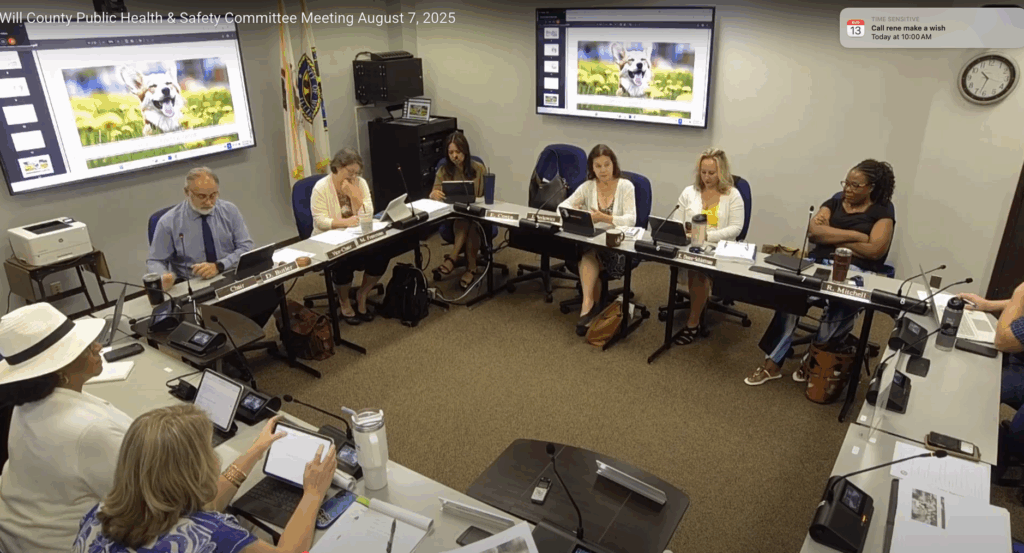
Health Department Seeks $1 Million Levy Increase to Prevent “Weakened System”
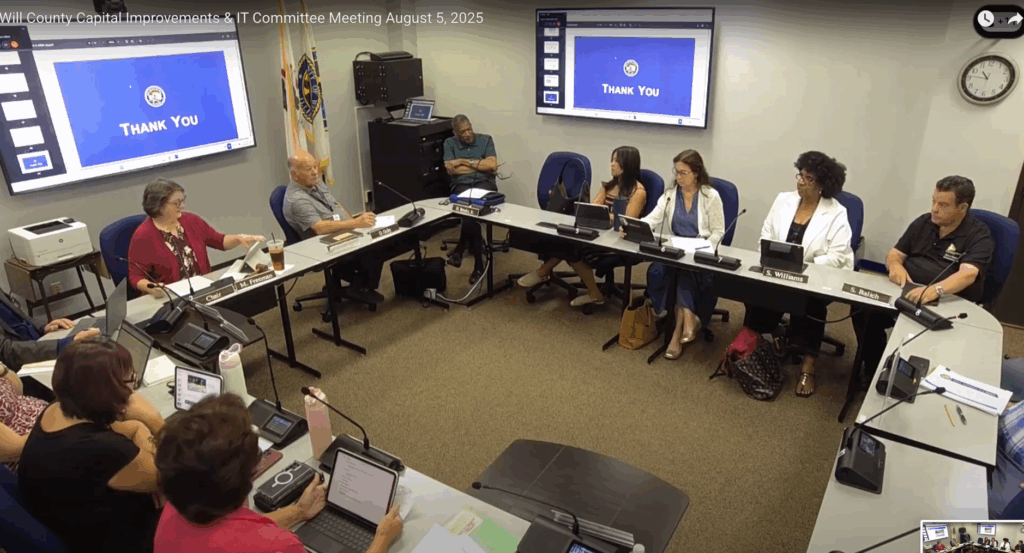
County Rolls Out New “OneMeeting” Software to Improve Public Access

Meeting Summary and Briefs: Will County Board Finance Committee for August 5, 2025
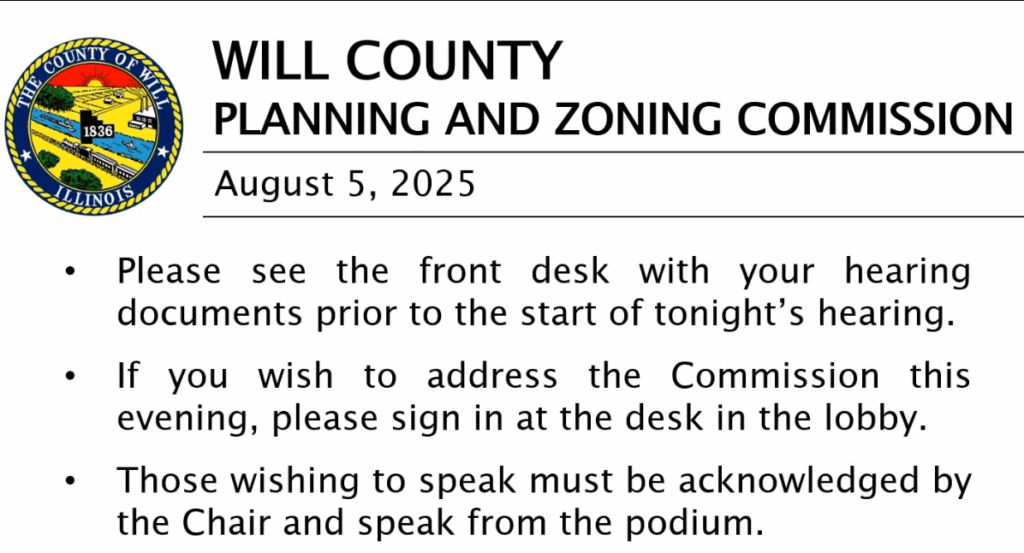
Will County PZC Approves Rezoning for Truck Repair Facility on Manhattan Road Amid Resident Concerns
Key Stretch of Bell Road on Track for Thanksgiving Reopening, Committee Approves Additional Funds