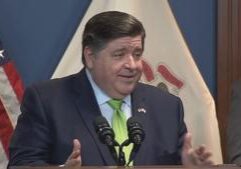
Feds sue IL for refusing to turn over full info on IL voters
The Justice Department has asked a federal judge to force Illinois state election officials to turn over full copies of the state’s list of registered voters.
The Justice Department under the administration of President Donald Trump filed suit on Dec. 18 against the Illinois State Board of Elections in the U.S. District Court for the Central District of Illinois.
The lawsuit makes Illinois’ election agency the latest in a growing list of state election authorities accused in court by the federal government of refusing to comply with federal requests for access to the states’ voter rolls.
In all, 21 states and the District of Columbia have been sued so far this year by the Trump administration, which has said it is seeking to review the voter rolls to determine if state election authorities are living up to their obligations under federal law to properly inspect and maintain its roster of eligible voters and remove those who have died, moved out of state or may otherwise be ineligible to vote.
This time, the Justice Department announced Illinois was one of three states – also including Wisconsin and Georgia – and D.C. hit with such legal actions.
The Justice Department said 10 states have come into “full compliance” with the federal demands. Most recently, the states of Louisiana, Mississippi and Tennesse have complied with the federal demands, the Justice Department said.
“The law is clear: states need to give us this information, so we can do our duty to protect American citizens from vote dilution,” said Assistant Attorney General Harmeet K. Dhillon of the Justice Department’s Civil Rights Division in a prepared statement announcing the lawsuits against Illinois and the other three jurisdictions.
“Today’s filings show that regardless of which party is in charge of a particular state, the Department of Justice will firmly stand on the side of election integrity and transparency.”
The lawsuit against Illinois accuses Illinois state election officials of allegedly improperly attempting to use privacy laws to shield federal officials from fully inspecting the state’s voter rolls.
According to the complaint, the Justice Department first delivered its requests for Illinois voter rolls to state election authorities in July.
However, in the months since, the complaint said Illinois officials have pushed back on the request, supplying federal officials only with a redacted list, containing only voters’ names, addresses and age.
The Justice Department said federal law requires the state to produce a list that also includes more specific individual identifying information, including driver’s license numbers, the last four digits of their Social Security numbers and date of birth.
The state has refused to turn over that information.
The Justice Department said this refusal violates federal law, including the Civil Rights Act, which requires state election authorities to retain and preserve records from federal elections and to turn over that information upon request from the U.S. Attorney General, who heads the Justice Department.
The federal lawsuit marks the opening of another front in a legal fight with Illinois election officials over its duties under federal law to properly maintain voter rolls and ensure only eligible citizens are issued ballots, particularly in elections for Congress and other federal offices.
Earlier this fall, a Chicago federal judge refused to dismiss a lawsuit lodged by conservative Illinois groups to force Illinois election officials to move more swiftly in removing voters who have died and other ineligible voters from the state’s voter rolls.
That lawsuit was initially filed in 2024 in partnership with national conservative activist organization Judicial Watch.
In that lawsuit, Judicial Watch and its co-plaintiffs claimed they had learned of “possible deceased registrants voting and requesting mail ballots in the 2020 and 2016 general elections,” among other incidents.
At the same time, Illinois also faces an important test before the U.S. Supreme Court over the state’s controversial mail-in balloting system. There, the high court has taken up the appeal by U.S. Rep. Mike Bost, R-Jackson County.
Bost and other Republicans are suing the state, claiming the state illegally and unconstitutionally requires county clerks and other election authorities to count all mail-in ballots received up to two weeks after Election Day.
Bost is specifically asking the Supreme Court to reverse the decisions of lower courts that he lacked the ability to challenge the law in court at all.
The Supreme Court heard arguments in the case in October. Justices have not yet ruled in that case.
However, in November, the Supreme Court also decided to take up a similar case out of Mississippi, in which justices may ultimately decide the fate of such late mail-in ballot deadlines. Mississippi allows up to five days after Election Day to receive and count late arriving ballots.
That case could decide the outcome of Bost’s lawsuit against Illinois, as well.
The Mississippi case has not yet been argued before the high court.
.





Sunny
Latest News Stories

Missouri year in review: capital gains eliminated, Medicaid increased
2025 in review: Historic border security actions taken by Trump

Free speech under fire nearly 300 times in 2025 on campus

IL rep: As if Bears ‘had a plan to rob the bank’ before considering Indiana
Lincoln-Way High Schools Maintain Top State Rankings; EL Progress Jumps
Undersheriff Brian Conser Retires After 29 Years of Service

Officials warn against limits on loans for nursing students
FBI to scrap $5 billion move, Patel says
AGs say ‘As You Sow’ may violate antitrust laws with anti-fossil fuel alliance
Manhattan-Elwood Library Board Authorizes Steps to Sell Extra Lot

Storm hits California over Christmas; flood watch continues

IL dyslexia screening takes effect Jan. 1, drawing reading instruction debate