Supreme Court blocks National Guard deployment to Chicago
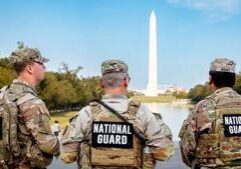
(The Center Square) – The U.S. Supreme Court ruled Tuesday that President Donald Trump can’t use National Guard troops in Chicago to help federal immigration enforcement, in another blow to the president’s push for federalization nationwide.
The justices turned down the administration’s emergency request to overturn a ruling by U.S. District Judge April Perry that had temporarily blocked the deployment of troops. The Supreme Court took more than two months to act on the emergency request.
“At this preliminary stage, the Government has failed to identify a source of authority that would allow the military to execute the laws in Illinois,” the majority wrote in an order.
Conservative Justices Samuel Alito, Clarence Thomas and Neil Gorsuch dissented from the majority.
The move leaves in place Perry’s temporary order barring the deployment amid the legal challenge.
Illinois Gov. J.B. Pritzker praised the decision.
“Today is a big win for Illinois and American democracy. I am glad the Supreme Court has ruled that Donald Trump did not have the authority to deploy the federalized guard in Illinois,” the governor said in a statement. “This is an important step in curbing the Trump administration’s consistent abuse of power and slowing Trump’s march toward authoritarianism.”
Pritzker, a Democrat with political ambitions, condemned Trump’s push to enforce immigration laws.
“American cities, suburbs, and communities should not have to face masked federal agents asking for their papers, judging them for how they look or sound, and living in fear that President can deploy the military to their streets,” he said. “The brave men and women of our National Guard should never be used for political theater and deserve to be with their families and communities, especially during the holidays, and ready to serve overseas or at home when called upon during times of immense need.”
Illinois Attorney General Kwame Raoul said America’s founders never intended for federal troops to be used in U.S. cities.
“Nearly 250 years ago, the framers of our nation’s Constitution carefully divided responsibility over the country’s militia, today’s U.S. National Guard, between the federal government and the states – believing it impossible that a president would use one state’s militia against another state,” Raoul said in a statement. “The extremely limited circumstances under which the federal government can call up the militia over a state’s objection do not exist in Illinois, and I am pleased that the streets of Illinois will remain free of armed National Guard members as our litigation continues in the courts.”
In October, President Donald Trump ordered the National Guard to the streets of Illinois to assist in protecting federal personnel and property while enforcing immigration law.
Trump also sent the National Guard to Los Angeles, Washington D.C., and other U.S. cities. Local and state officials challenged those deployments.
“While we welcome this ruling, we also are clear-eyed that the Trump Administration’s pursuit for unchecked power is continuing across the country,” Pritzker said. “Illinois will remain vigilant, defend the rights of our people, and stand up to further abuses of authority by Donald Trump and his cronies.”
The ruling might not slow the Trump administration.
Also on Tuesday, the Pentagon confirmed the Secretary of War called up to 350 Louisiana National Guard members to support federal law enforcement partners in New Orleans and other metropolitan areas in Louisiana.





Partly Sunny then Chance Showers And Thunderstorms
Latest News Stories

Democratic senators under fire explain why they supported GOP bill to end shutdown
Giannoulias ramps up campaign for state regulation of auto premiums
Illinois quick hits: Illinois U.S. senators split on shutdown vote

Meeting Summary and Briefs: Joliet Junior College Board of Trustees for October 2025
Will County Saves Nearly $5.74 Million in Bond Refinancing, Explores Future Borrowing Options

Will County Board Advances New Speed Limits in Green Garden and Frankfort Townships
New Lenox Garage Variance Denied After Neighbor Cites ‘Massive’ Scale and Neighborhood Impact

Library Board Adopts New Cell Phone Stipend Policy for Employees
Manhattan Announces Proposed 6% Property Tax Levy Increase
JJC Celebrates “Future Wolves” Partnerships with Joliet and Troy School Districts
State Veto Session Passes Energy Bill Limiting County Zoning, Approves Toll Hike for Mass Transit
Commission Approves Peotone-Area Farmhouse Split, Overruling Staff’s “Spot Zoning” Concerns
Will County Finance Committee Hits Impasse on 2025 Tax Levy, Postpones Budget Votes

Manhattan Park Board Tables Decision on Site Plan for Potential Development