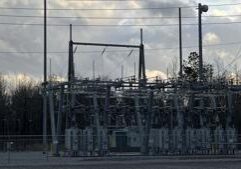
U.S. House advances GOP-backed energy reliability bill
Legislation looking to lower energy prices nationally successfully passed the U.S. House on a slightly bipartisan vote.
H.R. 3628, titled the “State Planning for Reliability and Affordability Act,” was introduced earlier this year by U.S. Rep. Gabe Evans, R-Colorado.
The bill would direct certain state authorities that oversee electric utilities to place a greater emphasis on long-term electric reliability. It would do so by amending the Public Utility Regulatory Policies Act of 1978.
Evans applauded its passage and called out Democrats, specifically in Colorado.
“For years Colorado’s ruling Democrats have pushed out-of-touch policies and burdensome regulations that have led to skyrocketing energy bills and increased financial strain, resulting in further mental and physical stress on hard-working families across the state,” he said.
The bill has not yet been taken up by the U.S. Senate.
Republicans have majorities in both the House and Senate, but would need seven Democratic votes in the Senate to prevent a filibuster. Under those circumstances, the Republicans’ bill appears to have a slim chance of passing. According to one prediction, it has a 34% chance of being enacted.
During the vote in the U.S. House, four Democrats did cross the aisle to vote for the bill. Two of those were California representatives, one from Texas, and one from Washington. One Republican from Nevada, U.S. Rep. Mark Amodei, voted against its passage.
The bill ensures states prioritize “reliable generation facilities” in their 10-year energy plan periods. This comes as more and more states, like Colorado, move away from coal-fueled power plants toward other sources that are considered “clean energy.”
Some policymakers and special interest groups remain skeptical of the move away from coal, and even the state acknowledges its role in energy production.
In 2023, the U.S. Energy Information Administration reported that coal-fired power plants accounted for 32% of Colorado’s total in-state energy generation.
While down significantly from 68% in 2010, that is still a notable portion of the state’s energy generation.
Additionally, a 2022 report from the U.S. Energy Information Administration found that, between coal, petroleum and natural gas, coal produced the least amount of the state’s carbon dioxide emissions.
The report found that almost all of coal’s emissions were due to the electric power sector, while petroleum’s was from transportation, and natural gas was almost evenly distributed throughout the sectors, including electric power.
Evans, who has been labeled by Democrats as “anti-clean energy,” argued his legislation is a necessary step to prioritize reliability and affordability.
He points to rising energy costs, both in Colorado and nationally. According to polling, Coloradans report a 24% increase in electricity costs since 2021. Just in the past year, 64% of Americans say their power bills have risen.
“This legislation puts Coloradans first by holding state regulatory entities like Colorado Public Utilities Commission accountable by new federal standards, to ensure they are focused on considering energy reliability and affordability,” Evans said. “I’m proud to lead the charge on legislation that lowers costs, uplifts working-class Americans, and strengthens our nation’s energy dominance.”





Chance Rain Showers
Latest News Stories

Trump admin investigates five medical schools over DEI

Ethics complaint alleges District 214 used tax dollars for poll polling

Lawyer: Billionaire tax could cost California $1 trillion

Hegseth defends Trump’s request for $67B to fund Iran conflict

Official: Agreement could come soon on Colorado River
Trump gives boost to Lebanese relations; puts squeeze on Iran in the process

Illinois news in brief: State police use grant money to recover 342 stolen vehicles; State launches Blue Envelope program; Treasurer: State returned $307.8 million in I-CASH
Biden recordings case could head to U.S. Supreme Court
Pritzker touts climate, green energy record as capacity leaves, rates rise
Warren will campaign this weekend for El-Sayed in Michigan

Trump hits Canada with new tariffs Congress may be powerless to stop
Abbott directs healthcare, regulatory agencies to target birth tourism in Texas

Fugitive accused in $547 million Medicare fraud scheme captured