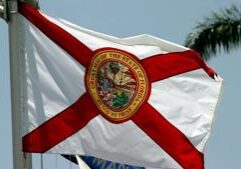
Florida’s minimum wage rising to $15 in 2026
Florida’s minimum wage will rise to $15 an hour in 2026 as the result of a constitutional amendment approved by voters in 2020.
Florida’s current minimum wage is $14 an hour. The increase will go into effect on Sept. 30 and will be the state’s last scheduled minimum wage increase.
The pay was $8.56 an hour when voters agreed to allow an annual $1 increase until it hits $15. In the future, the state Agency for Workforce Innovation will be tasked with adjusting the minimum wage rate for inflation.
The Florida Restaurant and Lodging Association had opposed the increase and warned that businesses would likely raise prices to offset the new wage costs. The organization cited a 2019 Congressional Budget Office report that said while incomes would rise, hundreds of thousands of jobs would be lost if the federal minimum wage of $7.25 an hour was increased to $15 by 2025.
Business leaders who supported increasing Florida’s minimum wage argued it would reduce employment turnover, saving them additional hiring and training costs and increasing productivity.
The state has seen employment rise in many counties year-over-year since the wage increase was approved, according to the Bureau of Labor Statistics. While prices have also risen, they are part of the nationwide trend of inflation, making it unclear whether the incremental wage increase is a contributing factor.
Research indicates that for every 10% increase in the minimum wage, consumer prices rise 0.3%, according to the Upjohn Institute for Employment Research.
Florida is on the higher end of the minimum wage pay scale. Only 11 states have a rate of $15 or higher. Twenty states still use the federal minimum wage of $7.25.
It’s estimated that an adult with no children or spouse to support would need to earn $23.41 an hour to make a living wage in Florida, according to the Massachusetts Institute of Technology’s Living Wage Calculator. The same person with a child or spouse would need to earn $37.98 an hour to make a living wage.
Nearly 20 other states are increasing their minimum wage in the new year.
Some have implemented incremental wage increases, including Alaska, Hawaii, Michigan, Missouri and Nebraska.
Others have an indexed minimum wage that automatically adjusts based on certain economic factors.
Ohio’s minimum wage has automatically increased since 2006, when voters approved a constitutional amendment to tie it to inflation.






Mostly Sunny
Latest News Stories
State Legislative Update: Housing Mandates, Mega Projects, and Data Centers Prompt Local Control Concerns

Data center regs proposed as $20 billion, 795-acre Joliet project advances

Labor stats offer mixed bag for Illinois

Lawsuit: IL state VRA unconstitutionally lets Dems divide voters by race

Illinois Quick Hits: State grants offered to tackle ‘challenging’ properties

Officers mourn fallen Chicago cop as policy debate grows
Trump accuses Schumer of election ‘interference’ with New York task force

Poll site gun ban proposal draws pushback

Trump confirms gas tax suspension push as prices hit $4.52

Trump says Iranian ceasefire on ‘life support’
Meeting Summary and Briefs: Will County Board Finance Committee for May 5, 2026
Committee Advances Nearly $212,000 in Road and Facility Contracts for Jackson Township and Monee