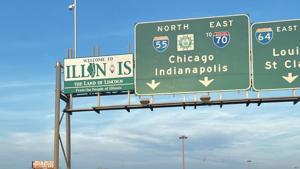
Lawsuit: Illinois Dems can’t use state law to control the name ‘democrat’
A group of Illinois Democrats who disagree with the power structure of their party on how to address transgender civil rights law and policies have sued the state of Illinois, accusing state Democratic officials of trampling their rights by enforcing and defending a state law that denies anyone the ability to call themselves “Democrats” unless they first get permission from the leaders of the Illinois Democratic Party.
On Jan. 27, the group calling themselves Democrats for an Informed Approach to Gender filed suit in Chicago federal court.
The lawsuit was filed nominally against Illinois Secretary of State Alexi Giannoulias.
However, the lawsuit seeks a court order declaring a state law, identified as the “Party Name Provision,” embedded in the state’s election codes, which blocks nonprofit organizations from “using words associated with established political parties — like the words ‘democrat’ and ‘republican’ — unless the established party consents.”
According to the complaint, Giannoulias’ office cited that Party Name Provision when the Secretary of State’s office “rejected DIAG’s application to conduct affairs” and to solicit donations in Illinois under its name, “unless it seeks and gains the Democratic Party’s permission.”
In the court filing, DIAG describes itself as a California—based nonprofit organization “comprising ‘Democrats, or now politically homeless former Democrats,’ who believe that ‘over the past 10 years, under the guise of kindness, gender ideology has hijacked the gay rights movement, falsely fashioned itself into the civil rights issue of our time, and led our party wildly astray.'”
The group says it seeks to “end ideology—driven medicine and sex—denialiasm,” “advocate for those harmed by the regressive ‘gender’ movement,” and “support the protection of female—only spaces, sports, honors, and opportunities,” among other goals related to addressing what the group describes as the excesses of the so—called transgender civil rights movement.
According to the group, it has been able thus far to gain the right to collect donations in 37 other states.
However, in Illinois, the DIAG said it is prevented from supporting its mission by the state law they say is an unconstitutional violation of their First Amendment speech and association rights.
In the complaint, the DIAG argues the Party Name Provision is uniquely unconstitutional because it amounts to a “content—based speech restriction that singles out specific subjects — and even specific terms — for differential treatment.”
The DIAG is represented in the case by attorneys with the First Amendment legal advocacy group, the Foundation for Individual Rights and Expression (FIRE).
In a release announcing the lawsuit, FIRE said such “content—based speech restrictions” are only constitutionally permitted if they satisfy a “compelling government interest” and are “the least restrictive way to achieve” that interest.
In this case, FIRE said the law only serves the interests of the Democratic Party and other “entrenched political parties.”
“Illinois can’t get around the First Amendment by outsourcing censorship to party bosses,” said FIRE attorney Daniel Zahn in a statement announcing the lawsuit. “No American — Republican, Democrat, or independent — should have to bend the knee before a political party to participate in the political system.”
The state has not yet responded to the lawsuit in court.






Chance Showers And Thunderstorms then Showers And Thunderstorms
Latest News Stories

WATCH: Commission makes ICE accountability referral; Rep says Pritzker wrong on prices

Illinois quick hits: DOJ sues over voters lists; CTA security surge

Trump administration pauses visa program after Brown U shooting suspect found dead

Meeting Summary and Briefs: Will County Committee of the Whole for Dec. 2025

JJC Board Approves 2025 Tax Levy and Bond Abatement

BREAKING: Milwaukee judge guilty of felony obstruction during ICE arrest

GOP opposes California tuition aid for Illegal Immigrants
Texas reps launch new Sharia Caucus
Legislator demands DCFS set record straight on child welfare interns

Illinois energy costs expected to increase as Pritzker considers bill
Plaintiff in redistricting lawsuit predicts Supreme Court fight

Texas leaders propose solution for northern border, national security