Food companies push back on Pennsylvania bills to ban certain food products
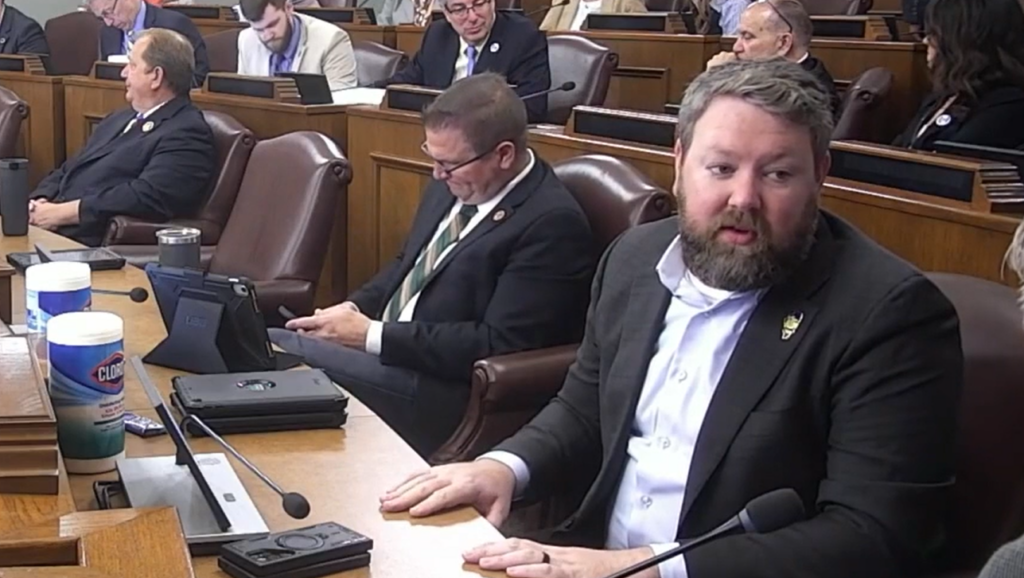
Representatives of the American Beverage Association said Tuesday the proposed bans for artificial ingredients in Pennsylvania are unnecessary and advocated for a national FDA-approved standard for processed foods instead of state-by-state restrictions.
Ed Patru, senior vice president of Public Affairs at American Beverage, argued that the policies currently in place already take into account consumers’ health and that the suggested restrictions would create more financial issues than healthier outcomes.
“The disagreement starts when policymakers push mandates and bans on commonly used ingredients that are proven safe,” Patru said. “Ingredient bans impose costs on businesses, limit consumer choice and ultimately drive up grocery prices.”
Several bills have been filed in Pennsylvania that would ban certain types of food and beverages from being purchased with SNAP benefits, restrict the use of certain additives such as BHA, certain dyes, and others.
Dr. Lyle Burgoon, president and CEO of Raptor Farm & Tox Ltd., argued that the ingredients in question to be banned are some of the most well studied and safe. He also said that the studies about these artificial ingredients have been dramatized to scare consumers.
“These are studies that are extremely high doses where they’re looking for toxicity. That’s why they treat at such high doses,” Burgoon said. “What they’re trying to do is they’re trying to see some kind of big response. But again, it’s not actually happening in humans.”
Alex Baloga, president and CEO of Pennsylvania Food Merchant Association, was more worried about the packaging legislation. He argued that the reformulation of products and redesigning packaging for the mandatory labels will ultimately result in higher costs for businesses and consumers.
“We would rather see discussion, robust discussion, which I think is taking place around these issues, that takes into account consumer safety, product safety, but also, ultimately, the cost on consumers that could be passed down if some of these processes and policies are implemented,” Baloga said.
Patru stated that consumers want transparency and clarity regarding the food they purchase and thus would be more interested in a national food legislation approved by the FDA.
“What’s approved in one state is not approved in another. It doesn’t create clarity for consumers, and it burdens businesses. And so I think if you ask most Americans, the vast majority of consumers would prefer to have this national standard,” Patru said.
Baloga emphasized the issue with the bill is how the required changes will be a financial burden to consumers as much as businesses.
“Higher costs incurred by manufactures to reformulate products and redesign them will ultimately result in higher costs for retailers who are buying those products from wholesalers … and then ultimately for the consumers. And so, business can’t absorb the cost that would be associated to alter these products. … With 1-2% profit margin businesses, we’re already doing everything in our power to keep prices low for consumers.”






Partly Cloudy
Latest News Stories

Trump hits 60 nations with forced-labor tariffs

Illinois news in brief: Year-over-year unemployment rates rise; Judge gives Rockford woman six months for stealing from booster club; Chicago Fed’s National Activity index rises
Voters say economy rigged for wealthy as Trump earns low marks

Parents challenge special ed regulation for private schools, seek SCOTUS review

Trump: Data center boom will lower Americans’ energy costs

Election 2026: Third day of filing for Graham’s seat remains quiet

White House has extra asks for stalled federal highway bill

Carolina, Virginia Tech chosen for fellowship program by War Department

Future regional power supply down, but not out

Exclusive: USDA distributing loans to Oregon, Nevada sawmills to expand timber production

Lawsuit claims digital asset tax is unconstitutional

Minnesotan will spend life in prison for deaths of House speaker, husband