Graham blocks govt. funding vote over policy demands as deadline looms
With only hours before the federal government runs out of money, tensions are rising in the U.S. Senate as a handful of Republicans block a vote on federal funding bills over policy demands.
Supported by Sen. Eric Schmitt, R-Mo., Sen. Lindsey Graham, R-S.C., has placed a hold on the vote to advance the remaining funding legislation for fiscal year 2026.
As of Friday afternoon, Graham refused to lift the hold unless he was guaranteed a vote in the near future on legislation prohibiting sanctuary cities.
He also demanded a vote on an amendment to the Homeland Security bill that would prohibit the federal government in most circumstances from collecting Americans’ metadata without their knowledge, as well as allow both senators and private individuals to sue the federal government if it does so.
“I’m asking for two simple things: give me a chance to express myself on what the solution to our problems of immigration are – I’m not asking for an outcome, [just] for a vote,” Graham told lawmakers Friday. “And as to Arctic Frost, I want to have a chance to have a vote on a version that would expand private cause of actions for non-members of Congress who may have a claim against Jack Smith.”
Some of Graham’s colleagues have rebuked his actions, with Sen. Thom Tillis, R-N.C., urging him not to shut down the government “to make a point.”
“The reason why we’re not moving forward today doesn’t have anything to do with the Democrats. It has to do with a handful of Republicans who are refusing to let us move forward,” Tillis said. “We’re going to shut down the government because some Republicans refuse to take the win, refuse to take a negotiated agreement that the president agrees with.”
Senate leaders from both parties struck a funding deal Thursday – which President Donald Trump supported – and had planned to vote that evening.
Under the agreement, the Senate split off the Homeland Security funding bill from the six-bill appropriations package and planned to pass the remaining five, sending them to Trump’s desk.
Lawmakers would then redraft the Homeland Security bill to include Democrats’ demands — bans on mask-wearing and roving patrols, body-worn camera requirements, and warrant rule changes, among other things.
But since restructuring and passing that bill could take weeks, senators will also pass a short-term Continuing Resolution to keep Homeland Security funding on cruise control in the meantime.
The House must approve the CR, however, and it will not return until after Jan. 30, meaning funding for some agencies covered under the Homeland Security bill will lapse.
While a weekend-long partial shutdown would have little negative impact, many Republican congressmen have expressed opposition to severing the House-passed Homeland Security bill and tailoring it to Democrats’ wishes.
“[Senate Minority Leader] Chuck Schumer’s current demands, compounded by a lack of Conservative priorities, are an absolute non-starter,” Rep. Mark Harris, R-N.C., said.





Mostly Cloudy then Chance Showers And Thunderstorms
Latest News Stories
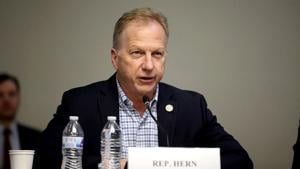
Hern projected to win Oklahoma GOP Senate primary
Pan criticizes Kiley as California congressional race heats up

U.S. Department of Justice investigates Newsom’s associates
Advocates say price transparency alone won’t fix healthcare prices

Social media platforms challenge Chicago tax; Pritzker confident in statewide plan

Feds move education programs to other agencies
Feds name five individuals charged in UFC terror plot
Central Ohio man linked to foiled terror plot at White House UFC event
WATCH: Senate panel OKs limits on protests near worship
New Bears bill introduced for Arlington Heights

Chicago pushes $21M home-purchase program, state expands its own
Illinois Quick Hits: Justice Department moves against Evanston reparations program