Lawmaker, officer: ‘Blue Envelope” could help navigate autism during stops
(The Center Square) – An Illinois lawmaker who also serves in law enforcement says proposed legislation creating a “Blue Envelope” program for autistic drivers could improve communication during traffic stops, though questions remain about training and implementation.
State Rep. Dennis Tipsword, R-Metamora, said the proposal appears to be a positive step in helping officers recognize potential communication challenges during encounters with individuals on the autism spectrum.
“You know, it’s really a case-by-case basis,” Tipsword told The Center Square. “It depends on the severity of the autism with the person you’re interacting with. Sometimes it’s perfectly workable and there’s really no issues. But sometimes it can be difficult just in the communication aspect.”
The legislation would direct the Illinois Secretary of State’s office to create and distribute blue envelopes that drivers with autism could voluntarily use to store required vehicle documents. The envelope would serve as a visual cue to officers that the driver may have communication challenges.
At first glance, Tipsword said he has few concerns.
“I think I understand where the sponsor is going with this legislation,” he said. “And at face value, what I see so far is I don’t have a lot of reservations with it.”
The sponsor of House Bill 4472, state Rep. Michelle Mussman, D-Schaumburg, did not immediately reply to The Center Square’s request for comment.
The program would be voluntary, which Tipsword said is an important feature.
“There will be some learning curve to this,” he said. “To get all of law enforcement on board with what the blue envelope means and how to use it.”
He added that officers may not encounter the envelopes frequently.
“If it’s voluntary, even fewer would use it,” Tipsword said. “So we may not see many of these blue envelopes out there.”
Tipsword was asked whether reaching for the envelope during a traffic stop could create a difficult situation for either the driver or the officer. He noted that alternatives, such as vehicle stickers, also present concerns.
“If I’m openly showing this sticker, could that potentially make me a victim in some way?” Tipsword said. “We have to think about that aspect, too.”
Tipsword said he has not personally encountered an autistic driver during a traffic stop, but acknowledged such situations are possible.
“Depending on where on the spectrum a person may be, they very well could be driving and functioning in society,” he said. “Every situation would be a one-off. You just never know how that is going to go.”
He said further discussion with subject-matter experts will be key as the bill moves forward.


Chance Showers And Thunderstorms
Latest News Stories
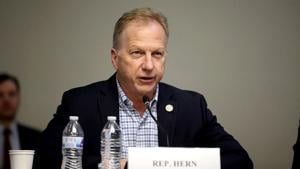
Hern projected to win Oklahoma GOP Senate primary
Pan criticizes Kiley as California congressional race heats up
U.S. Department of Justice investigates Newsom’s associates
Advocates say price transparency alone won’t fix healthcare prices
Social media platforms challenge Chicago tax; Pritzker confident in statewide plan
Feds move education programs to other agencies
Feds name five individuals charged in UFC terror plot
Central Ohio man linked to foiled terror plot at White House UFC event
WATCH: Senate panel OKs limits on protests near worship
New Bears bill introduced for Arlington Heights

Chicago pushes $21M home-purchase program, state expands its own
Illinois Quick Hits: Justice Department moves against Evanston reparations program