Legislative Committee: Lobbyists Report on Federal Shutdown and Legislative Outlook
Legislative Committee Meeting | February 3, 2026
Article Summary: Federal lobbyists provided the Legislative Committee with an update on the partial government shutdown and the status of appropriations bills. While critical departments like Transportation and HUD are currently closed, lobbyists expressed optimism that a resolution would be signed shortly to reopen the government.
Legislative Update Key Points:
-
Partial Shutdown: Departments including Transportation, HUD, and Health and Human Services have been closed since Saturday due to a lapse in funding.
-
Funding Split: The Senate split the funding package, separating the Department of Homeland Security (DHS) bill from five other appropriations bills to facilitate passage.
-
Immediate Outlook: The House is expected to vote on the five-bill package today, with President Trump agreeing to sign it immediately to reopen the affected agencies.
-
Homeland Security: DHS will receive a two-week continuing resolution (CR) to allow time for further negotiations on border policies and enforcement.
The Will County Legislative Committee received a timely update on the chaotic situation in Washington, D.C., during its meeting on Tuesday, February 3, 2026. Chris Pratt and Brett from the lobbying firm Smith Dawson & Andrews (now Smith Garson) briefed the committee on the partial government shutdown that began over the weekend.
Pratt explained that the shutdown affects key agencies relevant to the county, including the Department of Transportation and Housing and Urban Development (HUD). The impasse arose largely over the Department of Homeland Security (DHS) funding bill, following political fallout from a recent tragedy in Minneapolis.
To break the deadlock, the Senate moved to separate the DHS bill from the rest of the funding package. “The Senate passed that bill last week and today the House is working on that bill,” Pratt reported. He indicated that the House was expected to vote within the hour on a package that would fully fund five major appropriations bills through the end of the fiscal year on September 30.
The DHS funding, however, remains a sticking point. Under the current plan, DHS will operate under a two-week continuing resolution while Congress negotiates contentious policy issues related to ICE enforcement and personnel.
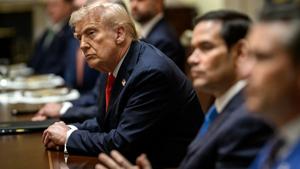
“Once this bill passes, President Trump has agreed to sign it immediately, which will reopen the government,” Pratt assured the committee.
Lobbyist Brett added that despite the shutdown, work continues on other legislative fronts important to Will County, including the Water Resources Development Act (WRDA) and earmark requests for fiscal year 2027. He also noted ongoing geopolitical discussions regarding trade and tariffs, specifically mentioning a new trade framework with India, though details remain sparse.
When asked about the impact on federal employees, the lobbyists confirmed that while pay is halted during the shutdown, back pay is typically guaranteed once funding is restored. “I don’t think we’re going to see much of an impact from this shutdown because it’ll ultimately really be like a day and a half,” Brett concluded.

Partly Sunny
Latest News Stories

Illinois tax proposals dampen decline in small business uncertainty index

JJC Board Approves Grundy County Land Purchase Amid Heated Debate

‘Trouble in Toyland’ report sounds alarm on AI toys
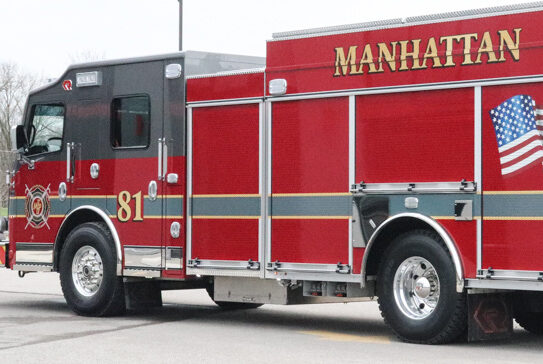
Manhattan Fire District Approves Final Bid for New Station Landscaping
Manhattan Township Officials Question Solar Farm Tax Revenue Estimates
Support Staff Urge Lincoln-Way 210 Board for ‘Fair Contract’ During Public Comment

When was the first Thanksgiving? It’s actually up for debate

Spirit of Thanksgiving in Galveston: Resilience, rebirth, renewal out of rubble

Feds criticized for excluding health care from student loan caps

Two National Guard members shot near White House
Trump election interference case in Georgia dismissed

New park fee for foreign tourists could generate hundreds of millions