
Harris Drive Residents Plead for County Intervention Amid Failing Septic Systems and Flooding
Public Health & Safety Committee Meeting | March 5, 2026
Article Summary: Residents of Harris Drive appealed to the Public Health and Safety Committee for help with severe seasonal flooding that is disabling septic systems and causing plumbing backups. The county is conducting dye testing to assess health hazards as officials debate how to fund remediation projects estimated to cost upward of $3 million.
Harris Drive Flooding Key Points:
-
Excessive runoff water and seasonal high groundwater are causing aging septic fields on Harris Drive to fail, leaving residents unable to use their household plumbing for days at a time.
-
The Will County Health Department is currently conducting on-site dye tests at up to six cooperating homes to determine if raw sewage is surfacing into the floodwaters.
-
Remediation alternatives developed by the Stormwater Committee range from installing better storm drains to demolishing six homes to create water retention areas, with costs estimated between $2 million and $3 million.
-
County Board members are elevating the issue to state and federal lobbyists to seek emergency grants, as local budgets cannot cover the multi-million-dollar infrastructure fix.
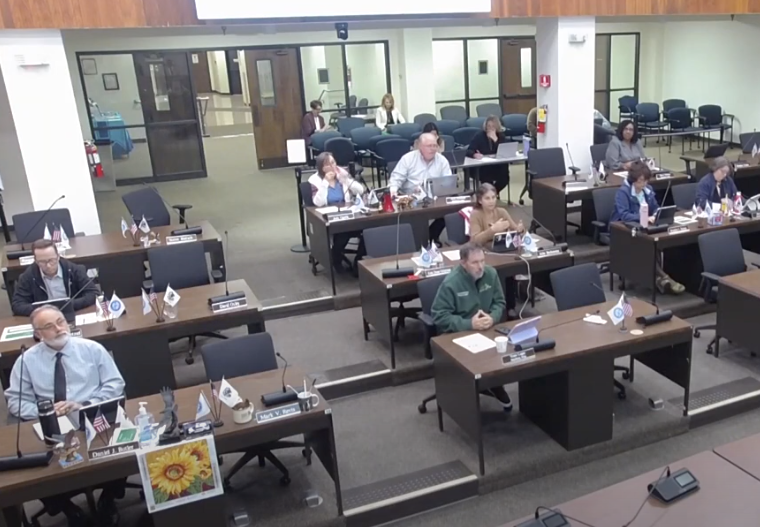
The Will County Public Health and Safety Committee on Thursday, March 5, 2026, waded into a complex, multi-jurisdictional infrastructure crisis after residents of Harris Drive begged the county to address severe flooding that is rendering their homes temporarily uninhabitable.
Anthony Melly, a resident advocating for his daughter who lives at 3102 Harris Drive, addressed the committee during public comment. He detailed a seven-month struggle with the county’s Stormwater Committee over seasonal rains and groundwater intrusion that effectively paralyze the neighborhood’s 1970s-era septic systems.
“When that happens, they are unable to use their plumbing in their house for a number of days,” Melly told the board. “You’re in your house three, four, maybe a week before everything recedes and then you can use your plumbing again. So, there’s no toilets, no showers.”
According to the Will County Health Department, roughly 24 homes are located in the affected area, with up to nine homes experiencing acute septic distress.
Sean Connor, representing the Health Department’s environmental division, explained that the excessive runoff water—potentially displaced by newer subdivisions built uphill in Joliet—is oversaturating the aging septic trenches.
“What we’re trying to do, what we’re trying to assess, is establish a baseline for each one of these homes that are having problems,” Connor said. “We were at Anthony’s daughter’s house yesterday, did a dye test there and another house. We have about four other homes that are cooperating with us to let us do on-site evaluations.”
Connor explained that if the harmless dye placed in the home’s plumbing surfaces in the yard’s floodwaters, it confirms that household sewage waste is mixing into the standing water.
The revelation sparked concerns from the committee regarding the immediate biological hazards.
“If it is being oversaturated with waste that hasn’t been broken down, is it a hazard?” asked Board Member Steve Balich. “Septic fields require proper drainage. If they don’t drain, they don’t operate. They don’t build the bacteria to break stuff down… I honestly feel this is a case where the government has to step in and help these people.”
However, fixing the root cause is a massive financial hurdle. Studies conducted for the Stormwater Committee outlined several alternatives, ranging from installing enhanced stormwater drains to purchasing and demolishing six homes to create a dedicated water retention basin. The costs range from $2 million to over $3 million.
Because the affected homes sit in unincorporated Will County, while the uphill runoff originates in the City of Joliet, the jurisdictional lines are blurred. Committee members noted that Joliet has shown little interest in absorbing the neighborhood into its municipal sewer system.
With county funds limited, the board is pivoting to external appeals.
“The Stormwater Committee resolved after its last session that they realized this is a funding issue,” explained a committee staffer. “Do we reach out to the state or federal lobbyists and see if there’s funding available for matching grants or full grants related to this type of infrastructure?”
Chair Daniel J. Butler confirmed the committee will place the Harris Drive crisis on a future action agenda as soon as the Health Department concludes its dye testing and delivers a formal environmental hazard report.





Patchy Fog then Partly Sunny
Latest News Stories
Controversial Immigrant Rights Resolution Postponed by Will County Board After Heated Debate
Will County’s Gas-to-Energy Plant Reports Nearly $460,000 Net Loss Amid Operational Setbacks
Will County to Draft First-Ever Policy on Artificial Intelligence Use
Will County Sees 50% Drop in Opioid Deaths, But Alarming Rise in Suicides
Will County Board Backs Effort to Rename ‘Stigmatizing’ Chicago Sanitary and Ship Canal
Access Will County Dial-a-Ride on Track for Full County-Wide Service in 2026
Divided Will County Board Authorizes Condemnation for 143rd Street Widening
Will County Committee Approves Preliminary $161.6M Tax Levy on Split Vote Amid Heated Debate Over Spending
Will County Eyes Major Overhaul to Consolidate Scattered Government Offices
Sheriff’s Office Reports Crime Down 10%, Cites Body Cam Footage as Main Challenge of Safety Act
Will County Considers Moving Land Use Public Hearings Away from Full Board Meetings

Meeting Summary and Briefs: Jackson Township Board for August 13, 2025