Chicago can’t ditch airlines’ suit vs ‘disruptive’ paid sick leave rules
Saying it appears likely the city’s sick leave ordinance would disrupt airlines’ ability to function, a federal judge has rejected Chicago City Hall’s attempt to ground a lawsuit from the airlines challenging the city’s ability to force them to abide by the city’s stringent paid time off rules.
U.S. District Judge Jeffrey Cummings delivered the ruling in an order filed March 20 in Chicago federal court.
In the ruling, Cummings specifically ruled the airlines can continue with their claims that the Chicago city ordinance is likely overruled by two federal laws which forbid local governments from interfering with airline operations.
The judge noted that the airlines have also plausibly alleged that the Chicago ordinance will interfere with the collective bargaining contracts they hold with the unions representing many of their workers, likely leading to disruptions in future negotiations, in airport and flight operations, and in the services they provide to customers.
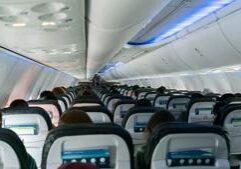
“When one flight attendant calls in sick on short notice, for example, their unavailability plausibly affects the operation of an entire flight crew and flight, not to mention every subsequent connecting flight and the flights of any other employees who need to be rerouted as replacements,” the judge said.
The case landed in federal court in 2024, shortly after the city of Chicago under Mayor Brandon Johnson enacted its Paid Leave and Paid Sick Leave Ordinance.
Supporters hailed the measure as a “legislative victory” for Mayor Johnson that established Chicago as the most “progressive” city in the U.S., when it comes to extending new guarantees for all workers.
Under the ordinance, everyone who is considered an employee who works just two hours inside Chicago’s city limits within a two week period is entitled by law to receive up to 10 days paid time off annually, including a minimum of five days to use for any reason.
The ordinance also included new rules governing when and how workers can use paid sick leave. It guarantees virtually all workers in the city up to 40 hours of paid sick leave each year, in addition to the 10 days PTO.
Further, under the ordinance employers are severely restricted in their ability to demand proof of illness and to limit when and how sick leave can be taken.
Alleged violations of the ordinance could be met with potentially costly lawsuits and fines.
The ordinance met with strong opposition from business groups, who warned the ordinance would only further cement Chicago’s growing reputation as a hostile place to do business.
But in 2024, the trade association Airlines for America did more than issue press releases and public statements. They filed suit against the city, asserting the city lacked any authority to regulate their operations in the manner outlined in the ordinance.
Airlines for America represents most of the major U.S. airlines and air cargo transport lines, including American, United, Southwest, Delta, FedEx and UPS, among others. In all, Airlines for America represents the companies that employ nearly 672,000 U.S. workers, or about 90% of all airline employees in the country, and which account for 90% of all U.S. air travel.
While those airlines and cargo carriers operate at Chicago’s airports, the airlines group asserted the ordinance cannot apply to them. They noted flights aren’t “based” in any one city, but rather can only originate or terminate in Chicago or any other operations “base.”
By enacting such an ordinance, the airlines said, Chicago is essentially attempting to use its city ordinance to regulate much of their workforces, whether in the city or not.
And they said the city’s ordinance would carry the risk of significant harm to their industry, which is largely governed by federal law and carefully negotiated collective bargaining agreements with unions.
The airlines, for instance, noted that the city ordinance includes sick leave guarantees for workers that far exceed even the most stringent provisions negotiated by unions in their contracts. Under those CBAs, for instance, the airlines are still able to provide some accountability to workers to prevent them from calling off work at the last minute, requiring employees to provide proof of illness or injury and allowing the airlines to take corrective action against employees for excessive call offs.
Without such protections, the airlines said, the guarantees provided in the Chicago city sick leave ordinance would leave the airlines at risk of short staffing, leading to flight delays, cancellations and other disruptions to operations, leading to cascading consequences for America’s air travel system.
The airlines said such disruptions are entirely what the federal laws governing air travel meant to prevent by generally forbidding such local interference.
In response, the city asserted the airlines’ arguments were speculative and overblown.
They asserted the airlines could simply make adjustments to adapt to the new environment.
Cummings, however, said the city’s arguments didn’t take seriously the depth of the airlines’ claims, which he said were “beyond mere speculation.”
“… The Association (Airlines for America) plausibly alleges that the increase in employee absences constitutes a ‘significant impact’ on airline rates, routes, or services. Contrary to defendant’s framing, the Association does not allege merely ‘a possible increase in . . . labor costs’ and a ‘downstream impact on customer-facing services.’
“Instead, it alleges that the Ordinance will disrupt flight services themselves, including by causing flight delays and cancellations, due to the difficulty and ripple effect of finding replacement members for a flight or ground crew.”
And the judge said the airlines have plausibly alleged the Chicago ordinance will upset the “delicate balance” the airlines have achieved in their operations through many years of negotiations with their employee unions, resulting in CBAs that already “provide generous leave.”
The airlines are represented in the case by attorneys with the firms of Skadden Arps Slate Meagher & Flom, of Chicago and Boston; and O’Melveny & Myers, of San Francisco.



Mostly Sunny
Latest News Stories
Redistricting opponents immediately appeal to CA voters
Former Transportation Secretary urges state taxpayer funding for Chicago transit

Illinois quick hits: Education tax benefits available; Giannoulias orders license plate reader to shut off access to CBP
WATCH: Trump order withholds funds over no-cash bail policies like Illinois’

Trump eyes First Amendment showdown with order to prosecute flag burning

Trump strikes positive tone with South Korean president
House Oversight Committee to investigate D.C. police over crime data

Twenty years later, Katrina still among Atlantic’s most deadly, costly
CBO says tariffs could raise $4 trillion over next decade, raise prices
IL Treasurer to work with lawmakers after Pritzker’s veto of nonprofit bill
Democratic AGs decry ‘political retaliation’ against James
Trump says he plans to rename Department of Defense