Maryland Supreme Court tosses Blue cities’ climate lawsuits against energy companies
The Maryland Supreme Court on Tuesday dismissed three lawsuits filed by Democrat-run jurisdictions claiming oil and gas companies concealed information about their products’ contributions to climate change, leading to significant costs.
In the 3-2 decision, Justice Brynja Booth wrote for the majority that the cities of Baltimore and Annapolis and Anne Arundel County improperly tried to use state and local nuisance laws to financially punish defendants such as BP, ExxonMobil and Chevron when climate change and its causes are an international issue that cross local, state and international borders.
“Quite simply, the notion that a local government such as Baltimore, Annapolis, or Anne Arundel County may pursue state law nuisance claims against the Defendants – seeking injunctive relief to abate injuries arising from global greenhouse effects arising from worldwide conduct – is so far afield from any area of traditional state or local responsibility that it cannot be seriously contemplated,” Booth wrote.
Attorneys for the oil companies said during oral arguments in October that federal agencies like the Environmental Protection Agency are responsible for regulating emissions across the country, rather than state and local governments. He said the EPA has a process for scientists to give their views on proposed rule changes like warning labels.
Several other Democrat-run state and local governments – including Hawaii, California, Minnesota, Colorado, Boulder, San Francisco and New York – have also sued fossil fuel companies over the same issue.
Critics of such lawsuits hailed the Maryland Supreme Court’s ruling and said other such cases should be dismissed as well.
“Maryland’s Supreme Court should be the first of more high courts, including the Supreme Court, to come to their senses,” said Professor John Yoo, Emanuel S. Heller Professor of Law at the University of California at Berkeley and Senior Research Fellow at the School of Civic Leadership at Civitas Institute at the University of Texas at Austin, in a statement emailed to The Center Square. “They should reject the perversion of state tort law to interfere with national control over the energy industry. The rise in oil prices due to the Iran War should underscore the national interests at stake.”
Victor Sher, an attorney representing the city and county plaintiffs, said during arguments that oil and gas companies must provide warnings on their products that are commensurate with the risk posed. In this case, the posed risk is the effects of rising global temperatures and climate change, he argued.
The Maryland Supreme Court didn’t buy that position.
Todd Zywicki, George Mason University Foundation Professor of Law at George Mason University’s Antonin Scalia School of Law, said in a statement emailed to The Center Square that the decision is a matter of common sense.
“Today’s decision by the Maryland Supreme Court strikes an important blow for democracy, the rule of law, and common sense,” he said. “The Court notes that for over a century the Supreme Court and lower federal courts have recognized that claims of interstate pollution – much less international in scope – are inherently federal in nature and are governed by federal law. … As the Maryland Supreme Court observes, ‘No amount of creative pleading can masquerade the fact that local governments are attempting to utilize state law to regulate global conduct that is purportedly causing global harm.’ As the United States Supreme Court is considering Boulder County’s similar lawsuit, it should look to this Court’s sensible decision as a roadmap in putting to rest these absurd claims once and for all.”






Chance Showers And Thunderstorms then Showers And Thunderstorms
Latest News Stories
District 210 Reports Insurance Deficit Amid National Healthcare Cost Spikes; Finances Remain Stable
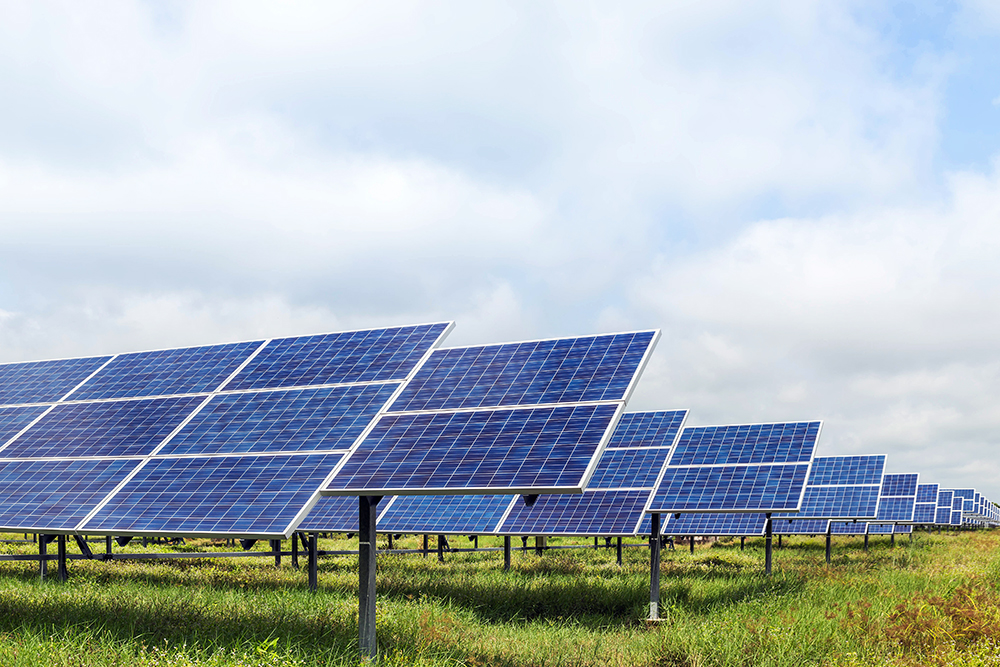
Planning Commission Backs 5-MW Peotone Solar Farm; Developer Pledges Pollinator Habitat and Community Funds

Joliet Junior College Board Approves $2 Tuition Increase Amidst Heated Debate Over Enrollment and Spending
Lincoln-Way Board Ratifies Three-Year Support Staff Contract with Significant Hourly Raises
Manhattan Township Weighs Hall Rental Fee Increase to Cover Professional Cleaning Costs
Jackson Township Prepares for Property Viability Pole Relocation, Addresses Northpoint Traffic Control
Manhattan School District Explores Alternative Transportation Amid Lincoln-Way Bus Challenges

Manhattan Ranked 6th Safest City in Illinois; Police Chief Warns of Traffic Accidents
Manhattan Township Assessor Initiates $13,500 Software Upgrade Amid Office Transition
Manhattan and New Lenox Renew Boundary Agreement Through 2046
Manhattan Board Approves Route 52 Safety Study and Multi-Use Path Engineering

State of the College: Local Legislators Bolster Student Support Services