
U.S. Supreme Court rules against automatic prison release punishments
The U.S. Supreme Court, in an 8-1 decision, decided an individual on supervised release is not automatically extended when that person absconds from their release.
The case, Rico v. US, focuses on Isabel Rico who absconded her supervised release while she was on probation after being detained in federal prison. During her probation period, Rico was convicted of a state drug offense.
A judge charged her with time in prison and several months of supervised release.
Justices on the court said Rico cannot be automatically considered for an extension of supervised release just because she violated her previous release.
“The government seeks not a rule that stops the clock or ensures a defendant takes no advantage of abscondment, but one that imposes new punishment by automatically extending supervised release,” Justice Neil Gorsuch wrote in the court’s majority opinion.
The justices argued that the Sentencing Reform Act protects Rico from automatic additional punishment, even though she absconded her supervised release.
In 1984, Congress passed the Sentencing Reform Act, which created mandatory uniform national guidelines to increase transparency and unity in federal sentencing practices.
“The Act already provides many ways to ensure defendants do not profit from violations without automatically extending the period beyond what a judge ordered,” Gorsuch wrote.
Justice Samuel Alito provided the lone dissenting opinion. He argued the Sentencing Reform Act was used by the judge to determine Rico’s punishment after she absconded supervised release.
“It seems strange to regard a crime committed after the expiration of “unsupervised supervised release” as a non-event,” Alito wrote. “By that logic, if petitioner had gone on a murder spree after the expiration of the period of unsupervised supervised release, the sentencing judge would have been required to put that out of his mind.”




Areas Of Drizzle
Latest News Stories

Democrats push back against education department dismantling
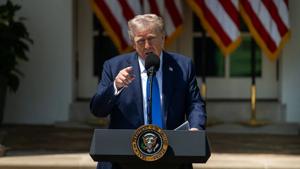
Trump urges Senate GOP to pass $95B budget bill before August break

New tariffs face lawsuit, fall short on revenue, analysis finds

Illinois quick hits: United delays launch of service at Willard Airport

Election 2026: Field increases in U.S. Senate special Republican primary

Drivers pay more as gas tops $4 nationwide
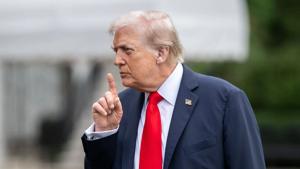
Trump warns China, Russia against aiding Iran amid escalating strikes

Democratic members of Congress hold field hearing on ICE shooting in Houston

Watchdogs target Rush for what they say is its‘woke’ agenda, misuse of tax dollars

Healthcare fraud in California has made Medi-Cal “fiscally unsustainable”

Illinois quick hits: Gas prices continue slow climb

Pediatrics group wants to dismiss lawsuit against Florida attorney general

More pros than cons: ALEC panel discussion focuses on positives of data centers

Trump hits 60 nations with forced-labor tariffs