Advocates urge stable tariff policy, protections against China
Advocates sparred Wednesday over the Trump administration’s trade and national security policy, particularly with concerns over China.
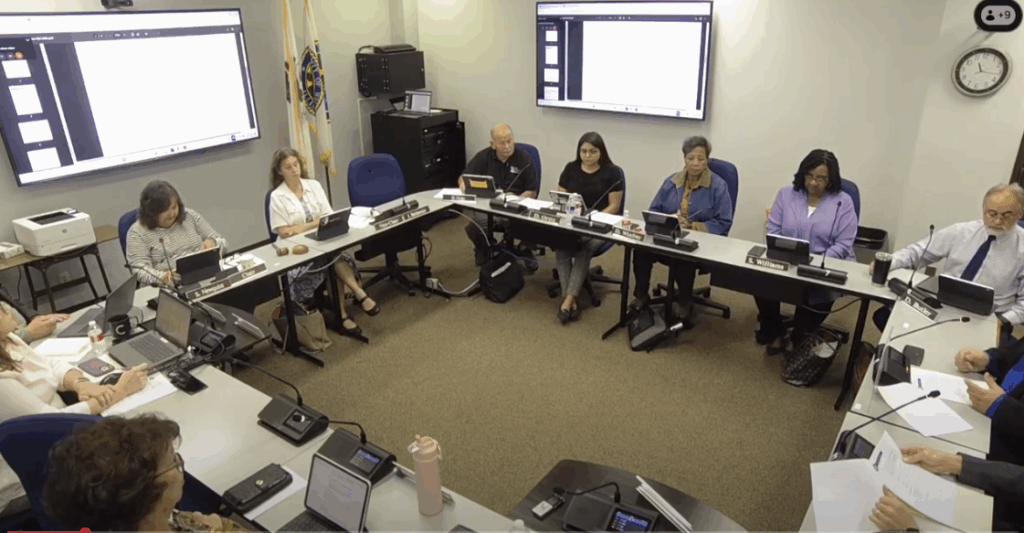
Advocates and experts gathered at the American Institute for Economic Research’s Trade, National Security and American Prosperity Conference Wednesday in Washington, D.C.
The groups debated the implementation of the Trump administration’s trade policies and their effect on national security. Most advocates argued for a greater reliance on free trade in the economic marketplace.
Michael Faulkender, former deputy secretary of the Treasury Department, called for the United States to build a comprehensive coalition of countries to counter China’s growing economic influence. He said the U.S. needs to enable cooperation with allies to encourage innovation and compete with China.
Derek Scissors, senior fellow at the American Enterprise Institute, agreed. He said the U.S. needs to engage in technological innovation at a greater scale to keep up with China.
Faulkender also called for a fundamental reform of the National Environmental Policy Act. The act requires federal agencies to assess and submit reports on the environmental effects of proposed actions before making decisions.
Gregg said overbearing regulations in the U.S. allow countries like China to get ahead. He urged a more relaxed approach to environmental regulations, alongside Faulkender.
“We’ve had some significant raw mineral discoveries in the United States over the past five years, but they’re still not up and running,” Gregg said. “Some of the problems we have have little to do with trade, they’re much more to do with things like excessive regulation.”
The advocates discussed whether to pursue economic and trade policies that regulate China or promote American growth. Faulkender said the U.S. can pursue both strategies.
Advocates at the conference also called for a free trade approach to economic policy. Samuel Gregg, president at the American Institute for Economic Research, said free trade is essential for America’s long-term economic interests and innovation.
“The more open a country’s economic orientation, the faster its economy grows, compared to nations with high trade barriers,” Gregg said.
He argued that allowing free trade to spur economic growth can help prevent military conflicts, allow the private sector to thrive and can help lower costs for those industries. Gregg said the U.S. does not need to sacrifice national security objectives in order to achieve freer trade goals.
“We shouldn’t think of freer trade as a luxury that America can only afford in peacetime,” Gregg said. “It’s capable of strengthening America’s economy, fortifying our alliances and helping to deter America’s adversaries.”




Chance Showers And Thunderstorms
Latest News Stories
Meeting Summary and Briefs: Will County Board Executive Committee for October 9, 2025
Renovations at Veterans Assistance Commission and Court Annex on Track for Winter Completion
Will County Considers First Update to Wastewater Ordinance Since 2016
IDOT Plans to Invest Over $1.3 Billion in Will County Roads Through 2031
Committee Advances 50% Increase in Mental Health Levy on 4-3 Vote
Will County Poised to Launch Major Mental Health Initiative Based on Joliet Program’s Success
Looming State Energy Bill Threatens to Further Limit County Control Over Solar and Wind Projects
Controversial Immigrant Rights Resolution Postponed by Will County Board After Heated Debate
Will County’s Gas-to-Energy Plant Reports Nearly $460,000 Net Loss Amid Operational Setbacks
Will County to Draft First-Ever Policy on Artificial Intelligence Use
Will County Sees 50% Drop in Opioid Deaths, But Alarming Rise in Suicides
Will County Board Backs Effort to Rename ‘Stigmatizing’ Chicago Sanitary and Ship Canal
Access Will County Dial-a-Ride on Track for Full County-Wide Service in 2026
Divided Will County Board Authorizes Condemnation for 143rd Street Widening