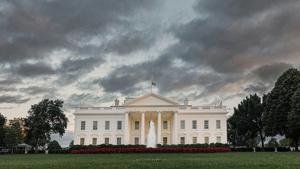
Advocates urge stable tariff policy, protections against China
Advocates sparred Wednesday over the Trump administration’s trade and national security policy, particularly with concerns over China.
Advocates and experts gathered at the American Institute for Economic Research’s Trade, National Security and American Prosperity Conference Wednesday in Washington, D.C.
The groups debated the implementation of the Trump administration’s trade policies and their effect on national security. Most advocates argued for a greater reliance on free trade in the economic marketplace.
Michael Faulkender, former deputy secretary of the Treasury Department, called for the United States to build a comprehensive coalition of countries to counter China’s growing economic influence. He said the U.S. needs to enable cooperation with allies to encourage innovation and compete with China.
Derek Scissors, senior fellow at the American Enterprise Institute, agreed. He said the U.S. needs to engage in technological innovation at a greater scale to keep up with China.
Faulkender also called for a fundamental reform of the National Environmental Policy Act. The act requires federal agencies to assess and submit reports on the environmental effects of proposed actions before making decisions.
Gregg said overbearing regulations in the U.S. allow countries like China to get ahead. He urged a more relaxed approach to environmental regulations, alongside Faulkender.
“We’ve had some significant raw mineral discoveries in the United States over the past five years, but they’re still not up and running,” Gregg said. “Some of the problems we have have little to do with trade, they’re much more to do with things like excessive regulation.”
The advocates discussed whether to pursue economic and trade policies that regulate China or promote American growth. Faulkender said the U.S. can pursue both strategies.
Advocates at the conference also called for a free trade approach to economic policy. Samuel Gregg, president at the American Institute for Economic Research, said free trade is essential for America’s long-term economic interests and innovation.
“The more open a country’s economic orientation, the faster its economy grows, compared to nations with high trade barriers,” Gregg said.
He argued that allowing free trade to spur economic growth can help prevent military conflicts, allow the private sector to thrive and can help lower costs for those industries. Gregg said the U.S. does not need to sacrifice national security objectives in order to achieve freer trade goals.
“We shouldn’t think of freer trade as a luxury that America can only afford in peacetime,” Gregg said. “It’s capable of strengthening America’s economy, fortifying our alliances and helping to deter America’s adversaries.”




Chance Showers And Thunderstorms
Latest News Stories

America 250: Celebrating the first attorneys general who fought for freedom

Texas becomes first state to make Bible required reading
Colorado gubernatorial candidates debate economic issues
U.S. launches retaliatory strikes against Iran

Illinois sued over prediction market law imposing new taxes, regulations
Epstein’s billionaire associate subpoenaed after refusing to answer oversight committee

Energy institute launches website criticizing use of ‘extreme’ climate scenario
Trump threatens 100% tariff over European digital services taxes
Trump teases ‘you’ll find out’ on U.S. response to Iranian drone attack

Military responds swiftly to devastating Venezuelan earthquakes

WATCH: Eight years later, quiet opt-out rules can’t stop millions saved in union dues

Accounting analyst: SEC should examine Illinois pension funding