Supreme Court appears skeptical of Trump’s birthright citizenship order
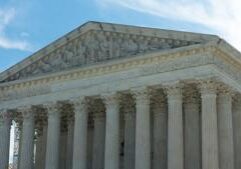
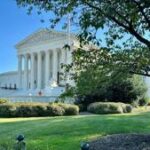
The U.S. Supreme Court Wednesday scrutinized President Donald Trump’s executive order to end birthright citizenship, raising skeptical questions in a pivotal hearing.
The justices heard arguments in Trump v. Barbara, challenging Trump’s 2025 executive order denying birthright citizenship to children born in the U.S. to parents who are in the country illegally or temporarily. The 14th Amendment has long been interpreted as granting citizenship to nearly all born in the U.S., except children of diplomats or invading armies. Trump seeks to alter this with his order.
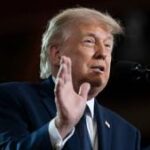
The president attended the oral arguments in person, a first for a sitting U.S. president, after he publicly criticized some of the justices who ruled against him in the tariffs case in February. None of the justices publicly acknowledged Trump’s presence in the chamber. Trump stayed for a little more than an hour, hearing sharp questions about his interpretation of the 14th Amendment. He didn’t stay for ACLU Legal Director Cecilia Wang’s arguments.
The case focuses on the 14th Amendment, which reads: “All persons born or naturalized in the United States, and subject to the jurisdiction thereof, are citizens of the United States and of the State wherein they reside.” The challenge could hinge on the meaning of five words: “subject to the jurisdiction thereof.”
“‘Subject to the jurisdiction thereof’ is the puzzle wrapped in an enigma wrapped in a mystery,” Justice Samuel Alito said.
Solicitor General D. John Sauer argued that the 14th Amendment’s phrase “subject to the jurisdiction thereof” excludes those in the country illegally. The amendment was passed to overturn the Supreme Court’s 1857 Dred Scott decision.
“The clause thus does not extend citizenship to the children of temporary visa holders or illegal aliens,” Sauer said. “Unlike the newly freed slaves, those visitors lack direct and immediate allegiance to the United States.”
Wang argued on behalf of a group of immigrants challenging Trump’s order.
“Ask any American what our citizenship rule is, and they’ll tell you: Everyone born here is a citizen alike,” Wang said. “That rule was enshrined in the 14th Amendment to put it out of the reach of any government official to destroy.”
Chief Justice John Roberts questioned the government’s argument.
“You know, children of ambassadors, children of enemies during a hostile invasion, children on warships,” he said. “And then you expand it to the whole class of illegal aliens who are here in the country. I’m not quite sure how you can get to that big group from such tiny and sort of idiosyncratic examples.”
Justice Neil Gorsuch noted that parentage wasn’t mentioned at the time.
“It’s striking that in none of the debates do we have parents discussed. That absence is striking,” he said.
The Supreme Court will rule on the matter by summer. The outcome could significantly impact U.S. immigration.
After arguments ended, Trump posted on social media: “We are the only Country in the World STUPID enough to allow ‘Birthright’ Citizenship!”
ACLU President Deborah Archer said the case could have sweeping implications.
“The America [that] President Trump is working to create – one where a child’s citizenship is dictated by their parents’ immigration status, not where they are born and raised – could compound this chaos,” she wrote. “Revoking birthright citizenship would invite even more discriminatory assumptions about who is – and isn’t – ‘really’ American.”
U.S. Sen. Ted Cruz, R-Texas, said the birthright citizenship policy must change.
“We need to end this policy using whatever vehicle we can, whether that be a constitutional amendment, legislation, executive order, or the courts,” he said.
Thirty-two other countries have birthright citizenship laws, according to a Pew Research Center report.
On day one of his second term, Trump signed an order denying citizenship to children born in the U.S. unless a parent is a U.S. citizen or green card holder. Several states challenged the order, and four federal judges have since blocked it.


Mostly Sunny
Latest News Stories
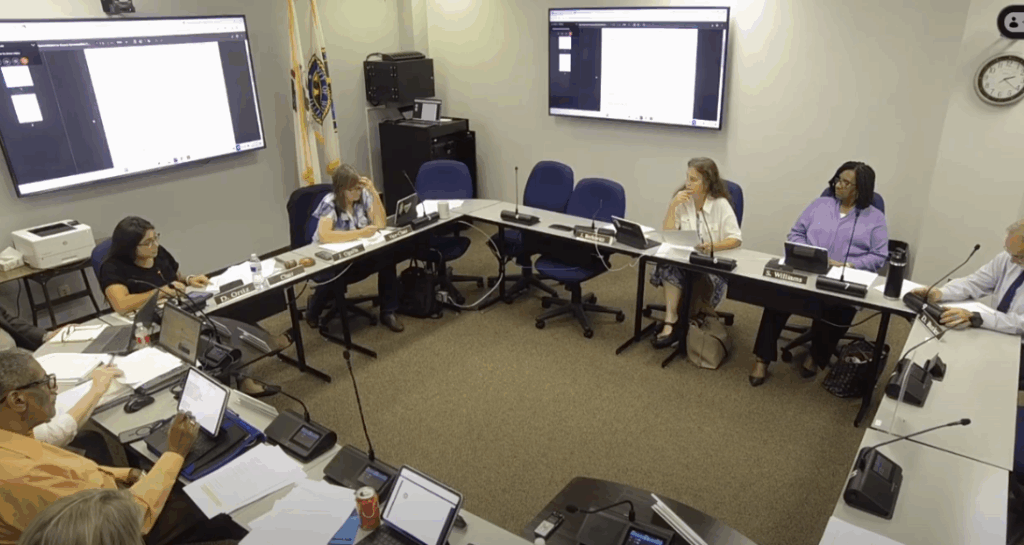
Will County Board Committee Passes Contentious ‘Live and Work Without Fear’ Resolution on 4-3 Vote
Will County Awards $10.4 Million Contract for Bell Road Widening in Homer Glen Area
Manhattan Township to Set Solar Farm Rules Amid Concerns with Area Projects
Meeting Summary and Briefs: Will County Public Works & Transportation Committee for October 7, 2025
Meeting Summary and Briefs: Will County Board Finance Committee for October 7, 2025
Meeting Summary and Briefs: Will County Board Capital Improvements & IT Committee for October 7, 2025
Jackson Township Board Discusses High-Speed Rail Uncertainty and Northpoint Development

Southwest falls short on list of great cities to drive

Govt shutdown predicted to drag on after funding bill fails for 8th time in Senate
Supreme Court rejects bid to overturn H-1B visa rule
Johnson tells Democrats to ‘bring it’ over pay for U.S. troops

WATCH: Pritzker vows to continue battling Trump over ‘abuses’ around public safety