Universities warn state funding delays are wasting millions in taxpayer investment
(The Center Square) – Long‑delayed university repair funding is leaving campuses across the state with holes in their roofs, and in project budgets.
Some say the delays in funding maintenance are wasting past taxpayer investment while accruing unneeded future costs.
Funding for deferred university maintenance was a focus in a Senate committee hearing early this week. University officials told lawmakers that aging buildings have deteriorated so badly that some spaces can no longer be used.
Northern Illinois University President Lisa Freeman was among university officials to speak up about the degradation of multi-million dollar buildings as a result of ongoing delays in funding.
“NIU has not received $34 million of its allocated $52.9 million of capital renewal funds from fiscal year ’20, and this has caused the university to assume prolonged risks associated with aging infrastructure,” said Freeman.
The backlog of maintenance requests at state universities and community colleges has grown to a projected $10.8 billion this year, according to the Illinois Board of Higher Education’s 2027 budget recommendation.
Former Republican state Sen. Jeanne Ives, who now runs a policy advocacy and education network, told The Center Square she thinks universities need consolidation.
“We have way too many campuses and it’s hard to support all of that, especially with the infrastructure you need to run a university,” Ives said. “I do think university funding is important, I just think our priorities at the state level are terrible.”
The IBHE document also says roughly $796 million would need to be allocated each year to keep deferred maintenance needs from growing, based on current standards.
Freeman said the 2024 plan to level an unusable dorm and build a Health Technology Center – backed by a record $40 million donation – has been stalled for two years, awaiting action from the state’s Capital Development Board, giving no reason why.
State Sen. Chris Balkema, R-Pontiac, suggested such delays reveal an inconsistency between the demand for universities to increase efficiency and a lack thereof from the state.
“Here we are, we can’t even get a leaking roof fixed, and we can’t allow a $40 million donation to be accepted because the rest of the process is not moving along,” Balkema said. “I think we’ve got a lot of work to do in a very short amount of time.”
Sen. Sally Turner, R-Lincoln, and Sen. Michael Halpin, D-Rock Island, shared in Balkema’s concern.
In a statement, State Rep. Jeff Keicher, R‑Sycamore, said the funding system needs reform. He said his bill, HB 5037, would do just that, proposing a statewide review of how universities use tax dollars, used to guide a 10‑year plan restructuring funding.
“We need to right-size our system and make sure taxpayer dollars are being spent wisely, not wasted. By prioritizing resources responsibly, we can help ensure students have access to safe and usable learning spaces,” Keicher said. “Illinois cannot afford to keep doing things the same way and expect a different result.”
The senate committee is scheduled to hear from the IBHE regarding their budget and recommendations Tuesday.


Mostly Sunny
Latest News Stories
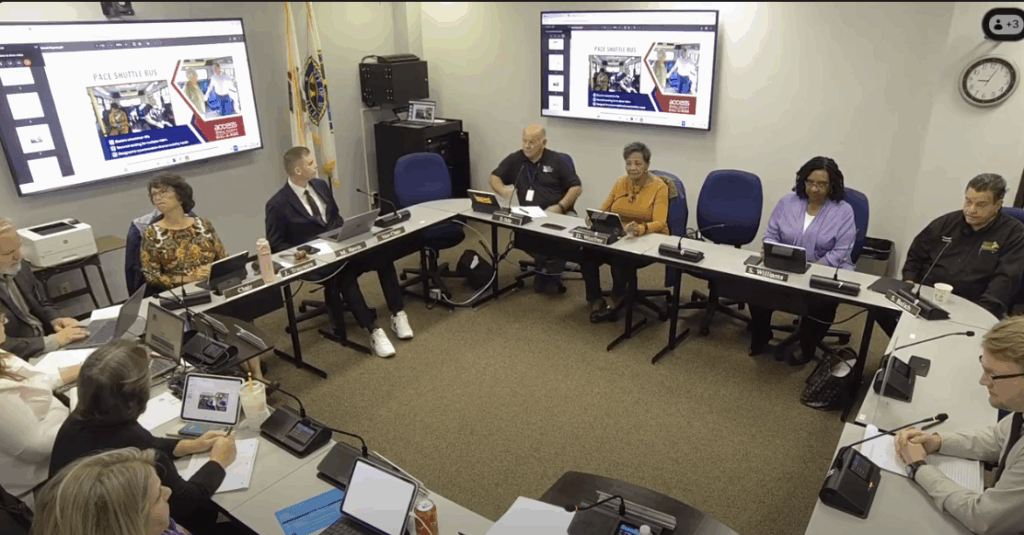
Access Will County Dial-a-Ride on Track for Full County-Wide Service in 2026
Divided Will County Board Authorizes Condemnation for 143rd Street Widening
Will County Committee Approves Preliminary $161.6M Tax Levy on Split Vote Amid Heated Debate Over Spending
Will County Eyes Major Overhaul to Consolidate Scattered Government Offices
Sheriff’s Office Reports Crime Down 10%, Cites Body Cam Footage as Main Challenge of Safety Act
Will County Considers Moving Land Use Public Hearings Away from Full Board Meetings
Meeting Summary and Briefs: Jackson Township Board for August 13, 2025

Jackson Township to Investigate Decade-Old High-Speed Rail Plan Through Elwood
Meeting Summary and Briefs: Manhattan Park Board for August 14, 2025
Meeting Summary and Briefs: Will County Board for September 18, 2025
Jackson Township Approves Settlement with Joliet, Union Pacific Over ICC Case
Meeting Summary and Briefs: Lincoln-Way Community High School District 210 Board of Education for September 18, 2025