County Board Members Pitch “Granny Flats,” Hobby Farm Zoning, and Farmland Mitigation in LRMP Brainstorm
Will County Board Land Use & Development Committee Meeting | March 26, 2026
Article Summary: During a brainstorming workshop for the county’s new Land Resource Management Plan, Will County Board members pitched a variety of hyper-local zoning concepts. Proposals included “small agriculture” zoning for artisan farmers, mandatory land-replacement mitigation for developers paving over farmland, and tax-exempt “grandma houses” added to residential lots.
LRMP Zoning Proposals Key Points:
-
Board Member Steve Balich proposed a farmland mitigation rule that would require developers to offset lost agricultural land with an equal amount of farmland elsewhere in the county.
-
Board Member Judy Ogalla suggested creating a new “small agriculture” zoning class to accommodate residents who want to raise goats or make artisan goods on smaller rural lots.
-
Multiple board members highlighted the urgent need to address heavy semi-truck traffic degrading rural township roads and endangering residents.
The Will County Land Use and Development Committee on Thursday, March 26, 2026, utilized a special planning workshop to pitch several highly specific zoning solutions aimed at preserving the county’s rural character and easing the burden on aging residents.
While the workshop with consultants from Tesca Associates was designed to outline broad goals for the upcoming Land Resource Management Plan (LRMP) update, several board members seized the opportunity to advocate for granular ordinance changes affecting their specific districts.
Board Member Steve Balich (R-Homer Glen) zeroed in on the rapid loss of the county’s agricultural heritage, proposing an aggressive new policy modeled after federal environmental protections.
“I feel that the biggest problem we have in Will County is protecting our farmland, and a good way to do that is simple: just use the mitigation process for wetlands for farmland,” Balich said. “If a developer wants to develop using farmland, they have to have an equal amount of farmland in Will County to offset their use.”
Balich also championed a zoning change that would allow homeowners to build accessory dwelling units (ADUs) by right, specifically to house aging parents. He referred to the concept as a “grandma or grandpa house,” stipulating that the additions should be built with 10-foot setbacks and, crucially, be exempt from property tax reassessments to keep them affordable.
Board Member Judy Ogalla (R-Monee), whose expansive district covers Monee, Peotone, Manhattan, Green Garden, and Wilton Townships, also focused on the changing nature of rural Will County. She advocated for the reintroduction of a “small agriculture” zoning classification.
“We do have a lot of people that lived in Chicago or a suburb and they’ve moved out to the country and they are raising goats, and they’re making cheese, and they’re making soaps, and we don’t have an actual zoning classification for them per se,” Ogalla explained, noting the county previously utilized an A-2 zoning class for five-acre hobby farms before moving away from the practice.
Ogalla also asked the consultants to explore mechanisms to fund agricultural preservation, suggesting the county purchase conservation easements from legacy farmers so they are not financially tempted to lease their land to industrial solar developers.
Transportation and the lethal impact of logistics traffic on rural roads was another dominant theme. During small-group breakout sessions, a working group focused on the dangers of semi-trucks utilizing rural backroads. The group suggested the county explore ordinances requiring trucking companies operating in Will County logistics parks to utilize specialized GPS systems programmed exclusively with approved county truck routes.
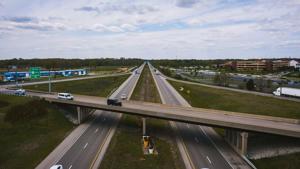
Pretzel echoed the logistical concerns, pointing to the eastern edge of the county along I-57 and Route 1, an area he noted has suffered numerous fatal accidents. He criticized the Illinois Department of Transportation (IDOT) for planning a new I-57 interchange that “goes to nowhere” instead of improving the highly trafficked, dangerous interchanges at Monee-Manhattan Road and Peotone-Wilmington Road.
Board Member Kelly Hickey (D-Naperville) rounded out the specific pitches by requesting the new LRMP view all development through an accessibility lens. She urged the county to ensure “visitability” and 508 compliance across all infrastructure, pushing for the expansion of sidewalks and ADA-compliant pathways to support an aging senior population and residents with disabilities.





Chance Showers And Thunderstorms
Latest News Stories

U.S. sees progress in Iran talks, Tehran says no deal yet

Manhattan Board Approves Director of Operations Hire After Closed Session

Everyday Economics: History doesn’t repeat, but the Fed Is hearing an echo

Illinois DHS appointment sparks backlash over alleged voter registration mailer practices

Arctic defense begins in Galveston after Memorial Day

Illinois Quick Hits: Pritzker urges megaprojects support for Bears
Lincoln-Way 210 Backs Mokena Downtown TIF Extension to 2044

Shooting outside White House leaves one dead, one injured
Manhattan School Board Adopts $39.9 Million Amended Budget for Fiscal 2026
Bill to let felons vote from prison draws criticism from Republicans

Supreme Court yet to decide high profile cases

Government spending on seniors’ benefits soon to make up majority of federal budget