Illinois lawmakers seek to regulate, tax prediction markets amid federal lawsuit
Illinois may soon allow prediction markets to operate in the state, but lawmakers and the federal government are at odds with how they want it done.
State legislators have introduced a bill proposing regulation and a tax on the services, hedging against any negative outcomes they think could stem from services operating in the state.
Operators say it would be overly burdensome and effectively prohibit them from operating.
Prediction markets allow users to effectively place bets on the outcomes of sports and real-world events by buying contracts.
The ability for states to regulate prediction markets’ operations has been brought into question by a federal lawsuit against Illinois and several other states last week.
The lawsuit against the Illinois and the Illinois Gaming Board was filed on the grounds that regulation should be exclusively overseen by the federal Commodity Futures Trading Commission and states have illegally blocked these companies from operating.
State lawmakers say they should have extra oversight powers, regardless of the lawsuit.
Senate Bill 4168, the Prediction Markets Regulation and Taxation Act, would require prediction market services – such as Kalshi or Polymarket – to pay a $1 million license fee to the Illinois Gaming Board to obtain a master prediction market license, along with yearly renewal fees of $1 million.
The bill would also impose a 50% tax to the market operator’s adjusted gross earnings from prediction contracts placed in the state and by residents.
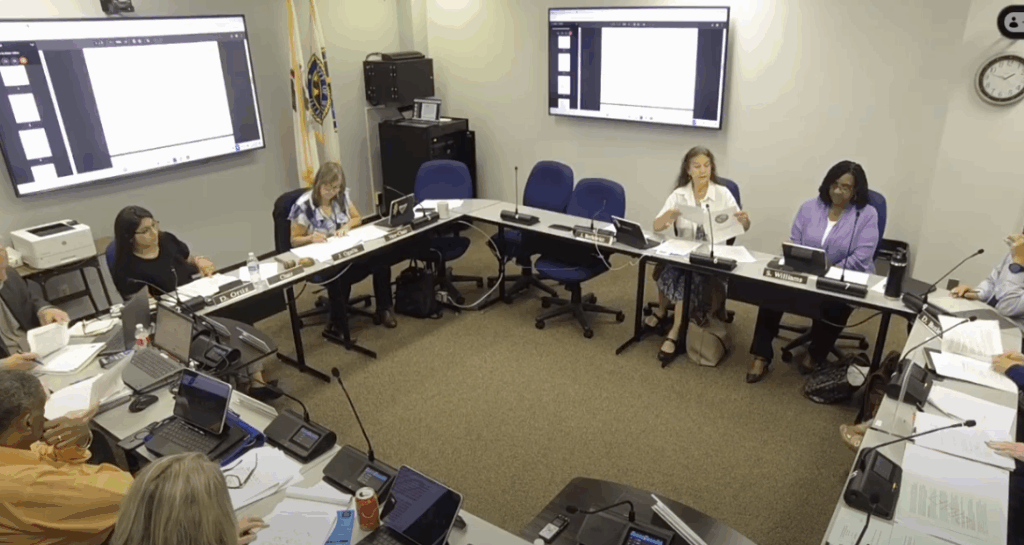
A state senate committee heard from Sen. Michael Hastings, D-Frankfort, regarding his bill Monday. He says the bill intends to protect bettors while allowing them to access the increasingly popular services.
“By passing this bill, we ensure that every entity seeking to serve Illinois bettors plays by the same rules And that we protect our consumers through strong oversight,” Hastings said.
While no outside testimony was spoken at the hearing, legal representatives for Kalshi Inc. did file a written statement to the committee, which was not acknowledged by lawmakers during the hearing.
The Center Square obtained a copy of the seven-page testimony submitted to lawmakers through Neil F. Flynn & Associates, the company’s legal counsel in Springfield.
“Kalshi also goes beyond what is required under its federal regulatory obligations to protect consumers,” the Kalshi statement said. “Kalshi has voluntarily implemented deposit caps, self-imposed trading breaks, and self-exclusion tools that allow users to restrict their own access to trading.”
The statement is also critical of the proposed 50% tax, saying it is overly burdensome and likely unconstitutional.
Lawmakers said they have concerns with how markets currently operate, including the threat of insider trading, low age requirements, and what specific events can be bet on.
“There was a wager that was made to bet on Armageddon. When the end of the world would occur,” Hastings said. “I had asked myself and a couple of my friends the question, what happens if you win the bet?”
Hastings also said that some real events being bet on, like who would streak at the Super Bowl or which world leader would be assassinated, promote poor and unlawful behavior.
The bill in its current form would only apply to non-sports event contracts, with sports related contracts being subject to previous state law on sports wagering, according to Hastings. He said in his research for the bill, he learned that well over half of all contracts are sports related.
Federal support for betting platforms came last year in the wake of backing from Wall Street and Silicon Valley investors and, notably, the President Donald Trump’s son, Donald Trump Jr. – who is directly invested in Polymarket and serves as a strategic advisor to Kalshi.
Kalshi and Polymarket, the two biggest prediction market platforms, have also recently signed partnership deals with national news companies, including CNN and CNBC, to provide insight into public opinion on notable current events through prediction data.
The Illinois bill recognizes prediction markets can serve a legitimate purpose.
“Prediction markets, when limited to non-sports events, serve a legitimate informational and hedging function by aggregating dispersed knowledge about future uncertain outcomes, contributing to more accurate public forecasting and risk management,” according to the bill
The Illinois Attorney General’s office says they are reviewing the federal complaint.
Hastings said he wants to address issues brought about by the federal lawsuit and industry criticisms.
“I do intend on filing an additional piece of legislation to counter any arguments that the industry does choose to make to ensure that there’s proper oversight in the state of Illinois,” Hastings said.


Mostly Sunny
Latest News Stories

Illinois quick hits: State Farm sued; ag education grants announced; ‘Operation Summer Heat’ results

U.S. military strikes another suspected drug boat near Venezuela

WATCH: Frustration mounts with Dept. of Corrections ‘unseriousness,’ ‘timeliness problem’

Illinois audit commission members worried about ‘ghost’ health care networks

Exclusive: District to repay $3 million to property owners

WATCH: CCTV footage captures attempted murder of Pennsylvania governor
Most Americans say U.S. heading in the wrong direction, poll finds

Balmer pleads guilty to attempted murder of Pennsylvania governor

Cook County officials warn property tax reform could hurt homeowners

Maine Gov. Janet Mills officially launches U.S. Senate bid
Illinois quick hits: Poll finds mixed reviews for Trump; posthumous medal for Kirk; transit fare increase proposed

AARP under fire after $9 billion payment from UnitedHealthcare revealed
WATCH: Trump: Pritzker should ‘beg;’ Veto Session begins as Madigan reports to prison
Meeting Summary and Briefs: Will County Board Public Health & Safety Committee for October 2, 2025