Minnesota, Illinois AGs challenge federal orders to keep coal plants running
Minnesota Attorney General Keith Ellison is challenging the Trump administration over orders requiring coal-fired power plants in Indiana to remain open past their planned retirement dates.
Ellison, joined by Illinois Attorney General Kwame Raoul, filed the petitions for judicial review against U.S. Energy Secretary Chris Wright in the U.S. Court of Appeals for the District of Columbia Circuit.
Ellison argued the U.S. Department of Energy “unlawfully” invoked emergency powers to keep the plants operating, a move he said will increase costs for ratepayers throughout the Midwest, including those in Minnesota.
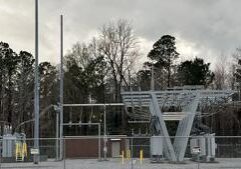
The states are challenging federal orders affecting the R.M. Schahfer power plant in Wheatfield, Indiana, and the F.B. Culley generating station in Newburgh, Indiana. Both facilities had been slated for retirement.
“It makes no sense for the federal government to force old, out-of-date, expensive, and polluting coal plants to continue operating far past when they were supposed to shut down,” Ellison said. “Continuing to operate these plants will ultimately raise energy costs for ratepayers.”
The orders were issued in December under Section 202(c) of the Federal Power Act, which allows federal intervention in the electric grid during emergencies. Additional extensions were filed by the federal government on March 23.
Ellison and Raoul argue no such emergency exists and say the administration exceeded its legal authority.
“Donald Trump doesn’t even have the legal authority to order these plans to continue operating,” Ellison said. “I’m suing to stop this unlawful action and prevent the Trump administration from raising Minnesotans’ energy costs and increasing pollution that leads to climate change.”
The Trump administration has defended similar actions as necessary to maintain grid reliability as electricity demand rises and more traditional power plants retire.
When President Donald Trump took office he issued executive orders declaring an unlawful “national energy emergency” and “terminating the Green New Deal.”
A July report from the U.S. Department of Energy last year warned the country could face a significantly increased risk of power outages by 2030 if coal and natural gas plants continue to shut down as planned.
The report, ordered by Trump as part of an April 2025 executive order, found closures could increase outage risks by as much as 100 times without intervention and urged keeping existing generation capacity online.
“Our nation possesses abundant energy resources and capabilities such as oil and gas, coal, and nuclear,” the report said.
It applauded deregulation and permitting reform by the Trump administration, but argued that won’t be enough if plants continue to close.
“However, even with these foundational strengths, the accelerated retirement of existing generation capacity . . . undermine this energy outlook,” it said. “Absent decisive intervention, the nation’s power grid will be unable to meet projected demand for manufacturing, re-industrialization, and data centers driving artificial intelligence (AI) innovation.”
That report faces a lawsuit for a multi-state coalition, as previously reported by The Center Square.
Wright said emergency orders are intended to ensure sufficient generation capacity throughout the Midwest.
“The last administration’s energy subtraction policies had the United States on track to likely experience significantly more blackouts in the coming years—thankfully, President Trump won’t let that happen,” Wright said of the March extension. “The Trump Administration will continue taking action to keep America’s coal plants running to ensure we don’t lose critical generation sources.”
A similar dispute is playing out in Michigan. Just hours before its planned closure last May, the J.H. Campbell coal-fired plant in West Olive was ordered to remain open under a federal emergency directive.
Michigan Attorney General Dana Nessel challenged the move in July, calling it a “manufactured emergency” and arguing the federal government was overstepping its authority to keep open coal plants. She also warned the plant’s extension would significantly raise costs for consumers, with some reports stating an additional $134 million for just six months of operation.
Wright has filed multiple extensions for that plant since last year and it still remains operational. Nessel has challenged each of those extensions to no avail.
Similar concerns are central to Minnesota’s lawsuit.
Ellison argued the Indiana plants require significant maintenance, repairs and fuel to continue operating, particularly after running down resources ahead of their planned retirements. Those costs would ultimately be passed on to customers across the Midcontinent Independent System Operator region.
“This comes at a significant loss that will be passed on to Minnesota rate payers,” Ellison’s office said. “There is no evidence the coal plants could reasonably address any emergency need, because they are inefficient, in disrepair, and operate on a long timetable.”





Chance Showers And Thunderstorms
Latest News Stories
U.S. Supreme Court could rule on Texas lawsuits brought in Democratic-led state courts

WATCH: Illinois In Focus Daily | Monday Aug. 11th, 2025

Illinois quick hits: Judge denies Madigan’s motion; legislator urges action on DCFS interns

About Us

Everyday Economics: CPI takes center stage as tariff-driven price pressures mount

Net negative migration is harmful to the economy, economists say

Details pending on billions in foreign investments coming from trade deals
Will County Health Department Seeks $1 Million to Avert ‘Drastic’ Service Cuts from Expiring Grants

Will County’s “First-in-Nation” Veterans Center to House Workforce Services, Sparking Debate
Improved Vendor Service Creates $1.2 Million Shortfall in Sheriff’s Medical Budget
Will County Public Works Committee Unveils 25-Year Transportation Plan, Projects $258 Million Gap

Will County Animal Protection Services Seeks New Facility Amid “Gaping Wound” of Space Crisis

Board Confronts Animal Services Crowding, Explores Future Facility Options
Will County Board Members Demand Transparency in Cannabis Tax Fund Allocation